Are Multi-Stop Delivery Offers Worth It?
A multi-stop delivery may have a large payout, but every additional stop adds time and possible complications. Learn how to decide whether the complete route is profitable.
By Thomas Staggs · August 31, 2026
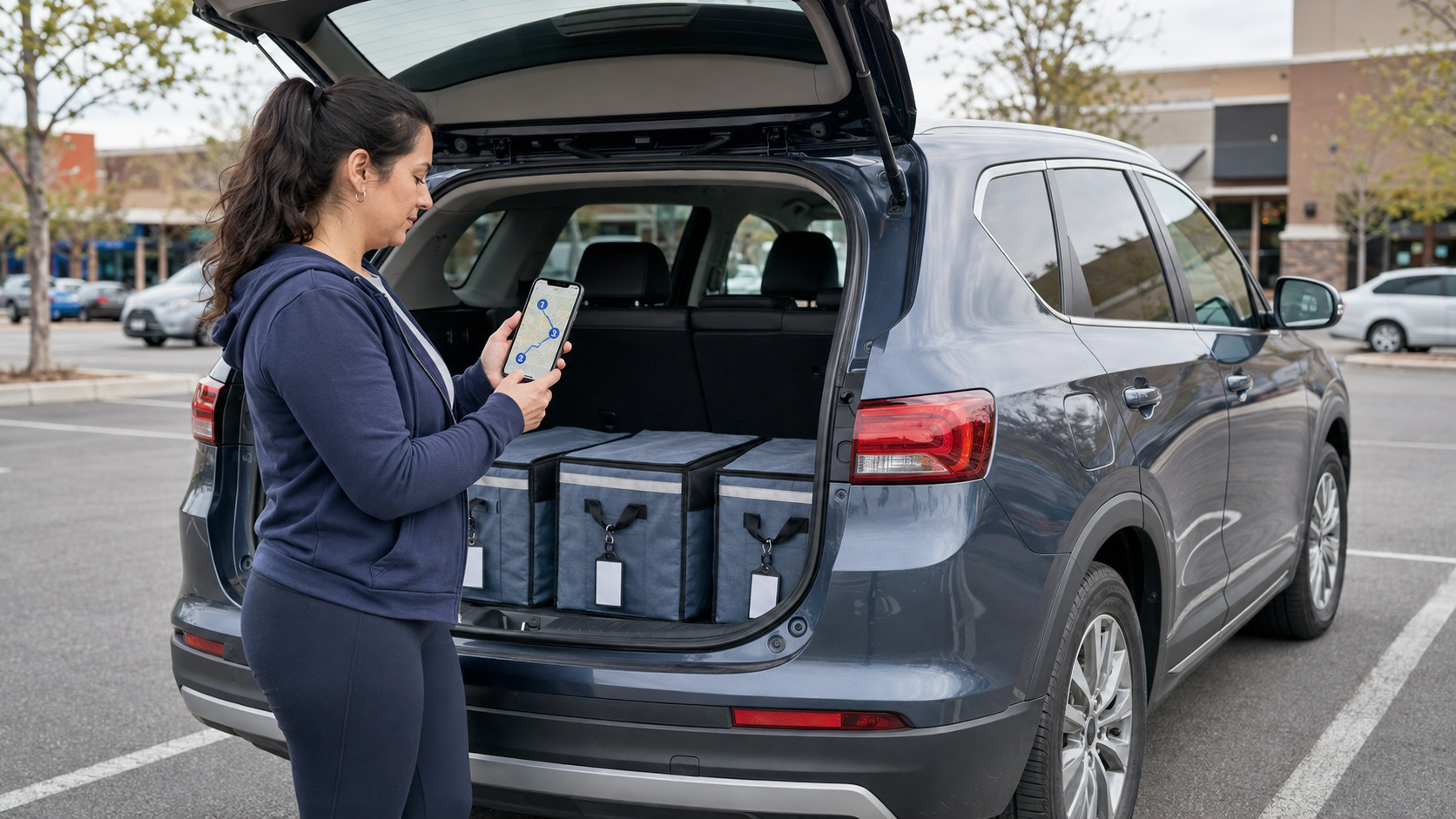
Are Multi-Stop Delivery Offers Worth It?
A multi-stop delivery offer can look attractive because the total payout is usually larger than a single delivery.
You may see $25, $35, or more displayed on the screen and immediately think it is a strong offer. But that payment may include several customers, more miles, a longer loading process, and multiple opportunities for delays.
The total payout matters, but it does not tell you how much work is attached to the offer.
Before accepting a multi-stop delivery, look at the complete route and ask whether the pay covers all the miles, time, customer stops, and vehicle costs involved.
What is a multi-stop delivery offer?
A multi-stop delivery combines two or more customer deliveries into one route.
Depending on the platform and type of order, the route may include:
- Several customer homes
- Multiple apartment buildings
- Separate grocery orders
- Several packages
- Different drop-off requirements
- Age or identity verification
- Customer signatures
- Returns to the store
- A long distance between the final stops
Combining deliveries can make a route more efficient when the customers are located close together. It can also create a long, complicated trip when the stops are spread across a wide area.
Do not judge the offer by its total payout
A $30 delivery offer will naturally get more attention than a $12 offer. However, the larger offer may include three times as much work.
Suppose you are comparing these two offers:
Single-stop offer:
- $16 payout
- 7 total miles
- 30 estimated minutes
- One customer
Multi-stop offer:
- $30 payout
- 24 total miles
- 90 estimated minutes
- Four customers
The $30 offer pays more in total, but the numbers look different after calculating the rates.
The single-stop offer pays about $2.29 per mile and has a gross hourly rate of $32 before expenses.
The multi-stop offer pays $1.25 per mile and has a gross hourly rate of $20 before expenses.
The larger payout does not automatically make the larger route more profitable.
Calculate the pay for the complete route
When reviewing a multi-stop delivery, use the total expected mileage.
Include:
- Miles to the pickup location when appropriate
- Miles between customer stops
- Miles added by the route
- Likely miles after the final delivery
- Any required return to the store
Use this calculation:
Total payout ÷ complete expected mileage = gross pay per mile
For example, a three-stop offer pays $28 and shows 18 miles.
$28 ÷ 18 miles = about $1.56 per mile
If the final customer leaves you 8 miles from another useful delivery area, the complete trip may be closer to 26 miles.
$28 ÷ 26 miles = about $1.08 per mile
The added miles can significantly change the value of the offer.
Estimate the time required for every stop
Mileage is only part of a multi-stop route. Each customer adds time even when the homes are close together.
At every stop, you may need to:
- Find the correct address
- Locate a safe parking space
- Unload the correct order
- Walk to the drop-off point
- Follow delivery instructions
- Take a confirmation photo
- Contact the customer
- Wait for verification
- Return to your vehicle
- Prepare for the next stop
If each stop adds only seven minutes, four stops add 28 minutes before considering loading time or driving.
A route with low mileage can still produce a weak hourly rate when it contains many stops.
Calculate pay per stop
Pay per stop can help you understand how much work is included in the payout.
Use this calculation:
Total payout ÷ number of customer stops = gross pay per stop
Suppose an offer pays $24 for six customer deliveries:
$24 ÷ 6 stops = $4 per stop
That $4 must help cover the driving, parking, unloading, walking, delivery confirmation, and possible customer contact connected to each stop.
Pay per stop should not replace mileage and time calculations. It is another way to recognize how much work is attached to the total payout.
Check the distance between stops
A route with several nearby stops may be more efficient than separate single-customer offers.
For example, three deliveries in the same neighborhood may require less driving than three orders completed at different times.
However, the first few stops may be close together while the final customer is far outside your preferred delivery area.
Look at the complete route instead of assuming all the stops are grouped together.
Pay special attention to:
- The distance to the first customer
- The distance between each stop
- The location of the final customer
- Whether the route crosses heavy traffic
- Whether the last stop leaves you far from another opportunity
The final stop often has the greatest effect on what happens after the delivery.
More stops create more opportunities for delays
Every additional customer creates another point where the route can take longer than expected.
Possible delays include:
- Apartment access problems
- Gated communities
- Missing gate codes
- Difficult parking
- Incorrect map locations
- Customer verification
- Signature requirements
- Loose animals
- Long driveways
- Road construction
- Complicated delivery instructions
- Packages that must be returned
One small delay may not ruin the route. Several delays can turn an expected one-hour delivery into a two-hour trip.
Leave room in your estimate for normal problems instead of assuming every stop will go perfectly.
Large and heavy orders require more work
The number of customers does not tell you the complete size of the route.
A two-stop delivery could contain more items and require more work than a five-stop package route.
Before accepting, review any available information about:
- Item count
- Large or bulky products
- Cases of water
- Heavy grocery orders
- Apartment deliveries
- Stair access
- Multiple trips between the vehicle and the door
- Space available inside your vehicle
A route may fit the mileage and hourly requirements but still be a poor choice if the items exceed your vehicle space or physical limits.
Order organization matters
Multi-stop deliveries create a greater risk of mixing up customer orders.
Before leaving the pickup location:
- Keep each customer’s items separated
- Place labels where you can see them
- Confirm the stop order
- Avoid stacking items in a way that hides another order
- Protect cold, fragile, or crushable items
- Make sure you can safely see through your windows
Good organization can reduce search time at each stop and help prevent delivery mistakes.
However, organization also takes time. Include the loading and sorting process when estimating the complete trip.
Tips can make the payout look stronger
A multi-stop offer may include tips from one or more customers. The displayed total can make it difficult to see how much each stop contributes.
One customer may provide most of the tip while another adds little or nothing.
Evaluate the complete route based on the total payout available to you, but be careful about depending on estimated tips that have not been finalized.
A large tip can improve the route. It cannot remove the miles, time, and vehicle wear required to complete every stop.
When a multi-stop offer may be worth accepting
A multi-stop delivery may be a good opportunity when:
- The total payout meets your goal
- The customers are located close together
- The complete mileage is reasonable
- The estimated time supports your hourly target
- The final stop ends in a useful area
- The order fits safely inside your vehicle
- The pickup location normally runs efficiently
- The route does not include difficult delivery requirements
- The expected profit remains strong after expenses
Several deliveries can be efficient when they are combined into a well-planned route.
The number of stops is not automatically a problem. The question is whether the pay covers the complete work.
When a multi-stop offer may be better to skip
A route may deserve a closer look when:
- The payout looks high only because there are many customers
- The stops are spread across a large area
- The final stop leaves you far away
- The pay per mile is below your minimum
- The expected hourly profit is too low
- The order contains more items than your vehicle can safely carry
- Several stops involve apartments or difficult access
- The pickup location regularly has long delays
- The route includes requirements that could add unpredictable time
A larger payout should not pressure you into accepting more work than the payment justifies.
A quick multi-stop checklist
Before accepting, ask:
- What is the total payout?
- How many customer stops are included?
- What is the complete expected mileage?
- How long will loading, driving, and every drop-off take?
- Where will the final stop leave me?
- How much will the route pay per mile?
- How much will it pay per hour?
- How much profit may remain after vehicle costs?
- Will everything fit safely inside my vehicle?
- Does the complete route meet my standards?
This review must often happen quickly. Having personal mileage and hourly minimums can make the decision easier.
Frequently asked questions
Are multi-stop delivery offers more profitable?
They can be, especially when several customers are close together. However, more stops also add time and possible delays. Profit depends on the complete payout, mileage, time, and expenses.
How do I calculate pay for a multi-stop delivery?
Divide the total payout by the complete expected mileage to calculate gross pay per mile. Also divide the payout by the estimated total hours to calculate the gross hourly rate.
Should I calculate pay per stop?
Pay per stop can help show how much work is attached to the offer, but it should be used with pay per mile, pay per hour, and expected profit.
Do multi-stop deliveries save mileage?
They may save mileage when customers are grouped along an efficient route. A route can also add unnecessary mileage when stops are spread apart or the final customer is far away.
What should I check before accepting a batch delivery?
Check the payout, number of customers, complete mileage, expected time, item count, delivery requirements, final location, and whether the route fits safely inside your vehicle.
The bottom line
Multi-stop delivery offers are not automatically good or bad.
A well-planned route with nearby customers can help you complete more deliveries efficiently. A poorly planned route can consume time, add vehicle miles, and leave you far from your next opportunity.
Do not accept a route only because the total payout looks large.
Count the customers, study the complete route, estimate the time, consider the vehicle costs, and determine how much TRUE profit the entire delivery may produce.