Gig Delivery Driver Reviewing Work Expenses Taxes
Gig delivery expenses go far beyond gas. Learn which vehicle and work costs drivers should track to understand their TRUE cost and what they actually keep.
By Thomas Staggs · August 30, 2026
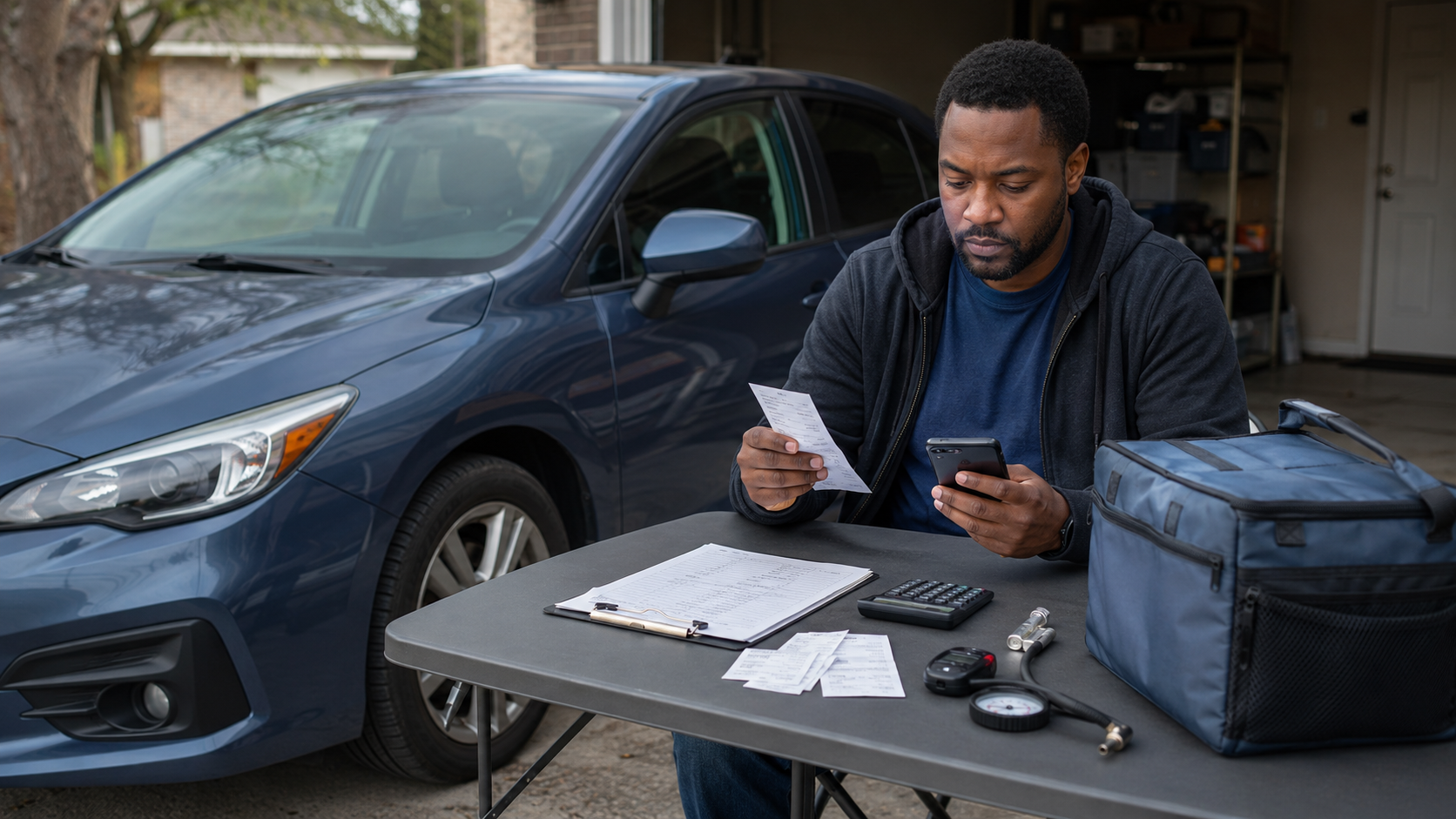
Gas is usually the first expense gig delivery drivers think about. It is visible, frequent, and hard to ignore. Every time you stop at the pump, you see exactly how much money leaves your pocket.
But fuel is only one part of the cost of using your vehicle for delivery work.
Oil changes come sooner. Tires wear down. Brakes need to be replaced. Mileage lowers the value of your vehicle. Your phone, insurance, cleaning supplies, and other work-related costs can also take away from what you earn.
If you track only your payouts and fuel purchases, you may believe you are making more profit than you really are.
Why should gig delivery drivers track expenses?
Tracking expenses helps you understand the difference between gross earnings and actual profit. It also helps you decide whether a delivery offer is really profitable.
Gross earnings are the payouts and tips you receive. Profit is what remains after the cost of completing your deliveries is considered.
Suppose you earn $800 during a week. That sounds good by itself, but it does not tell you what it cost to earn that money.
How much did you spend on fuel? How many miles did you add to your vehicle? Did you buy delivery supplies? Are your tires or brakes getting closer to replacement?
You may not pay every expense during the same week you earn the money. The cost is still building.
Knowing your delivery expenses can help you:
- Evaluate offers more accurately
- Set realistic profit goals
- Prepare for maintenance and repairs
- Compare one week or month with another
- Understand what you are actually keeping
- Keep better records for your tax professional
Tracking does not need to be complicated. Start with the expenses that affect your delivery work the most.
Fuel expenses
Fuel is one of the largest regular expenses for many gig delivery drivers.
Record the amount you spend each time you fill up. It also helps to track the price per gallon and your vehicle’s average fuel economy.
These numbers can help you estimate the fuel cost of a delivery before accepting it.
For example, if your vehicle averages 28 miles per gallon and gas costs $3.50 per gallon, your fuel cost is approximately 12.5 cents per mile.
A 20-mile trip would use about $2.50 in fuel under those conditions.
Real-world fuel use may be higher. Idling, stop-and-go traffic, hills, air conditioning, cold weather, and heavy loads can all affect fuel economy.
Your estimate does not need to predict the exact amount used on every delivery. It should be realistic enough to keep fuel from being treated as free.
Oil changes and routine maintenance
Delivery driving adds mileage quickly, which means routine maintenance may be needed more often.
Oil changes are the most obvious example. If your vehicle needs an oil change every 5,000 miles, delivery work can bring that expense around much faster than normal personal driving.
Other routine maintenance may include:
- Oil and filter changes
- Air filters
- Cabin filters
- Fluid checks and replacements
- Spark plugs
- Belts and hoses
- Wheel alignments
- Tire rotations
- Manufacturer-recommended services
Keep receipts and record the date and mileage when the work was completed. This creates a useful maintenance history and helps you see how much delivery driving is costing over time.
Regular maintenance can also help you catch smaller problems before they become expensive repairs.
Tires
Tires are easy to overlook because you do not buy them every week or month. When replacement time comes, the cost can be significant.
Delivery work can wear tires faster because of added mileage, repeated stops, rough roads, apartment entrances, gravel driveways, and frequent turning.
Tire costs may include:
- New tires
- Mounting and balancing
- Rotations
- Alignments
- Flat repairs
- Valve stems
- Tire-pressure equipment
Instead of waiting until you need a full set of tires, include a small amount for tire wear in your vehicle cost per mile.
That gives you a more realistic picture of each delivery’s cost and helps you prepare for the replacement bill.
Brakes and other wear items
Gig delivery work often involves more stopping than ordinary highway driving. That can increase wear on brake pads and rotors.
Brakes are not the only parts affected. Delivery mileage can also wear suspension components, wheel bearings, steering parts, batteries, and other vehicle systems.
You cannot know which repair will happen next or exactly when it will happen. You can recognize that repairs are part of using a vehicle for work.
This is why a delivery offer should cover more than fuel. An offer that barely pays for gas leaves nothing for the rest of the vehicle.
Vehicle depreciation
Depreciation is the loss of value a vehicle experiences as it gets older and accumulates mileage.
It does not arrive as a bill in the mail, so drivers often leave it out of their calculations. The cost may become clear later when they sell or trade the vehicle.
Two similar vehicles can have very different values if one has been driven thousands of additional delivery miles.
Depreciation varies based on the vehicle’s age, condition, mileage, model, and local demand. It can be difficult to calculate perfectly, but ignoring it completely can make delivery profit look higher than it is.
A reasonable wear-and-tear amount per mile gives you a practical way to account for maintenance, repairs, tires, and the long-term effect of added mileage.
Insurance
Personal auto insurance may not cover every situation involving paid delivery work.
Policies, companies, and state requirements vary. Some drivers may need a delivery endorsement or a different type of coverage. Do not assume you are covered simply because you have a personal auto policy.
Talk directly with a licensed insurance agent and explain the type of delivery work you perform. Ask when your personal policy applies, when the delivery platform’s coverage applies, and whether there are any gaps.
Track any additional premium you pay because you use your vehicle for delivery work.
Insurance is not the place to guess. Finding out that you lack coverage after an accident can be far more expensive than asking before one happens.
Phone and data costs
A reliable phone and data connection are necessary for most delivery work.
Drivers use their phones to receive offers, navigate, contact customers, photograph deliveries, and handle support issues.
Related expenses may include:
- Mobile service
- Additional data
- Phone mounts
- Charging cables
- Car chargers
- Portable battery packs
- Device repairs or replacement
Your phone may be used for both personal and delivery purposes. Track the delivery-related portion as accurately as you reasonably can and ask a qualified tax professional how it should be handled for tax purposes.
Cleaning and delivery supplies
Small purchases can add up when they happen throughout the year.
Depending on how you work, delivery supplies may include:
- Insulated bags
- Drink carriers
- Flashlights
- Reflective clothing
- Cleaning wipes
- Hand sanitizer
- Paper towels
- Disposable gloves
- Trunk organizers
- Replacement charging cables
Some supplies last for years, while others must be replaced regularly.
Keep receipts and record why the purchase was needed for your delivery work. It is much easier to document an expense when it happens than to remember it months later.
Tolls, parking, and other trip costs
Some deliveries create expenses that are tied directly to one trip.
These may include:
- Road or bridge tolls
- Paid parking
- Parking meters
- Garage fees
- Ferry charges
If you know an offer will require a toll or parking fee, subtract that cost when evaluating the delivery.
A $15 offer with a $4 toll is not really a $15 offer. The trip begins with only $11 available before fuel, vehicle wear, time, and other expenses are considered.
Track these costs separately so they do not disappear into your general spending.
Return miles and unpaid driving
Return miles are not a separate bill, but they increase nearly every mileage-based expense.
If a delivery leaves you far from the store or another area where you can receive offers, the drive back uses more fuel and adds more wear to your vehicle.
Those unpaid miles also take time.
A trip that shows 10 miles on the offer screen might require 18 miles once the drive back is included. Your fuel, maintenance, tire, and depreciation estimates should be based on the realistic total mileage.
Where a delivery ends can matter almost as much as the distance shown before you accept it.
How should drivers organize their expenses?
Choose a system you can continue using.
You might record expenses after each purchase, once a week, or at the end of every workday. The exact routine matters less than staying consistent.
For every expense, try to keep:
- Date
- Amount
- Expense category
- Business purpose
- Receipt or digital record
- Vehicle mileage when relevant
Do not mix estimates with actual payments without labeling them clearly. Fuel receipts and repair bills are actual expenses. A wear-and-tear amount per mile is an estimate used to understand operating cost.
Both are useful, but they serve different purposes.
Tracking profit and preparing taxes are not the same thing
TRUE cost calculations help you understand whether your delivery work is profitable. Tax calculations determine how income and expenses are reported under tax rules.
Those are related, but they are not identical.
The vehicle cost you use to evaluate a delivery may not be the same amount you claim as a tax deduction. Tax rules can also change, and the best method depends on your situation.
Keep accurate records and take them to a qualified tax professional. Do not assume that every cost used in your profit estimate is automatically deductible.
The purpose of tracking is to give yourself and your tax professional better information.
Start with the costs that matter most
You do not have to build a perfect record system in one day.
Start by tracking:
- Total delivery mileage
- Return miles
- Fuel
- Maintenance
- Tires
- Repairs
- Insurance related to delivery work
- Phone and data expenses
- Delivery supplies
- Tolls and parking
After a few weeks, look at how these expenses affect your earnings. You may discover that certain types of offers cost more than you realized.
You may also find that one vehicle, delivery area, or working schedule produces better results than another.
Know what you actually keep
I have been doing gig delivery work for four years, and one thing has become clear to me. A busy day does not always mean a profitable day.
Drivers can complete delivery after delivery and still lose too much of their earnings to mileage, fuel, maintenance, and unpaid time.
TRUE Driver Profit helps drivers bring their payout, mileage, time, return miles, fuel, and vehicle costs together. It is designed to show the difference between what an offer pays and what may actually remain after completing the trip.
You work for the payout. Your vehicle helps earn it. Tracking the cost of that vehicle is part of knowing your TRUE profit.