How Much Should a Delivery Offer Pay Per Mile?
Is $1 or $2 per mile enough for a delivery offer? Learn how to judge pay per mile while accounting for return miles, time, fuel, and vehicle expenses.
By Thomas Staggs · August 31, 2026
How Much Should a Delivery Offer Pay Per Mile?
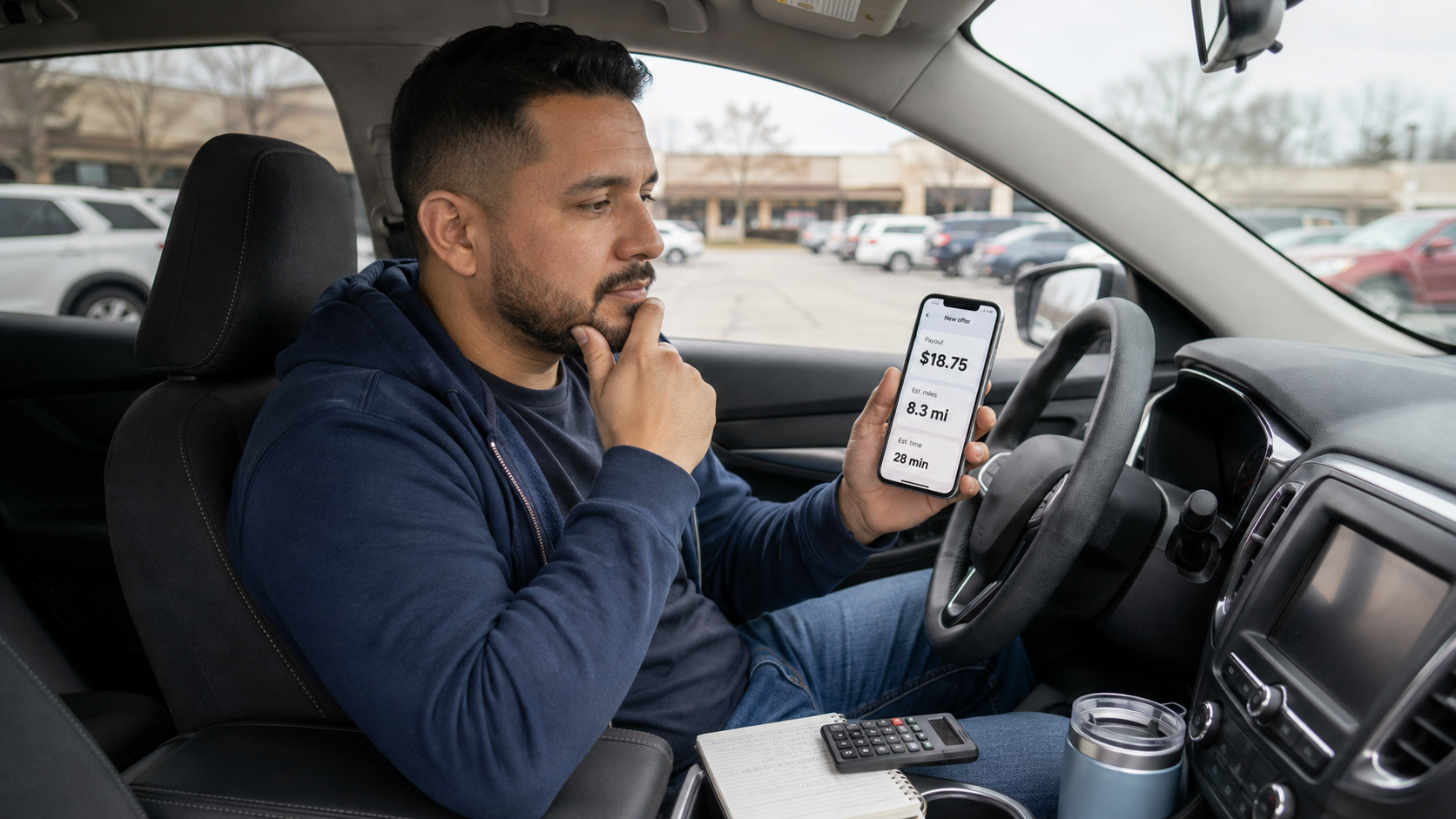
Many delivery drivers use a dollars-per-mile rule when deciding whether to accept an offer.
Some drivers look for at least $1 per mile. Others will not accept anything below $1.50 or $2 per mile.
Those numbers can be useful as a quick starting point, but they do not tell you whether an offer will actually be profitable.
A delivery that appears to pay $2 per mile can still be a poor choice when it includes a long wait, several stops, heavy items, difficult drop-offs, or unpaid miles back to the store.
The better question is not only, “How much does this offer pay per mile?”
It is, “How much profit will I keep after completing the entire trip?”
How to calculate pay per mile
The basic calculation is simple:
Offer pay ÷ delivery miles = pay per mile
For example, suppose an offer pays $18 and shows 9 miles:
$18 ÷ 9 miles = $2 per mile
At first glance, that may look like a strong offer.
However, the mileage shown on the offer may not include every mile you will drive. If the delivery leaves you 7 miles away from the store or another area where you can receive orders, the real trip may be closer to 16 miles.
Using the complete mileage changes the calculation:
$18 ÷ 16 miles = $1.13 per mile
The payout did not change, but your understanding of the offer did.
There is no perfect rate for every driver
There is no single dollars-per-mile number that works for every driver, vehicle, or delivery area.
A driver using a fuel-efficient hybrid may have lower fuel costs than someone driving a large SUV. A driver working in a busy city may receive another offer near the drop-off. A driver in a rural area may need to travel several miles back before receiving another worthwhile offer.
Your minimum rate should reflect:
- Your vehicle’s fuel economy
- The current price of gas
- Maintenance and repair costs
- Tire and oil change costs
- Vehicle depreciation
- Commercial or delivery insurance costs
- The number of unpaid miles you normally drive
- The amount of profit you need to earn
A rate that works for someone else may not work for you.
Why $1 per mile may not be enough
An offer paying $1 per mile may sound acceptable, but the payout must cover more than gas.
Every delivery adds wear to your vehicle. Tires, brakes, oil changes, suspension repairs, maintenance, and depreciation are all part of the cost of driving.
Suppose an offer pays $12 for 12 displayed miles. If you must drive another 6 miles to return to your preferred area, the complete trip is 18 miles.
That works out to only 67 cents per mile before expenses:
$12 ÷ 18 miles = $0.67 per mile
Once fuel and vehicle costs are deducted, very little profit may remain.
This is why judging an offer only by the mileage shown on the screen can lead to accepting work that looks better than it really is.
Why $2 per mile is not automatically profitable
Even a $2-per-mile offer can become unprofitable when it takes too much time.
Consider a $16 offer showing 8 miles. That equals $2 per mile.
But what if you wait 25 minutes at the store, spend 20 minutes driving, and need another 15 minutes to complete a difficult apartment delivery?
The order has now taken one hour.
Your gross rate is $16 per hour before fuel, vehicle expenses, and taxes. The mileage looked good, but the time lowered the value of the offer.
Pay per mile and pay per hour should be considered together.
Count the return miles
Return miles are the miles you may need to drive after completing a delivery before you can realistically receive another worthwhile offer.
These miles may not appear on the original offer, but they still use gas, add wear to your vehicle, and take your time.
Return miles are especially important when a delivery takes you:
- Outside your normal delivery zone
- Into a rural area
- Away from busy stores
- Into heavy traffic
- Across a toll road
- To an area where you rarely receive another offer
You may not always return to the exact store where the trip began. If another active store or delivery area is nearby, some of those miles may lead to your next opportunity.
The goal is to estimate the miles you are realistically likely to drive, not automatically double every offer.
Time can change the value of an offer
Mileage is only one part of a delivery.
An offer may have low mileage but still take a long time because of:
- Store delays
- Multiple customer stops
- Large shopping orders
- Apartment buildings
- Difficult parking
- Stairs or long walks
- Customer verification
- Traffic
- Road construction
- Complicated drop-off instructions
Imagine a $15 offer that requires only 5 miles. That equals $3 per mile, which sounds excellent.
If the entire delivery takes 75 minutes, however, the gross rate falls to $12 per hour before expenses.
A good mileage rate cannot make up for unlimited waiting and delivery time.
Tips should not hide a weak offer
Estimated tips can make an offer look more attractive, but drivers should be careful about depending on money that has not been finalized.
Ask whether the trip would still be acceptable if the tip were reduced, delayed, or removed.
This does not mean every tipped offer is risky. Tips are an important part of delivery income. The point is to understand how much of the offer depends on the tip and whether the complete trip still meets your standards.
A large tip can improve a good offer, but it does not erase long mileage, excessive time, or high vehicle costs.
Compare two delivery offers
Consider these two offers:
Offer A pays $20 for 10 displayed miles.
Offer B pays $15 for 6 displayed miles.
Based only on the displayed mileage:
- Offer A pays $2 per mile
- Offer B pays $2.50 per mile
Now add the likely return mileage and time.
Offer A requires 8 miles back and takes 55 minutes. Its complete distance is 18 miles, reducing the rate to about $1.11 per mile.
Offer B ends near another busy store, requires no separate return trip, and takes 30 minutes. It remains at $2.50 per mile.
Offer A has the larger payout, but Offer B may produce more profit while using less time and fewer vehicle miles.
The highest-paying offer is not always the most profitable offer.
Set a personal minimum
Instead of copying another driver’s rule, develop a minimum that fits your vehicle, area, and income goals.
Before accepting an offer, consider:
- How many total miles will I probably drive?
- How long will the complete trip take?
- Where will the delivery leave me?
- What will fuel and vehicle wear cost?
- How much profit will remain?
- Does the offer meet both my per-mile and hourly goals?
You may decide to use a quick minimum dollars-per-mile rule during the short time available to review an offer. That is useful, but it should be based on your real operating costs.
Pay per mile is a filter, not the final answer
Dollars per mile can help you quickly remove obviously weak offers. It should not be the only number you use.
A complete decision includes:
- Total payout
- Total expected mileage
- Estimated time
- Fuel cost
- Vehicle wear and tear
- Return miles
- Delivery difficulty
- Expected profit per mile
- Expected profit per hour
TRUE Driver Profit is designed to help drivers look beyond the payout and estimate what they may actually keep after the cost of completing the trip.
The goal is not to accept the offer with the biggest number on the screen. The goal is to recognize the offers that protect your time, your vehicle, and your profit.
Frequently asked questions
Is $1 per mile good for a delivery driver?
It depends on the complete trip. If the mileage shown does not include your return drive, $1 per mile can quickly become much less. Fuel, vehicle wear, time, and your location after the delivery must also be considered.
Is $2 per mile a good delivery offer?
A $2-per-mile offer may be worth considering, but it is not automatically profitable. Long waits, difficult stops, and unpaid return miles can reduce its value.
Should delivery drivers count round-trip mileage?
Drivers should count the miles they realistically expect to drive. If a delivery leaves you far from another active delivery area, include the likely return mileage. If you can receive another worthwhile offer near the drop-off, a full round trip may not be necessary.
Is pay per mile or pay per hour more important?
Both matter. Pay per mile helps measure vehicle use, while pay per hour helps measure the value of your time. A strong offer should support both goals after expenses.
What expenses should delivery drivers include?
Common expenses include fuel, maintenance, tires, oil changes, repairs, depreciation, insurance, phone service, and other supplies used for delivery work.
The bottom line
There is no universal pay-per-mile rule that guarantees a profitable delivery.
Your best minimum is one based on your vehicle, your delivery area, your time, and the amount of profit you need to keep.
Before accepting an offer, look beyond the displayed mileage. Count the complete trip, consider the time involved, subtract your vehicle costs, and decide whether the remaining profit is worth the work.
That is how you move from guessing about an offer to making a more informed decision.