Should Delivery Drivers Count Estimated Tips as Guaranteed Income?
Estimated tips can make a delivery offer look more profitable than its base pay. Learn how to evaluate tip-dependent offers before accepting them.
By Thomas Staggs · August 31, 2026
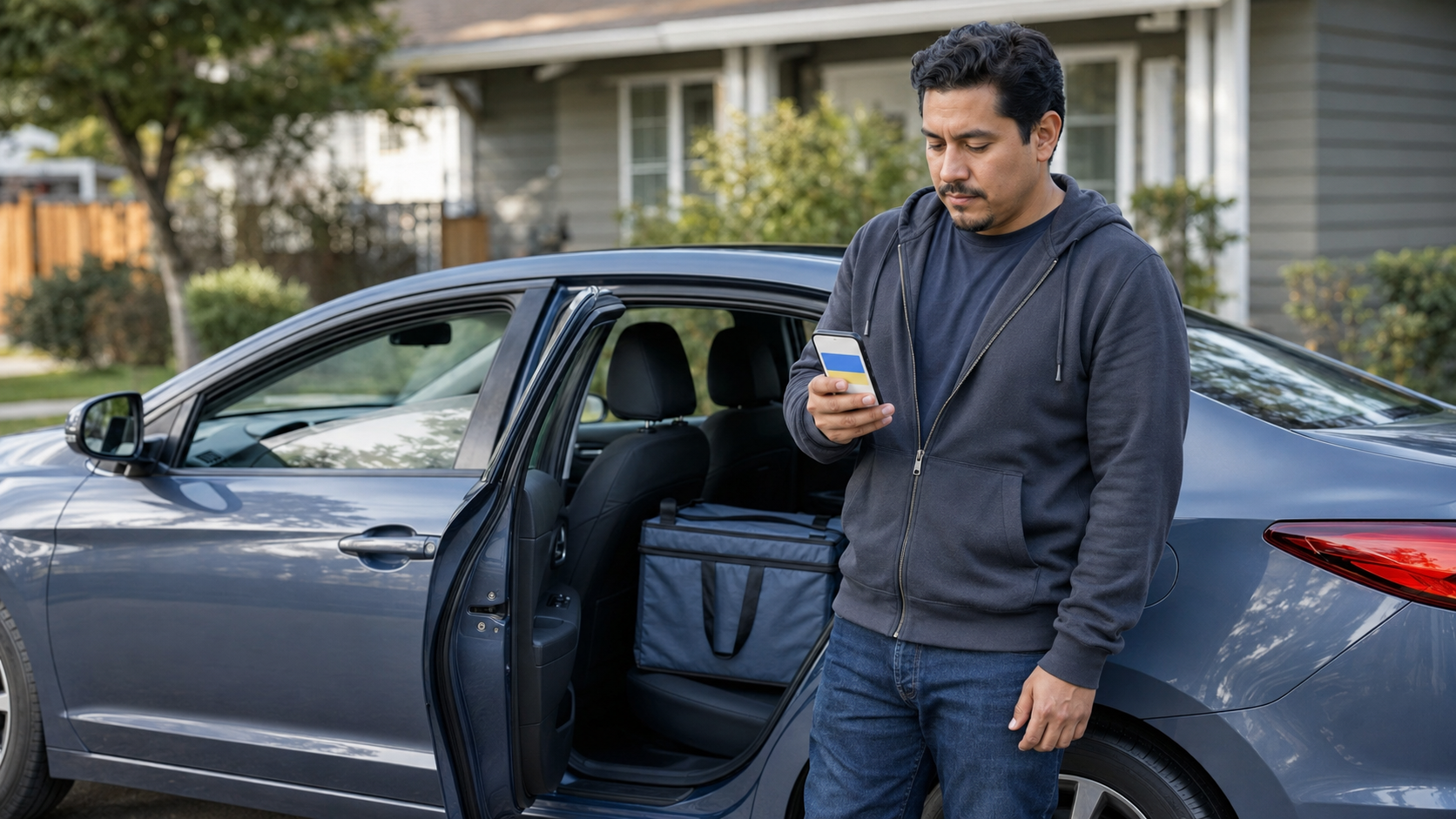
An estimated tip can make a delivery offer look much better than it would based on base pay alone.
A $28 offer may appear strong until you notice that only $9 comes from the delivery platform and the remaining $19 is an estimated customer tip.
That does not automatically make the offer bad. Most customers may leave the tip exactly as entered. But an estimated tip is not always the same as confirmed income.
Drivers should understand how much of an offer depends on the tip before accepting it.
Is an estimated tip guaranteed?
Not always.
Tip policies vary between delivery platforms. On some platforms, customers may be able to increase, reduce, or remove a tip after delivery. The confirmation period may last several hours or until the next day.
Other platforms may hide part of the tip or display the payout differently.
Drivers should check the current tip rules inside the platform they use. Policies can change, and a rule that applied last year may not work the same way today.
Until the tip is confirmed, treat it as expected income rather than guaranteed income.
Should drivers ignore estimated tips?
No. Ignoring every estimated tip would make many delivery offers look worse than they are likely to be.
A better approach is to evaluate the offer in two ways:
- Estimate the result with the full tip.
- Check what would happen if the tip were reduced or removed.
This shows how dependent the delivery is on money that has not been confirmed.
If the offer remains worthwhile with a smaller tip, the risk may be manageable. If removing the tip would leave almost no profit, you know the offer depends heavily on the customer’s final decision.
That information can help you decide whether the delivery offer is really profitable.
Look at the base pay and tip separately
The total payout is important, but the way that payout is divided also matters.
Consider this offer:
- Total estimated payout: $28
- Base pay: $9
- Estimated tip: $19
- Total expected mileage: 18 miles
- Estimated vehicle cost: 35 cents per mile
The estimated vehicle expense for 18 miles is $6.30.
With the full tip, subtracting $6.30 from the $28 payout leaves an estimated profit of $21.70 before taxes.
If the entire $19 tip were removed, the payout would fall to $9. After the same $6.30 vehicle cost, only $2.70 would remain.
The vehicle still traveled the same distance. The delivery still required the same time. Only the final tip changed.
This is an extreme example, but it shows why drivers should know how much of the expected profit depends on the tip.
A good tip cannot erase a bad trip
A generous tip can improve an offer. It cannot remove the mileage, waiting, vehicle wear, or return trip required to complete it.
An offer with a large tip may still be weak when it includes:
- High total mileage
- A long drive back
- Several difficult stops
- A long shopping list
- Heavy or oversized items
- An unreliable pickup location
- A difficult apartment delivery
- Excessive waiting
- Tolls or parking fees
The tip is part of the payout. It should be considered along with everything required to earn it.
Do not let one attractive number keep you from evaluating the whole trip.
Count the full mileage
Tip-dependent offers can be especially risky when the delivery requires a long return trip.
Suppose an offer pays $25 for 12 displayed miles, including a $15 estimated tip. The customer lives 9 miles away from your usual pickup area, and no other stores are nearby.
The complete trip could require about 21 miles.
If the tip is reduced, you are left with lower pay and the same 21 miles of fuel use and vehicle wear.
Before accepting, consider whether you need to count return miles.
A tip can make the expected payout look strong. Only the full mileage shows what your vehicle may have to do to earn it.
Check profit per mile with and without the tip
Profit per mile helps show how much may remain from every mile placed on your vehicle.
Calculate it first using the full estimated payout. Then calculate it again using the base pay or a reduced tip.
For example:
- Base pay: $8
- Estimated tip: $12
- Total offer: $20
- Actual trip mileage: 14 miles
- Estimated vehicle cost: $5.60
With the full estimated tip, the expected profit is $14.40. That equals about $1.03 in profit per mile.
Without the tip, the $8 base pay leaves only $2.40 after vehicle costs. That equals about 17 cents in profit per mile.
The first calculation may meet your goal. The second may not come close.
You do not have to assume the worst result will happen. Seeing both results helps you understand the amount of risk involved.
Learn more about calculating delivery driver profit per mile.
Check profit per hour too
A large estimated tip can also make a time-consuming delivery look more attractive.
Shopping, waiting, loading, driving, and unloading all use part of your working day.
Suppose a $30 offer takes 90 minutes to finish. Before expenses, that equals $20 per hour.
If $20 of the payout is an estimated tip and the tip is later removed, the trip falls to $10 for 90 minutes before expenses.
Waiting until the final tip is confirmed may reveal a very different hourly result from the one you expected when accepting the offer.
Profit per hour should be updated using the confirmed payout when it becomes available. This guide explains how delivery drivers calculate profit per hour.
Why might a tip change?
A reduced tip is often described as tip baiting, but drivers may not always know why the customer changed it.
Possible reasons can include:
- The customer entered the wrong amount.
- The order arrived with missing or damaged items.
- The customer was unhappy with something outside the driver’s control.
- The customer misunderstood how the tip worked.
- Another person in the household changed it.
- The customer intentionally used a large tip to make the offer attractive.
A driver may have completed the delivery correctly and still lose part of the tip.
That is frustrating, but it is better to record what happened than to assume every reduced tip had the same cause.
Track the expected and confirmed tip
If tips on your platform are not confirmed immediately, record both amounts.
For each trip, track:
- Base pay
- Estimated tip
- Confirmed tip
- Total expected payout
- Final payout
- Total mileage
- Delivery time
- Vehicle expenses
- Expected profit
- Final profit
This helps you see whether tip adjustments are actually a frequent problem in your work.
One reduced tip can stay in your memory for a long time. Your records show whether it was an unusual event or part of a repeated pattern.
Accurate records also improve your profit reports. Estimated earnings help with the initial decision, but confirmed earnings show what you actually received.
Keep private notes about repeated problems
If the platform allows you to identify a previous delivery location, private notes may help you remember what happened.
A useful note might include:
- The date
- The general delivery location
- Expected tip
- Confirmed tip
- Delivery conditions
- Any legitimate problem that occurred
- Whether the same issue happened more than once
Keep these notes factual and private.
Do not publicly accuse a customer or share personal information. A tip change does not prove why it happened, and delivery situations can be misunderstood.
The purpose of a private note is to help with your future decisions, not to punish or embarrass anyone.
Do not depend on memory alone
Drivers complete many deliveries. Over time, it becomes difficult to remember which tip changed, which location had poor access, and which order involved a legitimate problem.
Memory can also make uncommon events feel more frequent because negative experiences stand out.
Tracking the numbers gives you a more accurate picture.
You may discover that most estimated tips in your area are confirmed without a problem. You may also identify a repeated location or offer type that deserves more caution.
Use your own records instead of assuming every delivery area works the same way.
Include every delivery expense
A lost or reduced tip does not reduce the cost of completing the order.
Fuel has already been used. Mileage has already been added. Your time has already been spent.
That is why your final profit should include the expenses gig delivery drivers need to track, including fuel, maintenance, tires, depreciation, tolls, and other trip costs.
If a confirmed tip changes the payout, update the profit calculation. Do not change the mileage or expenses simply because the final earnings were lower.
Set a personal limit for tip-dependent offers
Some drivers may be comfortable accepting an offer where most of the payout comes from an estimated tip. Others may want stronger base pay before taking a long or difficult delivery.
Your decision may depend on:
- How tips normally work in your area
- The platform’s adjustment policy
- Total mileage
- Return mileage
- Estimated time
- Difficulty of the delivery
- Your vehicle expenses
- Your minimum profit goals
- Your previous experience with that location
You do not need one rule for every offer.
A short, low-cost delivery may carry less risk than a long rural trip that depends on a large tip. Look at how much time, mileage, and money you could lose if the final payout changes.
Review tips after they are confirmed
Do not stop tracking the delivery when you mark it complete.
When the platform confirms the tip, compare the final payout with the original estimate. Update the trip if needed so your records show the actual result.
This matters when reviewing:
- Daily profit
- Weekly earnings
- Profit per mile
- Profit per hour
- Customer tip patterns
- Offer types
- Delivery areas
A report built from estimated tips may show money you never received. A report built from confirmed payouts gives you a more reliable view of your work.
Use the tip, but understand the risk
After four years of gig delivery work, I do not believe drivers should ignore tips. Tips can make a real difference in whether a delivery is worthwhile.
I also do not believe an estimated tip should be treated exactly like confirmed money.
TRUE Driver Profit helps drivers compare payout, tips, mileage, time, return miles, fuel, and vehicle costs. When the final tip is confirmed, updating the trip shows how the change affected TRUE profit, profit per mile, and profit per hour.
A tip can improve an offer. It should not keep you from looking at the TRUE cost of completing it.