Are Walmart Spark Return Offers Worth Taking?
Learn how to evaluate a Spark customer return offer by its full route, time, payout, and vehicle cost before accepting.
By TRUE Driver Profit · October 7, 2026
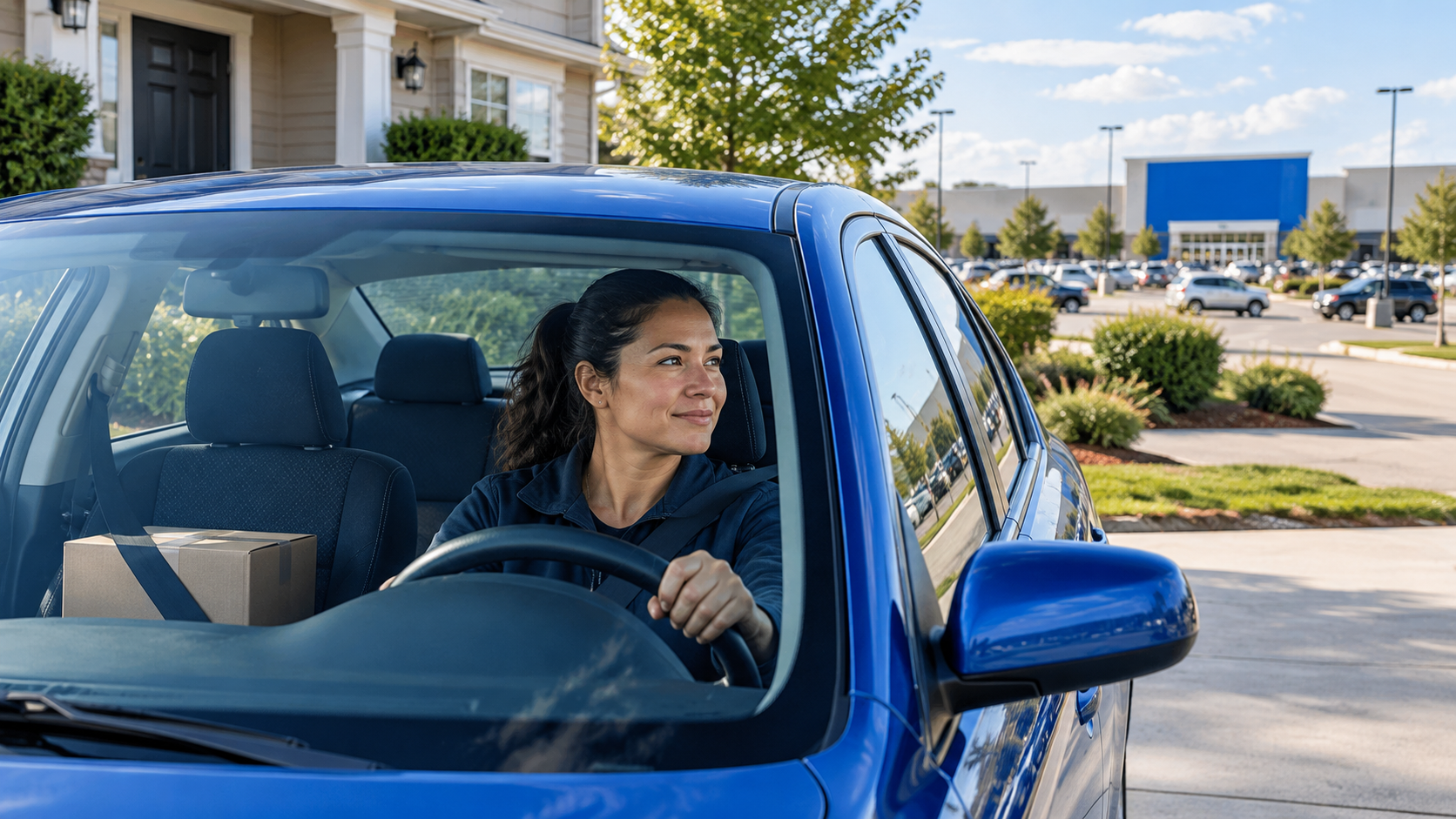
A Walmart Spark customer return offer can look simple: pick up an item from a customer and bring it to a participating Walmart. But the payout is only one part of the decision. The route, time, store process, and miles you drive before and after the offer all affect what you keep.
There are two situations drivers may call a “return.” A customer return offer is a separate offer to collect an item from a customer and take it back to a store. A delivery that cannot be completed may instead require a return stop added to the active trip. Check which situation the app is showing before you judge the offer.
Count the whole route
Start with the miles and time shown on the offer, then account for what your workday adds: driving to the customer, the customer handoff, returning to the store, and any repositioning afterward. Spark’s help material describes customer return offers as collecting an item from a customer and returning it to a participating Walmart. Its instructions also describe scanning the return label and completing the store handoff.
Use the route that makes sense for your actual starting point. If you are already near the customer, your approach may be short. If you must cross town to reach the pickup, those miles still use fuel and put wear on your vehicle.
Calculate what the payout leaves
Use your own cost-per-mile estimate, not a generic number:
- Estimated driving cost = total work miles × your vehicle cost per mile.
- Estimated profit before taxes = offer payout − estimated driving cost − other trip expenses.
- Estimated profit per hour = estimated profit ÷ total trip hours.
Example: Suppose a return offer pays $14, takes 45 minutes, and requires 18 total work miles after you include your approach and likely repositioning. At a personal vehicle cost of $0.30 per mile, estimated driving cost is $5.40 and estimated profit before taxes is $8.60. That is about $11.47 per hour for the 45 minutes. These figures are hypothetical; replace them with your own offer and vehicle numbers.
Include the handoff and uncertainty
A return can involve contacting the customer, locating the labeled item, scanning it in the app, and waiting for the store associate to accept it. A route that looks short on a map can take longer if the customer is unavailable, the item is not ready, or the store handoff takes time. Do not assume a specific extra payment unless the offer or your completed trip shows it.
Before accepting, ask: Does the shown payout cover the complete route? Is the customer pickup location clear? Can I finish the store handoff safely and within the time I have? Would I still take this trip if no follow-up offer appears nearby?
When a return may fit your shift
A return may work when it pays enough for your complete route, takes you toward a useful area, and fits your schedule. It may be a poor fit when the payout depends on ignoring approach miles, a long drive back, or substantial waiting. Compare it with the other work you could realistically do during the same time, not with an imagined nonstop sequence of offers.
Related articles
- how to evaluate Walmart Spark offers
- estimating the real miles of a delivery offer
- calculating your personal delivery cost per mile