How Much Does a Long Spark Curbside Wait Cost You?
See how curbside waiting changes your real delivery pay per hour, and track the full order time before judging your shift.
By TRUE Driver Profit · October 7, 2026
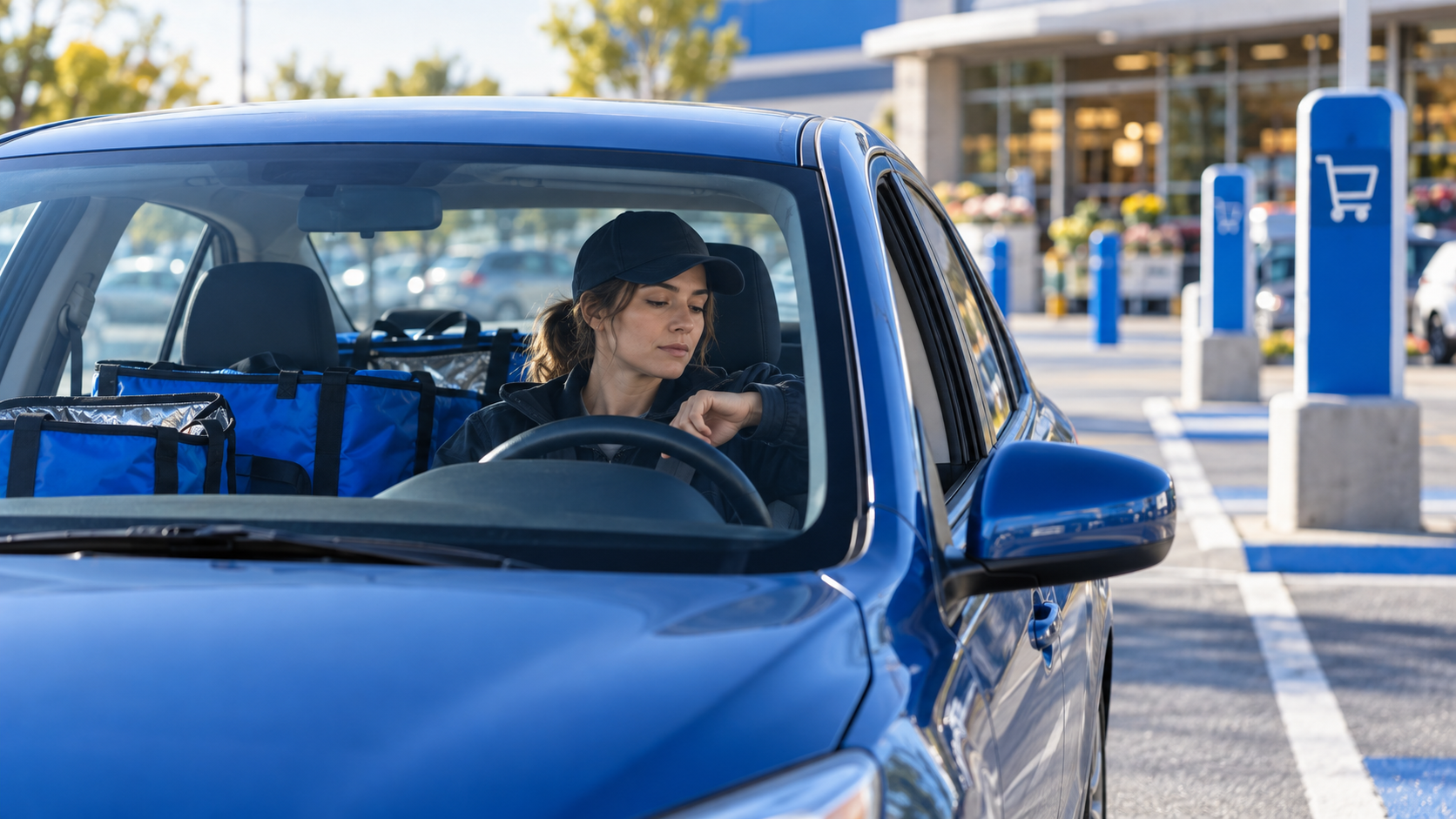
A long curbside wait can turn a promising Spark offer into a much lower hourly result. The payout may stay the same while your time grows, and the delay can also keep you from starting another order.
There is no single dollar amount that a wait costs every driver. Your result depends on the offer payout, the minutes added, vehicle expenses, and what the delay prevents you from doing. Calculate it with your own numbers instead of assuming the offer’s original estimate still describes your day.
Recalculate the actual hourly pace
For a quick gross comparison, divide the offer payout by the total time from starting the work to finishing it. Convert minutes to hours first:
- Gross hourly pace = offer payout ÷ (actual minutes ÷ 60).
- Estimated profit = payout − driving cost − other trip expenses.
- Profit per hour = estimated profit ÷ (actual minutes ÷ 60).
Hypothetical example: An $18 offer is estimated at 40 minutes, but curbside waiting adds 30 minutes. The total becomes 70 minutes. The gross pace falls from $27 per hour using the estimate to about $15.43 per hour using actual time. That is before vehicle costs, taxes, or any other expenses.
The 30-minute wait also has an opportunity cost: you could not use that time for another order, a break, or another income-producing task. That does not mean another offer would definitely have arrived. It means the time belongs in your real workday calculation.
Record the wait as part of the order
For a fair comparison, track when you arrive, when the order is ready, when loading ends, and when the delivery is complete. Include the time you spend getting to the store if that is part of your work. Do not compare one trip’s actual time with another trip’s offer estimate.
Keep a few notes by store and time of day. After several trips, you may see patterns: a particular pickup window, day, or location may routinely take longer. A small sample can be misleading, so look for repeated results rather than treating one unusually long wait as the normal time.
Do not count unconfirmed pay
Check the Spark offer and completed-trip details for any pay adjustment or incentive that actually appears. Do not include possible extra compensation in your calculation before it is shown or credited. App screens and program terms can change, so use the current information in your driver app or contact Driver Support about a specific trip.
Use the wait to improve your next decision
Before accepting, consider the full route and the time estimate along with your experience at that store. A familiar location with dependable handoffs may suit your targets better than a higher payout at a location where delays often erase the advantage. You can also set a personal decision point for reviewing whether to continue waiting, following the options currently shown in your app and applicable platform rules.
After the trip, compare actual profit per hour and per mile. A payout that looks strong on the offer screen is only useful if the complete work leaves enough after costs and time.
Related articles
- evaluating Walmart Spark offers before accepting
- estimating the real miles on an offer
- understanding delivery pace across a shift