When Should You Repair or Replace a High-Mileage Delivery Car?
Compare a repair with the full cost of replacing your delivery vehicle, including reliability, downtime, and cost per mile.
By TRUE Driver Profit · October 7, 2026
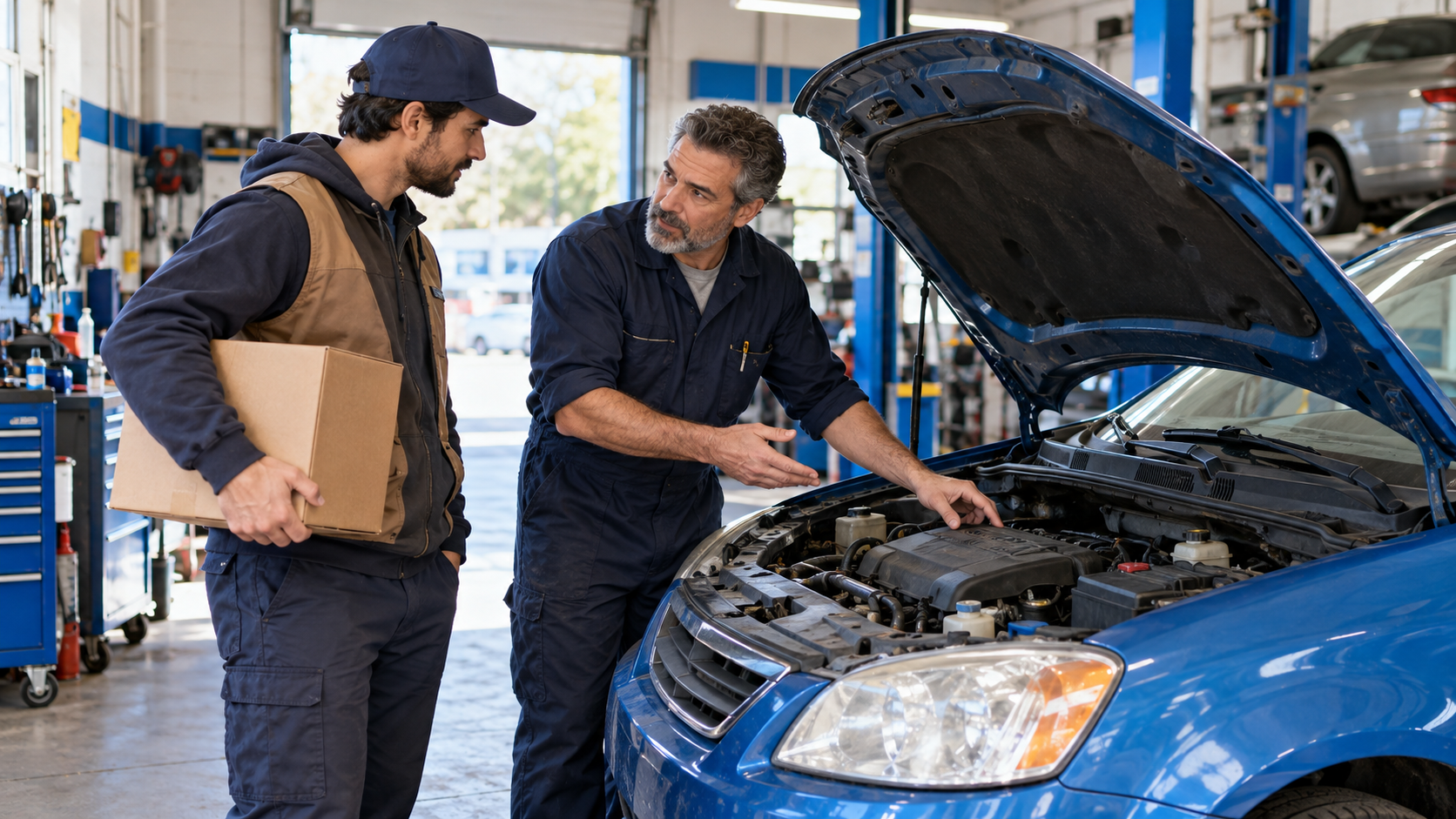
A high-mileage car is not automatically a bad delivery vehicle, and a large repair bill does not automatically mean you should replace it. The useful comparison is the cost and reliability of keeping this car against the full cost of another vehicle for the work you actually do.
Get a clear repair estimate first
Ask a qualified mechanic to identify the repair, explain whether it affects safe operation, and provide an itemized estimate. Ask which work is urgent and which can be monitored. If brakes, tires, steering, suspension, or another safety-critical system is in question, do not keep making delivery trips until the vehicle is safe to drive.
Review the service history and recent repairs. A single repair may be predictable; several unrelated failures close together can point to a larger reliability problem. Ask the mechanic what else is likely to need attention soon, while recognizing that future repairs cannot be predicted with certainty.
Compare the full cost of keeping and replacing
For the keep option, include the proposed repair, likely near-term maintenance, your vehicle’s regular operating cost, and the effect of downtime. For a replacement, include the purchase price, financing interest, taxes and fees, insurance changes, expected operating cost, and the value you could recover by selling your current car. Compare both options over the same time period and delivery mileage.
Do not compare only a repair invoice with a monthly payment. A loan payment can feel smaller while the replacement vehicle creates a larger total cost. A reliable paid-off car may still be the lower-cost choice even when it needs a repair—unless the repair is unsafe, repeated, or likely to be followed by more expensive failures.
Include lost work time without overestimating it
If the car is in the shop, you may lose delivery hours. Estimate the downtime using your own recent net results, not your best single shift. Do not count every unavailable hour as guaranteed lost income; include only the time you realistically would have worked. A repair that gets you back on the road quickly may be valuable even if it does not make the vehicle “like new.”
Check the cost per work mile
Use your own fuel, maintenance, repair, insurance, and depreciation assumptions to compare vehicles. Divide the delivery-related costs by delivery miles over a consistent period. Keep this business-planning estimate separate from tax deductions: the IRS mileage method is a tax calculation and may not equal what your car actually costs to operate.
Consumer Reports recommends following the maintenance schedule for the specific vehicle and notes that repair needs and costs vary by model. Use the vehicle manual and a mechanic’s inspection rather than relying on mileage alone.
A practical decision checklist
- Is the car safe to continue driving?
- What is the written estimate, and what other repairs are likely soon?
- How dependable has the car been over the past year?
- What is the replacement’s full cost, including insurance and financing?
- How much delivery downtime could each choice create?
- Which choice leaves more room for profit using realistic mileage and cost assumptions?
Choose the vehicle that supports safe, dependable work at a cost you can carry. If the numbers are close, get a second inspection and compare the same period and miles before making a major purchase.
Related articles
- comparing vehicles for delivery work
- calculating your personal delivery cost per mile
- saving for your next delivery vehicle