How to Tell Whether a Delivery Zone Is Actually Profitable
A busy delivery zone is not always a profitable one. Learn how mileage, wait time, traffic, drop-off difficulty, and real profit can help you compare different areas.
By TRUE Driver Profit · September 12, 2026
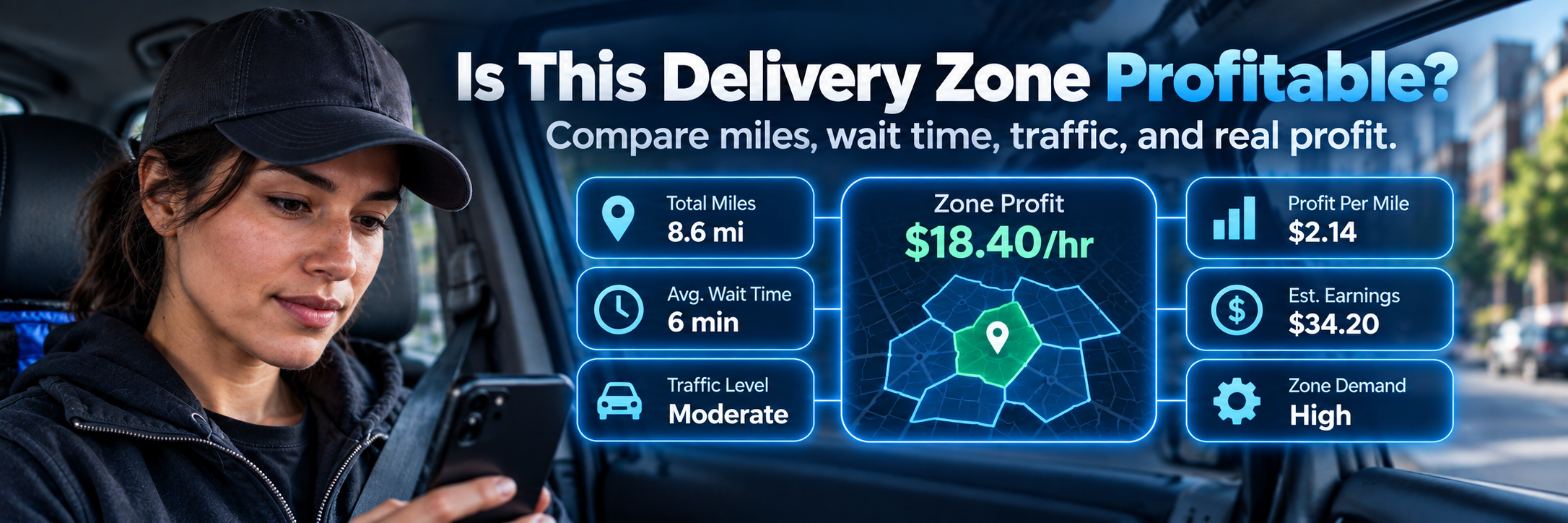
How to Tell Whether a Delivery Zone Is Actually Profitable
A busy delivery zone can look attractive.
More stores, more restaurants, and more orders can make an area seem like the obvious place to work.
But busy does not always mean profitable.
A zone can produce a lot of offers while also creating longer waits, heavier traffic, more difficult drop-offs, extra mileage, and lower profit.
The better question is not:
How busy is this area?
The better question is:
What does this area actually produce after the real cost of working there is counted?
That can happen when those orders require more miles, more waiting, or more difficult driving conditions.
Compare:
Total earnings
Total miles
Total time
Fuel cost
Vehicle cost
TRUE profit
Profit per hour
Profit per mile
Those numbers can tell you much more about a delivery zone than the number of orders you completed.
A zone may have plenty of offers, but those offers may regularly send drivers farther away.
A weaker zone may involve:
Long distances between pickup and drop-off
Frequent return driving
Poor positioning after delivery
Long distances between pickup locations
Higher total mileage for similar earnings
Two zones can produce the same gross earnings while requiring very different amounts of driving.
That difference matters.
Some zones may have strong order volume but slow pickup locations.
But repeated delays across a shift can add up.
If you regularly spend 10 or 15 minutes waiting at several pickup locations, your total working time can increase without increasing your earnings.
That lowers your profit per hour.
When comparing zones, look at how often you are waiting and how long those waits usually last.
Drive time
Fuel use
Idle time
Stress
Late-delivery risk
Total workday length
A zone that performs well in the morning may become much less efficient during afternoon or evening traffic.
That means profitability can change depending on the time of day.
Some zones may have more apartments, gated communities, difficult parking, stairs, or long walks.
When comparing zones, pay attention to how often you deal with:
Apartment complexes
Parking problems
Security gates
Elevators
Stairs
Long walks
Hard-to-find addresses
Repeated difficulties can reduce the number of profitable deliveries you complete in an hour.
Am I still near useful pickup locations?
Do I need to drive back?
How much unpaid mileage usually follows?
Does this area regularly leave me in a good position for the next offer?
A zone that keeps you close to future opportunities may produce better overall results than one that repeatedly sends you away from useful areas.
It shows how much profit the area produces for the time you spend working there.
Driving
Waiting
Pickup time
Drop-off time
Traffic
Repositioning
Return driving
A zone with slightly lower gross earnings may still be stronger if it produces better profit per hour.
Higher fuel costs
More vehicle wear
More maintenance
More depreciation
More unpaid return miles
A zone with fewer orders can sometimes produce better profit per mile if the routes are tighter and more efficient.
A business district may perform well during lunch.
A residential area may improve during dinner.
A shopping area may produce strong orders on weekends.
Heavy traffic may weaken an otherwise profitable zone during rush hour.
Instead of labeling an entire zone as good or bad, compare how it performs at different times.
Delivery demand changes.
Traffic changes.
Weather changes.
Order volume changes.
Compare:
Total profit
Profit per hour
Profit per mile
Miles driven
Wait time
Order count
Drop-off difficulty
Return driving
Over time, patterns become easier to see.
But high activity can hide weak profitability.
You may be accepting more orders while also driving farther, waiting longer, and spending more on your vehicle.
The goal is not to complete the most deliveries.
The goal is to complete the deliveries that produce the strongest return for your time and vehicle.
Your results depend on:
Your vehicle
Your fuel economy
Your delivery style
Your schedule
Your local traffic
Your preferred pickup locations
Your profit goals
That is why your own numbers matter more than general opinions about which areas are busy.
A strong delivery zone may have:
Reasonable mileage
Shorter waits
Manageable traffic
Efficient drop-offs
Good positioning
Strong profit per hour
Strong profit per mile
A weaker zone may be busy but produce poor results once time and vehicle costs are included.
TRUE Driver Profit is designed to help delivery drivers compare earnings, mileage, time, vehicle costs, and real profit across their work.
When you compare zones using actual results instead of activity alone, you can make better decisions about where your time and vehicle are most likely to produce the strongest return.
A busy delivery zone can look attractive.
More stores, more restaurants, and more orders can make an area seem like the obvious place to work.
But busy does not always mean profitable.
A zone can produce a lot of offers while also creating longer waits, heavier traffic, more difficult drop-offs, extra mileage, and lower profit.
The better question is not:
How busy is this area?
The better question is:
What does this area actually produce after the real cost of working there is counted?
Start With Total Profit, Not Order Volume
A zone with more orders may still leave you with less profit.That can happen when those orders require more miles, more waiting, or more difficult driving conditions.
Compare What You Actually Keep
At the end of a shift, look beyond total earnings.Compare:
Total earnings
Total miles
Total time
Fuel cost
Vehicle cost
TRUE profit
Profit per hour
Profit per mile
Those numbers can tell you much more about a delivery zone than the number of orders you completed.
Compare Mileage Between Zones
Some areas require much more driving than others.A zone may have plenty of offers, but those offers may regularly send drivers farther away.
Watch for Spread-Out Deliveries
A profitable zone often keeps your driving efficient.A weaker zone may involve:
Long distances between pickup and drop-off
Frequent return driving
Poor positioning after delivery
Long distances between pickup locations
Higher total mileage for similar earnings
Two zones can produce the same gross earnings while requiring very different amounts of driving.
That difference matters.
Pay Attention to Wait Time
Pickup wait time can change the value of an entire area.Some zones may have strong order volume but slow pickup locations.
Repeated Waiting Can Lower Profit Per Hour
A few extra minutes may not seem important on one order.But repeated delays across a shift can add up.
If you regularly spend 10 or 15 minutes waiting at several pickup locations, your total working time can increase without increasing your earnings.
That lowers your profit per hour.
When comparing zones, look at how often you are waiting and how long those waits usually last.
Traffic Can Change the Real Value of a Zone
A delivery area may look good on a map but perform differently during heavy traffic.Slow Roads Add Time Without Adding Pay
Traffic can increase:Drive time
Fuel use
Idle time
Stress
Late-delivery risk
Total workday length
A zone that performs well in the morning may become much less efficient during afternoon or evening traffic.
That means profitability can change depending on the time of day.
Drop-Off Difficulty Matters
Not every delivery takes the same amount of effort.Some zones may have more apartments, gated communities, difficult parking, stairs, or long walks.
Difficult Drop-Offs Add Hidden Time
A short-mileage delivery can still become inefficient if the final drop-off takes too long.When comparing zones, pay attention to how often you deal with:
Apartment complexes
Parking problems
Security gates
Elevators
Stairs
Long walks
Hard-to-find addresses
Repeated difficulties can reduce the number of profitable deliveries you complete in an hour.
Look at Where Deliveries Leave You
A zone may produce good offers but send you into areas with few nearby pickup opportunities.Positioning Affects the Next Order
After each drop-off, ask:Am I still near useful pickup locations?
Do I need to drive back?
How much unpaid mileage usually follows?
Does this area regularly leave me in a good position for the next offer?
A zone that keeps you close to future opportunities may produce better overall results than one that repeatedly sends you away from useful areas.
Compare Profit Per Hour
Profit per hour is one of the best ways to compare delivery zones.It shows how much profit the area produces for the time you spend working there.
Include the Whole Shift
When comparing zones, include:Driving
Waiting
Pickup time
Drop-off time
Traffic
Repositioning
Return driving
A zone with slightly lower gross earnings may still be stronger if it produces better profit per hour.
Compare Profit Per Mile
Profit per mile helps you see how efficiently a zone uses your vehicle.More Miles Can Quietly Reduce Profit
If one zone requires significantly more driving, it may also create:Higher fuel costs
More vehicle wear
More maintenance
More depreciation
More unpaid return miles
A zone with fewer orders can sometimes produce better profit per mile if the routes are tighter and more efficient.
Compare Different Times of Day
A delivery zone does not perform the same way all day.One Area Can Be Strong at One Time and Weak at Another
For example:A business district may perform well during lunch.
A residential area may improve during dinner.
A shopping area may produce strong orders on weekends.
Heavy traffic may weaken an otherwise profitable zone during rush hour.
Instead of labeling an entire zone as good or bad, compare how it performs at different times.
Look for Patterns Over Several Shifts
One good or bad shift is not enough to judge an area.Delivery demand changes.
Traffic changes.
Weather changes.
Order volume changes.
Use Several Shifts Before Making a Decision
Track your results across multiple days.Compare:
Total profit
Profit per hour
Profit per mile
Miles driven
Wait time
Order count
Drop-off difficulty
Return driving
Over time, patterns become easier to see.
Busy Does Not Automatically Mean Better
A zone with constant offers can feel productive.But high activity can hide weak profitability.
You may be accepting more orders while also driving farther, waiting longer, and spending more on your vehicle.
The goal is not to complete the most deliveries.
The goal is to complete the deliveries that produce the strongest return for your time and vehicle.
Build Your Own Zone Comparison
Your best zone may not be the same as another driver's.Your results depend on:
Your vehicle
Your fuel economy
Your delivery style
Your schedule
Your local traffic
Your preferred pickup locations
Your profit goals
That is why your own numbers matter more than general opinions about which areas are busy.
Let the Numbers Decide
Instead of assuming a zone is profitable because it has a lot of offers, compare what the area actually produces.A strong delivery zone may have:
Reasonable mileage
Shorter waits
Manageable traffic
Efficient drop-offs
Good positioning
Strong profit per hour
Strong profit per mile
A weaker zone may be busy but produce poor results once time and vehicle costs are included.
TRUE Driver Profit is designed to help delivery drivers compare earnings, mileage, time, vehicle costs, and real profit across their work.
When you compare zones using actual results instead of activity alone, you can make better decisions about where your time and vehicle are most likely to produce the strongest return.
Want to compare strategies with other delivery drivers? Join the conversation in our Facebook group.