Delivery Driver Profit Guide
Learn how payout, mileage, time, fuel, vehicle costs, return miles, and weekly review work together to reveal a delivery driver’s TRUE profit.
By TRUE Driver Profit · September 12, 2026
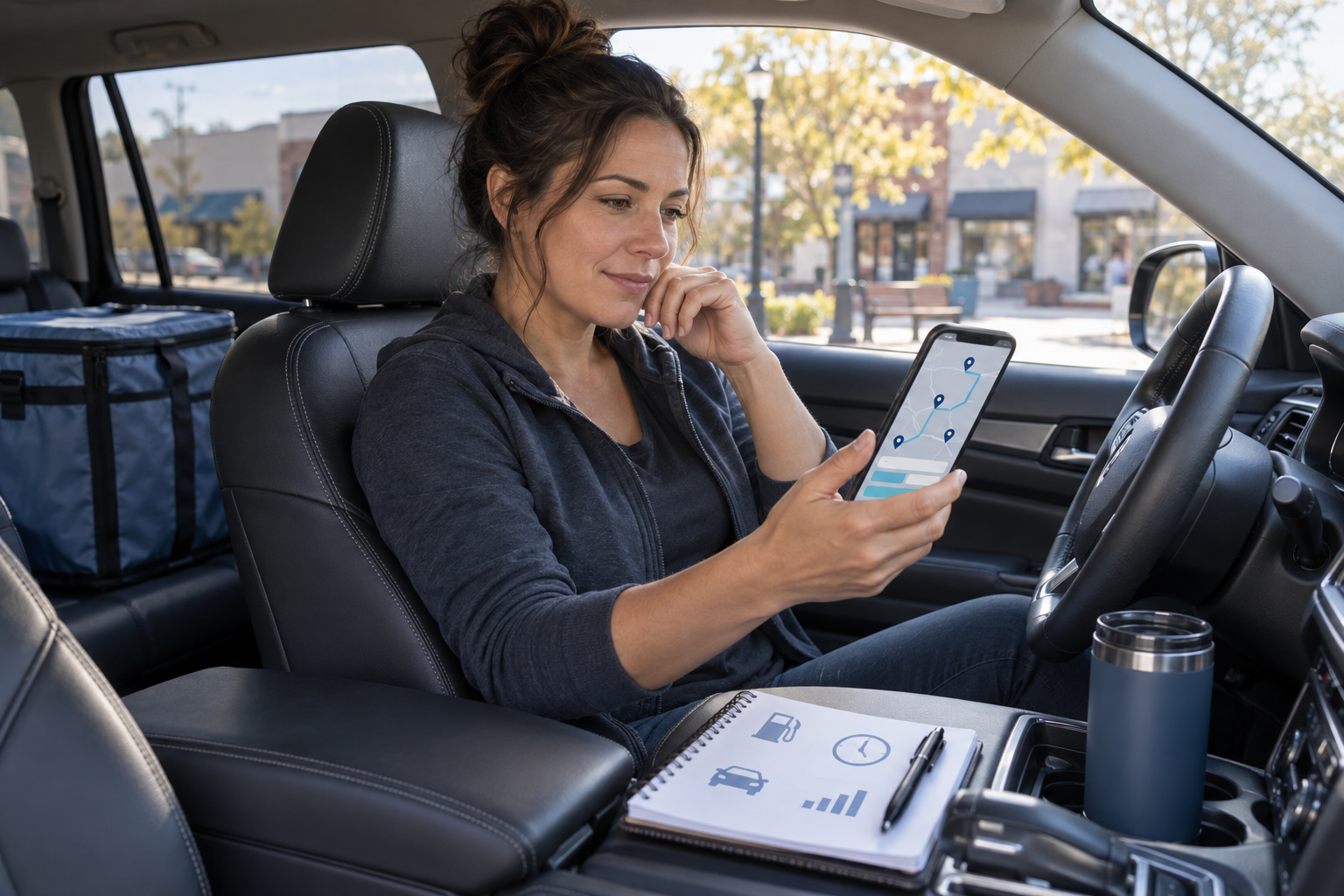
Every delivery offer shows you a payout. None of them show you what you keep. The difference between those two numbers is what TRUE Driver Profit calls TRUE Profit: what is left after the miles you drive, the time you spend, the fuel you burn, and the wear you put on your vehicle.
This guide pulls together everything we have written for delivery drivers about that difference. Read it top to bottom once, then come back to whichever section matches the decision in front of you.
What "profit" means for a delivery driver
Most drivers start by watching total earnings at the end of the day. That number feels like progress, but it says nothing about how far you drove or how long you were out. Two drivers can finish a day with the same earnings and keep very different amounts.
The useful measures are profit per hour and profit per mile. One tells you whether your time was worth it, the other tells you whether your driving was. Neither is the whole story on its own.
- How to Calculate Your Real Profit on a Delivery Offer
- Why Gross Earnings Can Be Misleading for Gig Drivers
- What Is a Good Profit Per Mile for Delivery Drivers?
- How Do Delivery Drivers Calculate Profit Per Hour?
- Profit Per Hour vs. Profit Per Mile: Which Matters More for Delivery Drivers?
- Busy Day vs. Profitable Day for Delivery Drivers
- Why Two Drivers Make Different Profit
- How Much Do Delivery Drivers Actually Make After Expenses?
- The Highest-Paying Delivery App Isn’t Always the Most Profitable
- Is Gig Delivery Still Worth It in 2026?
- Which Delivery App Pays the Most?
- Should Delivery Drivers Set a Daily Profit Goal or an Earnings Goal?
- How Many Deliveries Should You Complete in an Hour?
Deciding whether an offer is worth taking
You usually have a few seconds to decide. That is not enough time to do arithmetic, which is why it helps to know your own numbers before the offer appears.
Payout per mile and your own minimum
A per-mile rule you borrowed from someone else is only as good as their vehicle and their market. Your minimum should come from your own vehicle costs and the hourly goal you are driving toward.
Offers that look better than they are
A large payout can hide a long return drive. A short trip can hide a long wait. Comparing two offers that pay the same amount is often the fastest way to see what you are really being paid for.
- How Much Should a Delivery Offer Pay Per Mile?
- How to Set Your Own Minimum for a Delivery Offer
- How Many Miles Is Too Many for a Delivery Offer?
- How to Compare Two Delivery Offers With the Same Payout
- When a High-Paying Delivery Offer Is Actually a Trap
- Why Short Delivery Offers Are Not Always the Best Offers
- Should Delivery Drivers Count Estimated Tips as Guaranteed Income?
- How to Decide if a Delivery Is Worth Taking When You're Far From the Pickup
- Why Your First Order of the Day Can Affect Your Entire Shift
- Does a Higher Acceptance Rate Actually Make Delivery Drivers More Money?
- Are Delivery Bonuses, Quests, and Incentives Really Worth Chasing?
- Is It Better to Take One Long Delivery or Two Short Ones?
- When Should Delivery Drivers Reject an Offer?
The miles nobody pays you for
Offer screens describe the miles between the pickup and the drop-off. Your vehicle does not know the difference between those miles and the ones you drive to reach the pickup, or the ones you drive to get back to where the orders are.
Once you start counting every mile of the trip, some offers change character completely, and so do some zones.
- Should Delivery Drivers Count Return Miles?
- How Dead Miles Quietly Lower Your Delivery Profit
- Why Where a Delivery Ends Can Matter as Much as What It Pays
- How to Tell Whether a Delivery Zone Is Actually Profitable
- The Hidden Cost of Driving to a Busy Area With No Guaranteed Order
- How to Estimate the Real Miles of a Delivery Offer
Time, waiting, and routes
Time is the cost drivers notice least while it is happening. Standing in a store, hunting for an apartment door, or circling a parking lot all count against your profit per hour even though nothing about the payout changes.
Multi-stop routes cut both ways. Extra stops add time, but tightly grouped stops can cover more ground per mile than single orders do.
- The Hidden Cost of Waiting at Pickup
- How Long Should Delivery Drivers Wait for an Order?
- How Difficult Drop-Offs Eat Into Delivery Profit
- Why Your Best Driving Hours Matter More Than Your Longest Hours
- Are Multi-Stop Delivery Offers Worth It?
- When More Stops Can Actually Make a Delivery Route Better
- What Idle Time Really Costs a Delivery Driver
- How to Know When It’s Time to End Your Delivery Shift
- Is Multi-Apping Actually More Profitable for Delivery Drivers?
- Are Shop and Deliver Orders Worth It?
- Should Delivery Drivers Stay Parked or Reposition Between Orders?
- How Can Delivery Drivers Handle Apartment Deliveries More Efficiently?
- How Should Delivery Drivers Organize Multiple Orders?
Vehicle and operating expenses
Fuel is the expense you feel. Vehicle wear is the one you pay later, in tires, brakes, oil, and the value your vehicle loses as the odometer climbs. Both belong in the cost of every mile you drive.
Separating fixed expenses from variable ones is what makes a break-even number possible, and a break-even number is what turns a vague sense of "that offer felt low" into something you can check.
- Fixed Costs vs. Variable Costs for Delivery Drivers
- How Gas Prices Change Which Delivery Offers Are Worth Taking
- How Vehicle Wear Quietly Cuts Into Delivery Profit
- How to Calculate Your Break-Even Point as a Delivery Driver
- How Weather Can Change the Real Profit of a Delivery Offer
- Do Delivery Drivers Need Special Car Insurance?
- How Much Should Delivery Drivers Set Aside for Car Maintenance?
- How to Calculate Your Personal Delivery Cost Per Mile
- Should Delivery Drivers Set Aside Money for Their Next Vehicle?
Tracking, weekly review, and taxes
Good decisions on future offers come from records of past ones. If you log payout, miles, and time for each order, patterns show up after a week that no single day could reveal.
Tracking profit and preparing taxes are related but separate jobs, and the records that help with one usually help with the other.
- What Should Delivery Drivers Track After Every Order?
- How to Review Your Delivery Profit at the End of the Week
- How One Bad Order Can Hurt an Entire Shift
- Gig Delivery Driver Reviewing Work Expenses Taxes
- How to Track Mileage for Delivery Drivers
- How Much Should Delivery Drivers Set Aside for Taxes?
How to use this guide
Start with how to calculate your real profit on a delivery offer, then work out your break-even point so you know what an offer has to clear. Once those two numbers are yours, set your own minimum and check it against your results in a weekly review.
TRUE Driver Profit is built for that whole loop: logging orders, miles, and expenses as you drive, then turning them into TRUE Profit, weekly reports, and records you can use at tax time.