The Hidden Cost of Waiting at Pickup
A delivery offer can look profitable until you spend 10, 20, or 30 minutes waiting for the order. See how pickup wait time affects your hourly profit and the real value of a delivery.
By TRUE Driver Profit · September 10, 2026
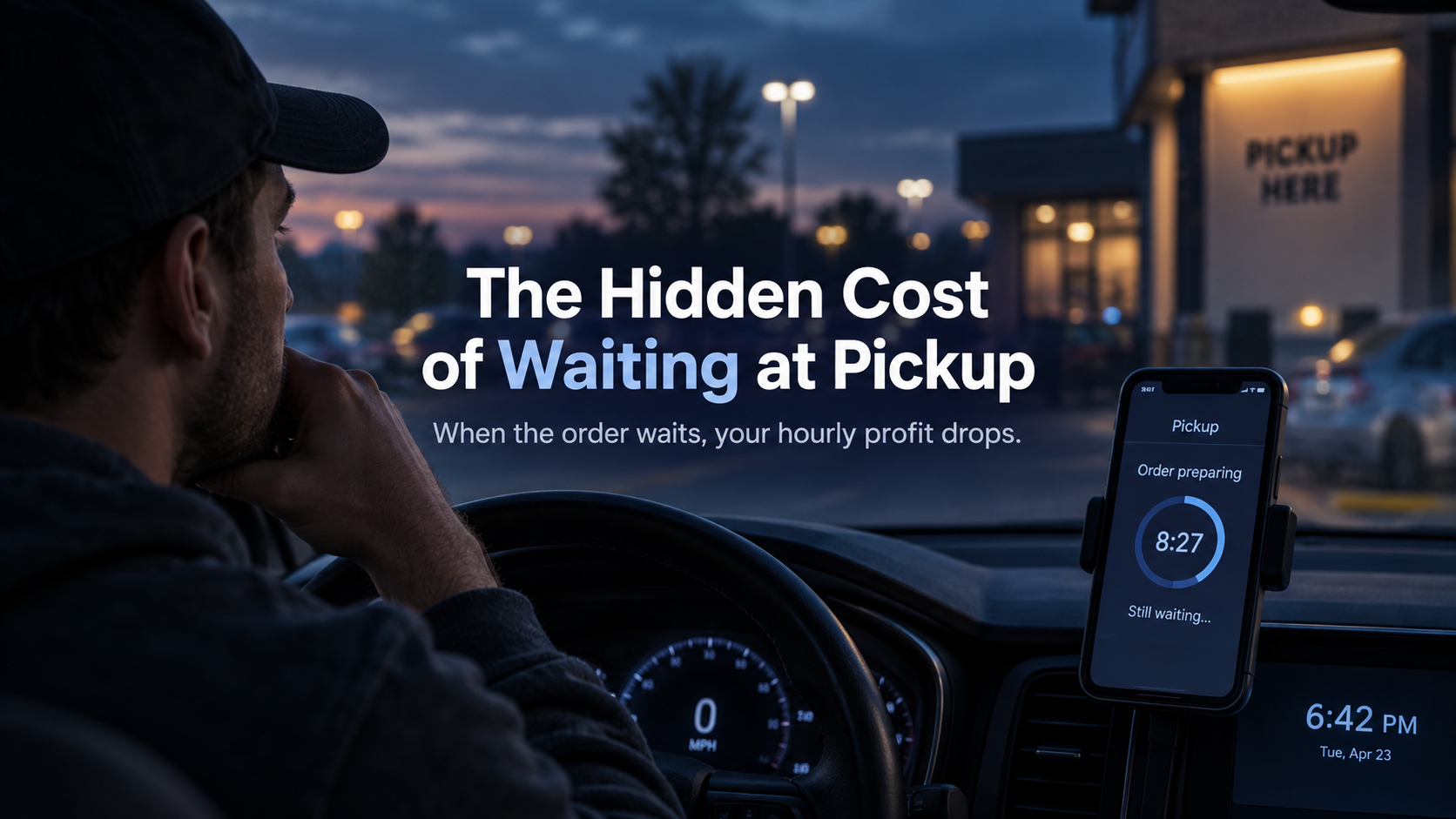
The Hidden Cost of Waiting at Pickup
A delivery offer can look great when you first accept it.
The payout is good.
The mileage is reasonable.
The customer is not far away.
Then you arrive at the pickup location and wait.
Five minutes turns into 10.
Ten turns into 20.
Before long, an offer that looked profitable has taken much more of your time than you expected.
That waiting time matters.
The clock keeps running even when your wheels are not moving.
Wait time is different.
You usually do not know exactly how long you will be waiting until you arrive.
That makes it one of the hardest parts of a delivery to predict.
A $15 offer that takes 25 minutes can be a very different decision from a $15 offer that takes 50 minutes.
The payout did not change.
The miles may not have changed.
Your time did.
If your costs leave you with $12 in profit, that could represent a strong hourly result.
Now imagine you wait an additional 20 minutes at pickup.
The same $12 in profit now takes almost an hour of your time.
Your profit per mile may still look good because the vehicle did not travel many additional miles.
Your profit per hour can tell a very different story.
That is why time and mileage need to be looked at together.
Depending on the situation, you may still be:
Running the engine
Using air conditioning or heat
Burning fuel
Using your phone and data
Giving up time that could have been spent completing another delivery
The biggest cost is often opportunity.
While you are waiting for one order, you are unavailable for another.
It can change what happens afterward.
You may miss a busy period.
You may complete fewer deliveries during the hour.
You may arrive at the customer later.
You may get back to your pickup area after demand has slowed.
That means one long wait can affect more than one order.
It can affect an entire part of your shift.
Not every wait is a reason to leave
Some waits are worth it.
A high-paying offer may justify a longer pickup time.
A short-mile delivery may still produce a good result even with a delay.
You may also know that a particular pickup location usually gets orders out quickly after a certain point.
The goal is not to say that waiting is always bad.
The goal is to understand what the waiting is doing to the value of the offer.
One delayed order does not tell you much by itself.
Patterns are more useful.
Maybe a certain pickup location regularly takes 20 minutes.
Maybe one time of day is consistently slower.
Maybe orders that look excellent on payout keep producing weak hourly results because of pickup delays.
Those patterns can help you make better decisions later.
A $20 offer is not always a $20 opportunity
Imagine two offers.
Offer A pays $20 and takes 35 minutes from acceptance to completion.
Offer B also pays $20, but a 25-minute pickup delay pushes the total time close to an hour.
Both offers put $20 on the screen.
They do not use your time the same way.
That difference becomes important when you look at several hours of work instead of one delivery.
The driver completing more profitable orders during the same period may finish the day with better results even if some individual payouts were smaller.
Your time has to be part of the decision
Mileage is important because your vehicle costs money to operate.
Time is important because you only have so many working hours in a day.
An offer that protects one but wastes the other may not be as strong as it first appears.
That is why looking at TRUE profit together with profit per hour and profit per mile can give you a clearer picture.
How long have I already been waiting?
What was the expected total time for this order?
How much does the offer pay?
How far will I still have to drive?
Where will the delivery leave me afterward?
What is this delay doing to my profit per hour?
You do not need to calculate every second.
The goal is simply to recognize when waiting has become a meaningful part of the cost of the delivery.
TRUE Driver Profit helps you see the time behind the payout
TRUE Driver Profit is designed to help drivers look at more than the number shown on the offer screen.
Time is part of the real picture.
By tracking the time involved in your deliveries along with payout, mileage, fuel, vehicle cost, and return driving, you can get a clearer view of what you are actually earning.
Sometimes the difference between a great offer and an average one is not the payout.
It is the 20 minutes you spent waiting for it.
A delivery offer can look great when you first accept it.
The payout is good.
The mileage is reasonable.
The customer is not far away.
Then you arrive at the pickup location and wait.
Five minutes turns into 10.
Ten turns into 20.
Before long, an offer that looked profitable has taken much more of your time than you expected.
That waiting time matters.
The clock keeps running even when your wheels are not moving.
Why waiting is easy to overlook
Drivers naturally pay attention to payout and mileage because those numbers are easy to see before accepting an offer.Wait time is different.
You usually do not know exactly how long you will be waiting until you arrive.
That makes it one of the hardest parts of a delivery to predict.
A $15 offer that takes 25 minutes can be a very different decision from a $15 offer that takes 50 minutes.
The payout did not change.
The miles may not have changed.
Your time did.
Waiting can lower your profit per hour
Suppose you accept an offer that should take about 30 minutes from start to finish.If your costs leave you with $12 in profit, that could represent a strong hourly result.
Now imagine you wait an additional 20 minutes at pickup.
The same $12 in profit now takes almost an hour of your time.
Your profit per mile may still look good because the vehicle did not travel many additional miles.
Your profit per hour can tell a very different story.
That is why time and mileage need to be looked at together.
A parked car still has a cost
Waiting does not add as much vehicle wear as driving, but it is not always free.Depending on the situation, you may still be:
Running the engine
Using air conditioning or heat
Burning fuel
Using your phone and data
Giving up time that could have been spent completing another delivery
The biggest cost is often opportunity.
While you are waiting for one order, you are unavailable for another.
One delay can affect the rest of your shift
A long pickup wait does not always end when the order finally comes out.It can change what happens afterward.
You may miss a busy period.
You may complete fewer deliveries during the hour.
You may arrive at the customer later.
You may get back to your pickup area after demand has slowed.
That means one long wait can affect more than one order.
It can affect an entire part of your shift.
Not every wait is a reason to leave
Some waits are worth it.
A high-paying offer may justify a longer pickup time.
A short-mile delivery may still produce a good result even with a delay.
You may also know that a particular pickup location usually gets orders out quickly after a certain point.
The goal is not to say that waiting is always bad.
The goal is to understand what the waiting is doing to the value of the offer.
Patterns matter more than one bad wait
Almost every delivery driver will eventually get stuck waiting.One delayed order does not tell you much by itself.
Patterns are more useful.
Maybe a certain pickup location regularly takes 20 minutes.
Maybe one time of day is consistently slower.
Maybe orders that look excellent on payout keep producing weak hourly results because of pickup delays.
Those patterns can help you make better decisions later.
A $20 offer is not always a $20 opportunity
Imagine two offers.
Offer A pays $20 and takes 35 minutes from acceptance to completion.
Offer B also pays $20, but a 25-minute pickup delay pushes the total time close to an hour.
Both offers put $20 on the screen.
They do not use your time the same way.
That difference becomes important when you look at several hours of work instead of one delivery.
The driver completing more profitable orders during the same period may finish the day with better results even if some individual payouts were smaller.
Your time has to be part of the decision
Mileage is important because your vehicle costs money to operate.
Time is important because you only have so many working hours in a day.
An offer that protects one but wastes the other may not be as strong as it first appears.
That is why looking at TRUE profit together with profit per hour and profit per mile can give you a clearer picture.
What should drivers pay attention to?
When you are waiting at pickup, consider:How long have I already been waiting?
What was the expected total time for this order?
How much does the offer pay?
How far will I still have to drive?
Where will the delivery leave me afterward?
What is this delay doing to my profit per hour?
You do not need to calculate every second.
The goal is simply to recognize when waiting has become a meaningful part of the cost of the delivery.
TRUE Driver Profit helps you see the time behind the payout
TRUE Driver Profit is designed to help drivers look at more than the number shown on the offer screen.
Time is part of the real picture.
By tracking the time involved in your deliveries along with payout, mileage, fuel, vehicle cost, and return driving, you can get a clearer view of what you are actually earning.
Sometimes the difference between a great offer and an average one is not the payout.
It is the 20 minutes you spent waiting for it.