Is Gig Delivery Still Worth It in 2026?
Gig delivery can still work for some drivers, but gross earnings alone cannot tell you whether it is worth it. The answer depends on your vehicle, mileage, time, costs, and what you actually keep.
By TRUE Driver Profit · September 12, 2026
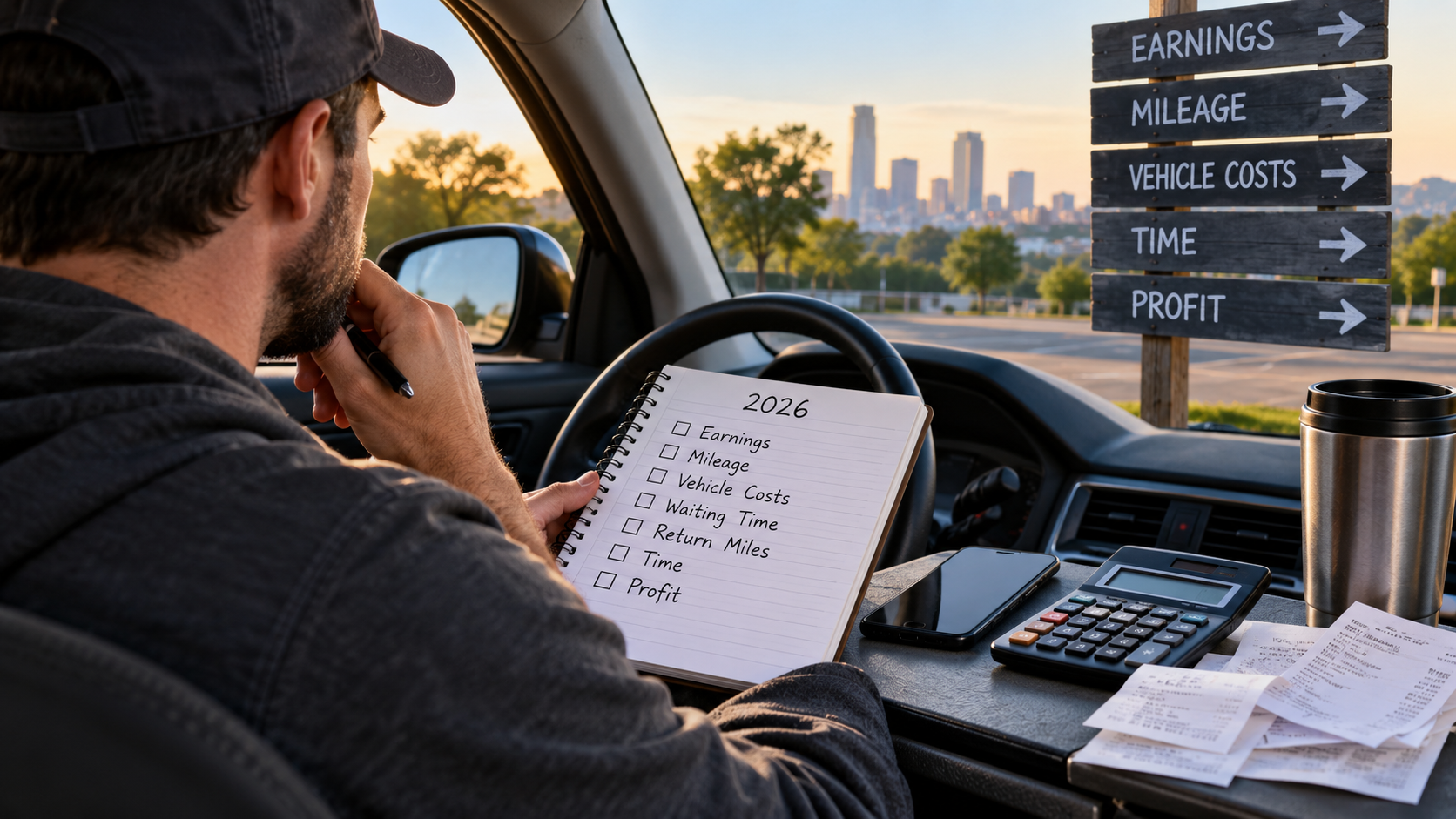
Gig delivery has changed.
Fuel prices change.
Vehicle costs change.
Offer quality changes.
Competition changes.
Drivers also become more experienced and begin looking at the work differently.
That leads to a question a lot of delivery drivers eventually ask:
Is gig delivery still worth it in 2026?
The answer is not a simple yes or no.
For some drivers, delivery work can still produce worthwhile profit.
For others, the combination of mileage, waiting, vehicle costs, and weak offers can make the numbers difficult to justify.
The important question is not whether gig delivery is worth it for everybody.
It is whether it is worth it for you.
Start With What You Actually Keep
One of the biggest mistakes when judging gig delivery is looking only at gross earnings.
If you earned $900 this week, that tells you how much money came in.
It does not tell you what the work produced after expenses.
Your vehicle helped generate that $900.
So did your time.
Those resources have value.
Gross Earnings and Profit Are Different
Delivery work can involve:
- Fuel
- Tires
- Oil changes
- Brakes
- Maintenance
- Repairs
- Vehicle depreciation
- Business supplies
- Phone-related expenses
- Unpaid driving
- Waiting time
A driver who grosses $900 with relatively low mileage may have a very different week from a driver who grosses $900 while driving hundreds of additional miles.
The gross earnings are identical.
The TRUE profit may not be.
Your Vehicle Can Determine Whether Delivery Works
Gig delivery is unusually dependent on the vehicle being used.
A driver with a fuel-efficient vehicle and reasonable operating costs may have much more room for profit.
A driver with a vehicle that uses more fuel or requires expensive maintenance may need stronger offers to reach the same result.
Fuel Economy Is Only Part of the Equation
Drivers often focus heavily on gas mileage.
It matters.
But fuel is only one part of operating a vehicle.
Every delivery mile also contributes to wear.
Your tires get closer to replacement.
Your brakes get closer to service.
Your oil gets closer to the next change.
Your vehicle accumulates mileage.
Those costs may not appear today, but the driving is creating them.
Mileage Matters More Than Many Drivers Realize
A delivery driver can put a large number of miles on a vehicle while working.
Some of those miles are obvious.
Others are easy to overlook.
The Offer Mileage May Not Be Your Total Mileage
Your actual driving can include:
- Driving to the pickup
- Driving from pickup to customer
- Driving between delivery areas
- Returning from a distant drop-off
- Repositioning while waiting for another order
- Driving home when the shift ends
Those miles still use fuel and vehicle life even when there is no active payout attached to them.
Return Miles Can Change the Entire Order
Imagine receiving an offer that pays $24 for a relatively long trip.
At first glance, the payout may look attractive.
But what happens after the delivery?
If the customer is far outside your normal pickup area, you might have to drive back before you have a realistic chance of receiving another useful offer.
That return drive changes the economics of the trip.
Where the Delivery Ends Matters
An order that ends near another useful pickup area can keep the workday moving.
An order that leaves you far away can create:
- Unpaid mileage
- Additional fuel use
- More vehicle wear
- Lost time
- Lower profit per hour
This is why two orders with similar payouts can produce very different results.
Waiting Time Can Quietly Reduce Profit
Not every expensive part of delivery work happens while the wheels are moving.
Sometimes the cost is time.
A driver may spend part of a shift:
- Waiting for an order
- Waiting at pickup
- Waiting for an order to be prepared
- Waiting for another useful offer after a drop-off
- Waiting in a busy area that never produces a worthwhile order
Waiting Changes Your Hourly Result
Suppose you earn $80 from completed deliveries.
If those deliveries took three hours, the gross hourly number looks strong.
But if your entire workday lasted five hours because of waiting and repositioning, the real hourly picture is different.
Your time did not stop counting simply because the app was not paying you.
Longer Hours Do Not Automatically Mean Better Results
It is easy to think that staying out longer will solve a slow day.
Sometimes it does.
Sometimes it makes the day worse.
Extra Hours Need to Produce Extra Profit
Imagine your first four hours produce strong orders.
Then business slows down.
You stay out another three hours, drive around, wait, and accept weaker orders because you want to increase the day’s earnings total.
Your gross earnings may increase.
But your profit per hour could fall.
That means a longer day was not necessarily a better day.
Offer Selection Makes a Major Difference
Gig delivery does not pay drivers the same amount for every mile or every minute.
That means profitability can depend heavily on which offers you accept.
A Higher Payout Is Not Always the Better Offer
Compare two offers.
Offer A pays $18.
Offer B pays $14.
It would be easy to assume Offer A is better.
But suppose Offer A requires much more mileage, takes considerably longer, and leaves you far from another pickup area.
Offer B is shorter, faster, and keeps you near your next opportunity.
The smaller payout could produce more profit for the time and vehicle use involved.
Busy Does Not Always Mean Profitable
A driver can stay busy all day and still have disappointing results.
Completing order after order can feel productive.
But activity and profitability are not the same thing.
Measure the Work, Not Just the Number of Orders
A busy shift can still include:
- Too much mileage
- Long waits
- Low-paying offers
- Difficult drop-offs
- Expensive return trips
- Weak profit per hour
What matters is not simply how many deliveries you completed.
What matters is what those deliveries produced after their costs.
Delivery Areas Can Produce Different Results
Where you work can have a major effect on profitability.
A busy delivery area may have many offers.
That does not guarantee they are good offers.
Another area may generate fewer offers but require less mileage or less waiting.
More Orders Do Not Automatically Mean More Profit
When comparing areas, look at:
- Gross earnings
- Total mileage
- Total work time
- Waiting time
- Return miles
- Vehicle costs
- TRUE profit
- Profit per hour
- Profit per mile
The strongest area is the one that works best with your actual numbers.
The Best Time to Drive Matters
Some hours can produce significantly better results than others.
You may discover that certain parts of the day consistently give you:
- Better payouts
- Shorter waits
- More efficient routes
- Less traffic
- Better profit per hour
You May Not Need to Drive All Day
If your strongest results happen during a few specific windows, driving only those periods may make more sense than staying online for many additional hours.
This is another reason total weekly earnings alone can be misleading.
One driver may earn $1,000 by working a very long week.
Another may earn less gross income while producing stronger profit per hour and putting far fewer miles on the vehicle.
Know Your Break-Even Point
Before deciding whether delivery work is worth doing, it helps to know what it costs you to operate.
Your break-even point is the point where your income covers your business costs but has not yet produced meaningful profit.
Above Zero Profit Does Not Automatically Mean a Good Offer
An order could leave you with a few dollars after vehicle costs but require a large amount of time.
That may not meet your goals.
Knowing your break-even point gives you a starting line.
Your personal profit goals determine how far above that line an offer needs to be.
Profit Per Mile Helps Protect Your Vehicle
Profit per mile helps answer an important question:
How effectively did your vehicle produce profit?
If two shifts generate the same TRUE profit but one requires far fewer miles, the lower-mileage shift may be much better for your vehicle.
Mileage Has a Long-Term Effect
High mileage can contribute to:
- More frequent maintenance
- Faster tire replacement
- More repairs
- Faster depreciation
- Earlier vehicle replacement
Those costs are part of the long-term economics of delivery work.
Profit Per Hour Helps Protect Your Time
Profit per hour answers a different question:
Was the time worth it?
A delivery can have strong profit per mile but take too long.
Another can have a strong hourly result but require excessive mileage.
That is why both measurements matter.
Look at the Two Numbers Together
Profit per mile helps measure vehicle efficiency.
Profit per hour helps measure time efficiency.
TRUE profit shows what remains.
Together, they provide a much clearer picture of whether your delivery work is actually performing well.
Your Personal Situation Matters
There is no universal answer to whether gig delivery is worth it.
Drivers have different:
- Vehicles
- Fuel economy
- Insurance costs
- Maintenance costs
- Delivery areas
- Schedules
- Income goals
- Driving strategies
A delivery strategy that works for one driver may perform poorly for another.
Your Own History Is More Valuable Than Someone Else’s Screenshot
Drivers often share impressive earnings screenshots.
Those screenshots rarely show the full picture.
They may not show:
- Mileage
- Fuel
- Vehicle costs
- Waiting
- Return miles
- Hours actually worked
Without those numbers, it is impossible to know what the driver truly kept.
Your own records are far more useful for making decisions about your work.
Do Not Ignore Taxes
Gig workers also need to consider tax obligations.
Tax treatment is different from simply calculating the operating profit of a shift.
Keeping accurate mileage, income, and expense records can make it much easier to understand the business side of delivery work and prepare for tax time.
Tax rules can change, so drivers should use current IRS guidance or speak with a qualified tax professional when making tax decisions.
Look at a Full Week Instead of One Great Day
One unusually strong Saturday does not tell you whether delivery work is consistently profitable.
Neither does one terrible Tuesday.
Look for Patterns
Review several shifts or an entire week.
Compare:
- Total gross earnings
- Total business mileage
- Total hours
- Fuel
- Vehicle costs
- TRUE profit
- Profit per mile
- Profit per hour
Then ask what produced the strongest results.
You may find that certain days, times, areas, or types of offers consistently work better for you.
Know When a Strategy Needs to Change
If your results are getting weaker, quitting delivery work is not necessarily the first answer.
Sometimes the strategy needs to change.
You might need to:
- Drive different hours
- Raise your minimum acceptable offer
- Avoid certain long-distance trips
- Stop chasing busy areas
- Reduce unnecessary repositioning
- Pay closer attention to return mileage
- End slow shifts earlier
Measure the Change
Try a different strategy and compare the results.
If your TRUE profit, profit per hour, or profit per mile improves, you have evidence that the change helped.
If it does not, try something else.
When Gig Delivery May Not Be Worth It
There can also be situations where the numbers simply do not work.
Warning signs can include:
- Consistently weak TRUE profit
- Excessive business mileage
- Vehicle costs consuming too much income
- Long unpaid return trips
- Large amounts of waiting
- Profit per hour falling below your goal
- Frequent repairs caused by heavy driving
- Having to accept poor offers just to stay busy
If these patterns continue even after changing your strategy, delivery work may no longer be producing the result you need.
That is useful information.
When Gig Delivery Can Still Work
Gig delivery can still make sense when the numbers support it.
That may mean:
- You know your vehicle costs
- You control unnecessary mileage
- You choose offers carefully
- You understand your strongest driving times
- You account for return miles
- You track waiting
- You know your minimum
- You review your actual results
- You focus on profit rather than chasing gross earnings
Those habits do not guarantee that every shift will be great.
They help you recognize which work is actually worth doing.
So, Is Gig Delivery Still Worth It in 2026?
The answer depends on what you keep.
Not what the app says you earned.
Not what another driver posted online.
Not how busy the day felt.
Not how many orders you completed.
Your own numbers provide the answer.
If your delivery work consistently produces acceptable TRUE profit, profit per hour, and profit per mile after considering your vehicle and your time, then gig delivery may still be worthwhile for you.
If those numbers consistently fall short, the answer may be different.
The key is knowing the difference.
TRUE Driver Profit is designed to help delivery drivers see the complete picture by tracking earnings, mileage, time, vehicle costs, return driving, and what remains after the cost of doing the work.
Because the question is not simply whether gig delivery still pays.
The better question is whether it still pays you enough.