How Weather Can Change the Real Profit of a Delivery Offer
Rain, snow, heat, and storms can change more than driving conditions. Learn how slower routes, extra waiting, fuel use, and difficult drop-offs can reduce real delivery profit.
By TRUE Driver Profit · September 12, 2026
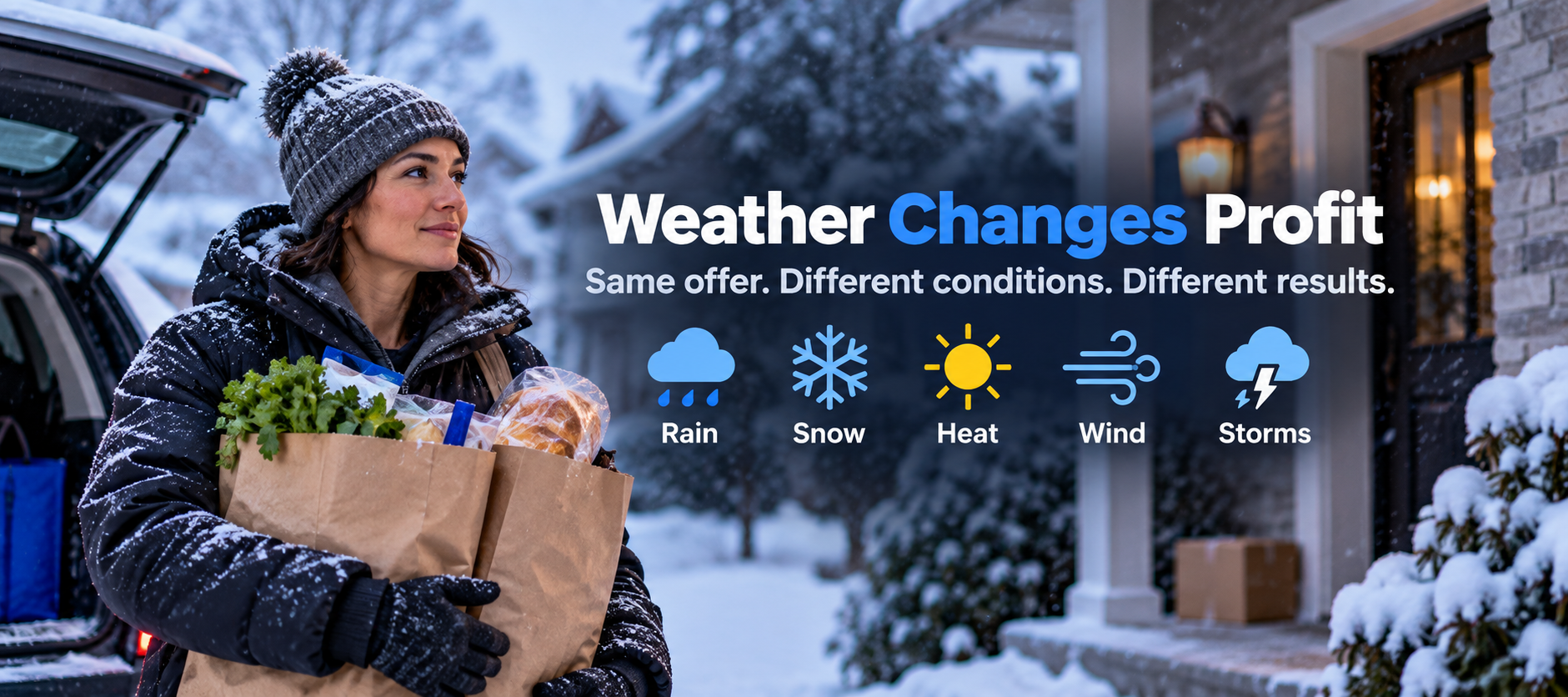
Weather can change a delivery offer before you even leave the parking lot.
The payout may stay the same.
The mileage may stay the same.
But rain, snow, heat, wind, and storms can change how long the trip takes, how much fuel you use, how difficult the drop-off becomes, and how much profit is left when the delivery is finished.
That means weather is not just a driving condition.
It can become a profitability factor.
Weather Can Change the Real Time of a Delivery
Bad weather often slows everything down.
Drivers may need to reduce speed, allow more stopping distance, deal with poor visibility, or take longer routes.
More Time Can Lower Profit Per Hour
An offer that normally takes 25 minutes may take 40 minutes during heavy rain or snow.
The payout does not automatically increase just because the trip took longer.
That extra time can reduce profit per hour even when the delivery still looks good on the offer screen.
Rain Can Add More Than Driving Time
Rain affects more than the road.
It can also slow down pickups and drop-offs.
Wet Conditions Can Make Simple Stops Take Longer
Rain can create:
Slower loading
Longer walks
More careful driving
More time finding covered entrances
More time protecting groceries or packages
Extra parking difficulty
Those added minutes may seem small one at a time.
Across several deliveries, they can reduce the efficiency of the whole shift.
Snow and Ice Can Change the Route Completely
Snow and ice can make a normal route much more expensive in time and mileage.
The Shortest Route May Not Be the Best Route
Drivers may need to avoid:
Steep roads
Unplowed streets
Unsafe driveways
Back roads
Flooded or icy areas
A route that normally takes eight miles may require a safer detour.
That means the actual trip can become longer than the mileage shown when the offer was accepted.
Bad Weather Can Increase Fuel Use
Weather can also affect how much fuel your vehicle uses.
Slow Traffic and Idling Add Cost
Heavy rain, snow, storms, and congestion can lead to:
More idling
Lower average speeds
Longer travel time
More stop-and-go driving
More use of heat or air conditioning
Those factors can increase fuel consumption.
The difference on one order may be small, but across a full shift it can add up.
Extreme Heat Can Reduce Efficiency Too
Hot weather may not slow traffic the way snow does, but it can still affect profitability.
Heat Can Add Time and Vehicle Use
During extreme heat, drivers may spend more time:
Running air conditioning
Keeping temperature-sensitive orders protected
Finding shaded parking
Managing longer walks carefully
Waiting in a running vehicle between orders
Those things can increase fuel use and total working time.
Storms Can Create Longer Wait Times
Weather can affect pickup locations too.
Busy stores and restaurants may fall behind when roads are bad or order volume increases.
Pickup Delays Can Change a Strong Offer
Imagine an offer with a good payout and reasonable mileage.
You arrive at pickup and wait 20 minutes because the location is overwhelmed during a storm.
The offer may still be profitable.
But the profit per hour can be much lower than expected.
Weather Can Make Drop-Offs More Difficult
A delivery that is easy on a clear day can become much harder in poor weather.
Drop-Off Conditions Matter
Weather can create:
Slippery stairs
Muddy driveways
Flooded walkways
Poor lighting
Longer walks
Unsafe parking
Snow-covered addresses
Those conditions can add time and make the delivery more difficult.
Return Miles Can Become More Expensive
Return driving already matters when evaluating an offer.
Bad weather can make those unpaid miles even more costly.
Unpaid Driving Still Takes More Time in Bad Conditions
If a delivery leaves you far from your normal pickup area, the drive back may take much longer during bad weather.
You may also need to use a safer or longer route.
The payout for the original delivery does not increase because the return trip became harder.
Traffic Patterns Can Change Quickly
Weather can create traffic where you normally would not expect it.
A Familiar Area Can Perform Differently
Road closures, accidents, standing water, snow, or poor visibility can slow down an entire delivery zone.
An area that normally produces strong profit per hour may temporarily become much less efficient.
That is why past performance does not always predict how a zone will perform during severe weather.
Higher Payouts Do Not Automatically Mean Better Profit
Some weather conditions may lead to higher-paying offers.
That can make the work look more attractive.
Compare the Extra Pay With the Extra Cost
A larger payout may be worthwhile.
But compare it with:
Extra driving time
Longer waits
Higher fuel use
Harder drop-offs
Longer return trips
Vehicle risk
The higher payout only helps if it is enough to support the extra work and cost.
Weather Can Change Profit Per Mile
Profit per mile is not only affected by the number of miles shown on the offer.
Detours and Repositioning Can Increase Real Mileage
If poor weather adds detours or extra repositioning miles, the real mileage may be higher than expected.
That can reduce profit per mile even if the original offer looked strong.
Weather Can Change Profit Per Hour
Time is often where weather has the biggest effect.
Slower Trips Can Reduce Hourly Results
A delivery may still produce positive profit but take much longer to complete.
If the same payout requires significantly more time, your profit per hour can fall quickly.
This is why weather should be considered when deciding whether an offer still meets your goals.
Your Vehicle Can Change the Result
Different vehicles handle weather differently.
Your Costs May Be Different From Another Driver's
Factors can include:
Fuel economy
Tire condition
Vehicle size
Heating and cooling use
Maintenance
Traction
Weather-related wear
That means the same weather and the same offer can produce different results for different drivers.
Know When the Conditions Change the Decision
You do not need a completely different system for bad weather.
You simply need to adjust the numbers and expectations.
Ask a Few Extra Questions
Before accepting, consider:
Will this trip take longer than normal?
Will I need a detour?
Is the drop-off likely to be difficult?
Will return driving take longer?
Does the payout still support the extra time and cost?
Is the route safe enough to take?
Those questions can help you see whether the offer still works under current conditions.
Track Weather Patterns Over Time
Your own history can help you understand how weather affects your results.
Compare Similar Shifts
Look at:
Total earnings
Total miles
Total time
Wait time
Fuel cost
TRUE profit
Profit per hour
Profit per mile
You may notice that certain weather conditions consistently change how profitable your shifts are.
The Offer Is the Same but the Conditions Are Not
Weather does not change the number shown on the offer screen.
It changes what may be required to earn that number.
A delivery that works well on a clear day may produce very different results during heavy rain, extreme heat, snow, or storms.
TRUE Driver Profit is designed to help delivery drivers look beyond payout and consider mileage, time, vehicle costs, return driving, and what they actually keep.
When weather changes the trip, the best decision comes from evaluating the offer based on the conditions you are actually driving in.
Want to compare strategies with other delivery drivers? Join the conversation in our Facebook group.