Why Your First Order of the Day Can Affect Your Entire Shift
The first order of your delivery shift can shape where you end up, how much unpaid driving you do, and how efficiently the rest of your day begins.
By TRUE Driver Profit · September 12, 2026
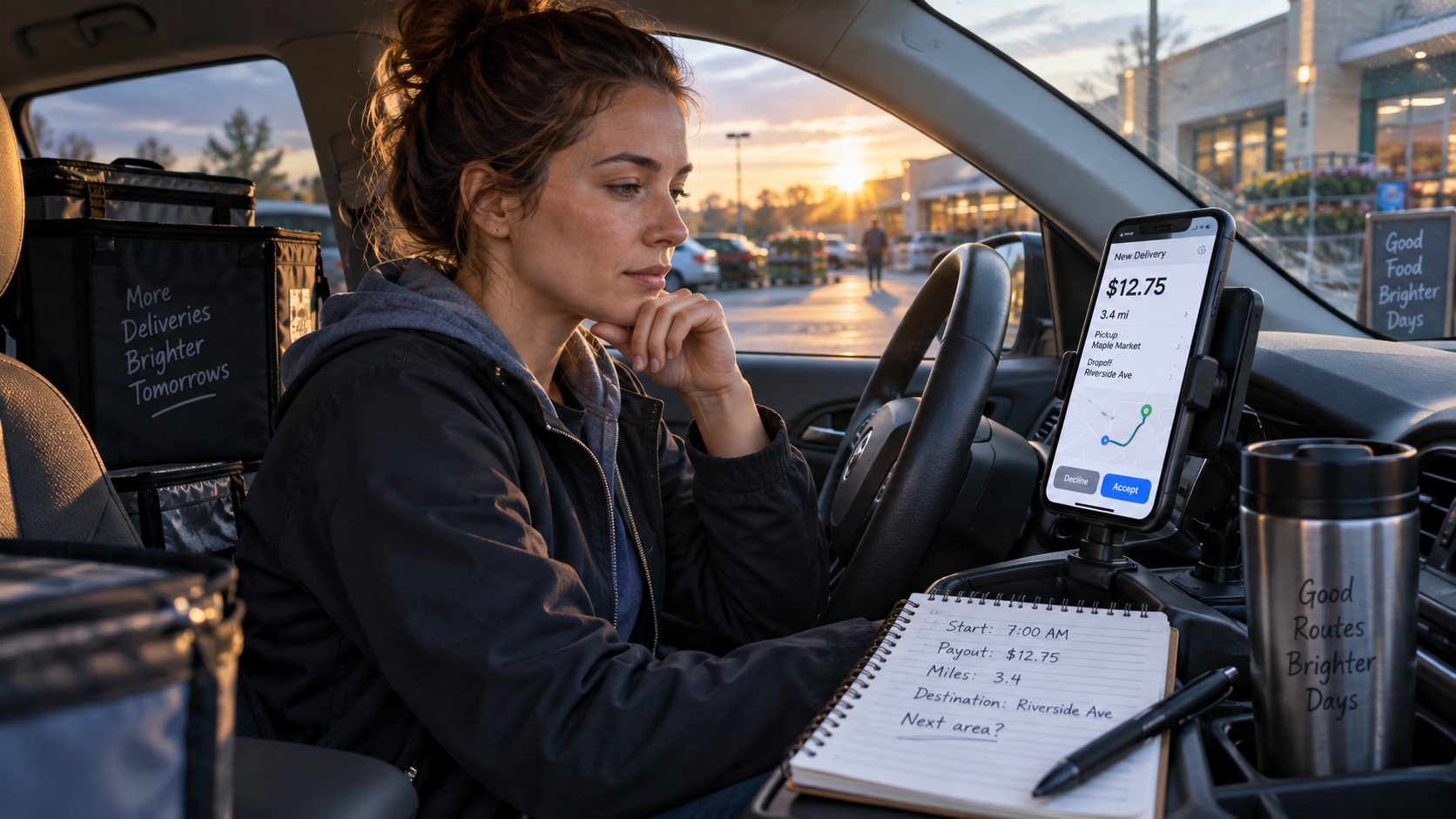
The first delivery offer of the day can feel like a simple decision. You are ready to work. You want to get moving. You may even feel pressure to accept something quickly so the shift can begin. But that first order can do more than add one payout to your earnings. It can influence where you end up, how many unpaid miles you drive next, how quickly you reach the busiest part of the day, and whether the rest of your shift starts efficiently. That does not mean the first order has to be perfect. It means it deserves the same careful look as every other delivery.
The first order sets your starting direction
Before you accept your first order, you usually have some control over where you begin. You may be near home. You may already be parked near a group of pickup locations. You may have chosen a specific area because it normally performs well. Once you accept an order, that flexibility changes. The delivery begins moving you in a direction.
Where the order ends matters
A first order that keeps you near useful pickup locations can put you in a strong position for the next offer. A first order that sends you far outside your preferred area can do the opposite. The payout may look good by itself. But the destination can affect what happens immediately afterward. That is why the first order should be evaluated as the beginning of a workday, not just an isolated trip.
A weak first order can create unpaid return miles
Suppose your first offer pays reasonably well but takes you 12 miles away from the area where you planned to work. After the delivery, you may need to drive several miles back before you have a realistic chance of receiving another worthwhile offer. Now your shift begins with: - The delivery miles - The return miles - The time spent driving back - The vehicle cost connected to both That can make the first payout look much less attractive.
The real trip may be longer than it appears
An offer screen may show the distance needed to complete the delivery. It does not necessarily show what you will need to do afterward. If the destination leaves you far from your next likely pickup, the true effect of the order continues after the drop-off. That matters even more at the beginning of a shift because you still have the whole workday ahead of you.
Starting with unnecessary mileage can hurt the whole day
A few extra miles may not seem important early in the shift. You may think you have plenty of time to make them up. But mileage adds up from the moment the workday begins. If you start with 15 or 20 low-value miles, those miles become part of your total operating cost for the day.
Early miles can lower profit per mile later
Imagine two drivers each finish the day with similar earnings. One started with a short profitable order near a strong pickup area. The other started by driving far out of the way and then returning. Even if the rest of their shifts look similar, the second driver may finish with significantly more total mileage. That can reduce overall profit per mile.
The first order can affect your timing
The first delivery also affects when you become available for the next offer. This can matter during busy periods. Suppose you begin working just before lunch or dinner. A long first order may take you through part of the strongest demand period. A shorter, profitable order may allow you to finish and become available for another offer while demand is still strong.
One long order can block several opportunities
This does not mean shorter orders are automatically better. A long order can still be very profitable. But you should consider what you may be giving up while you are committed to it. If a first delivery takes an hour during one of your strongest periods, the payout should justify the time.
The urge to get started can lower your standards
One reason the first order can be risky is psychological. You are ready to work. You want the shift to begin. Sitting still at the start can feel unproductive. That can make the first acceptable-looking offer seem better than it really is.
Starting the shift is not the same as making progress
Accepting an order just to get moving can lead to: - Too many miles - A poor destination - Weak profit - A long return drive - Missing better offers shortly afterward Being active does not automatically mean the shift has started well. Sometimes waiting a little longer for a better opening order is the stronger decision.
A strong first order can create momentum
The opposite can also happen. A good opening delivery can put you in an excellent position. Maybe it pays well. Maybe the mileage is low. Maybe it ends near another reliable pickup area. Maybe it finishes just as a busy period begins. That one order can help the next decision become easier.
Good positioning can reduce unpaid driving
When the first delivery ends in a useful location, you may not need to reposition at all. You can complete the order and be ready for the next opportunity immediately. That saves time and mileage. Over an entire shift, those small advantages can add up.
Your first order should fit your plan for the day
Drivers often begin a shift with some idea of how they want to work. Maybe you plan to stay close to home. Maybe you want to work a specific area. Maybe you only have three hours available. Maybe you are beginning before a known busy period. Your first order should make sense within that plan.
A good order can still be wrong for your schedule
Imagine you only have two hours available. A delivery with a strong payout might take you far away and leave you with a long drive home. That may be acceptable during a full-day shift. It may be a poor choice during a short work window. Context matters.
The first order can affect your fuel use early
Starting with a long trip means using more fuel immediately. Again, that does not automatically make the order bad. But it changes the cost structure of the shift right from the beginning. If the first few offers are mileage-heavy, you may notice your total fuel and vehicle cost increasing faster than earnings.
Watch the relationship between earnings and mileage
The goal is not to keep mileage as low as possible. The goal is to make sure the payout justifies the miles. That relationship begins with the first order and continues throughout the day.
Do not chase a bad first order because the day is young
A common thought is: I can make it up later. Sometimes you can. But there is no guarantee the rest of the shift will be busy enough to recover from a weak beginning. Good decisions later do not erase the cost of unnecessary miles already driven.
Profit does not reset after each delivery
Your workday is cumulative. Every mile, minute, expense, and payout contributes to the final result. A weak first order remains part of the day's numbers even after several strong orders follow it. That is why it is worth protecting the beginning of the shift.
Your first order does not have to be the highest-paying offer
A strong start is not about chasing the biggest payout. A smaller order can sometimes be an excellent first delivery. For example, it may: - Require few miles - Take little time - Keep you near good pickup locations - End in the direction you want to work - Produce strong profit per mile - Leave you ready for the next busy period The amount shown at the top of the offer is only one part of the decision.
Think one order ahead
One useful habit is to ask where you are likely to be after the delivery. Not exactly which order will come next. You cannot know that. But you can consider whether the drop-off leaves you in a reasonable position.
Ask what happens after the drop-off
Before accepting the first order, consider: Where does this delivery end? Will I be near another pickup area? Will I need to drive back? How much unpaid mileage might follow? How long will I be committed? Does this fit the part of the day I am entering? These questions help you evaluate the order as part of a sequence rather than a single event.
The first order matters more on short shifts
If you work all day, one weak order may become a relatively small part of the total. If you only work two or three hours, the first order can have a much larger effect. A long return drive or extended wait can consume a significant portion of the entire shift.
Short work windows leave less room for recovery
Suppose you have three hours available and your first order uses one full hour. If it also leaves you far from your preferred area, another portion of your limited time may be spent getting back. That can make the first decision especially important.
Compare your best and worst starts
Your own history can help you see how much the opening order matters. Look back at previous shifts. Ask: Which shifts started smoothly? Which ones began with too much driving? Did strong first orders lead to lower total mileage? Did distant first orders create long return trips? Did certain opening hours consistently produce better offers? Patterns may become obvious once you start looking for them.
Do not let one bad start ruin the rest of the shift
The first order matters, but it does not control everything. If you accept a weak order, recognize it and reset. Do not try to recover immediately by taking another questionable offer. Do not chase distant areas because you feel behind. The next decision should still stand on its own.
Protect the rest of the day
A poor first order is one decision. Turning it into three or four poor decisions is what causes bigger damage. The goal is not perfection. The goal is staying disciplined throughout the shift.
Start the day with the whole shift in mind
The first offer can shape the beginning of your mileage, time, location, and profit.
That makes it more important than it may initially appear.
You do not need to wait forever for the perfect order.
You do not need a huge payout to start the day.
You simply need an offer that makes sense for the workday you are trying to build.
TRUE Driver Profit helps drivers look beyond the first payout and consider the mileage, time, vehicle costs, return miles, and profit connected to the decision.
Because your first order is not just the first money you earn.
It is also the first decision that shapes everything that comes next.