Why Where a Delivery Ends Can Matter as Much as What It Pays
A delivery can pay well and still leave you in a poor position for the next order. Learn how destination, return driving, and nearby opportunities can affect real profit.
By TRUE Driver Profit · September 12, 2026
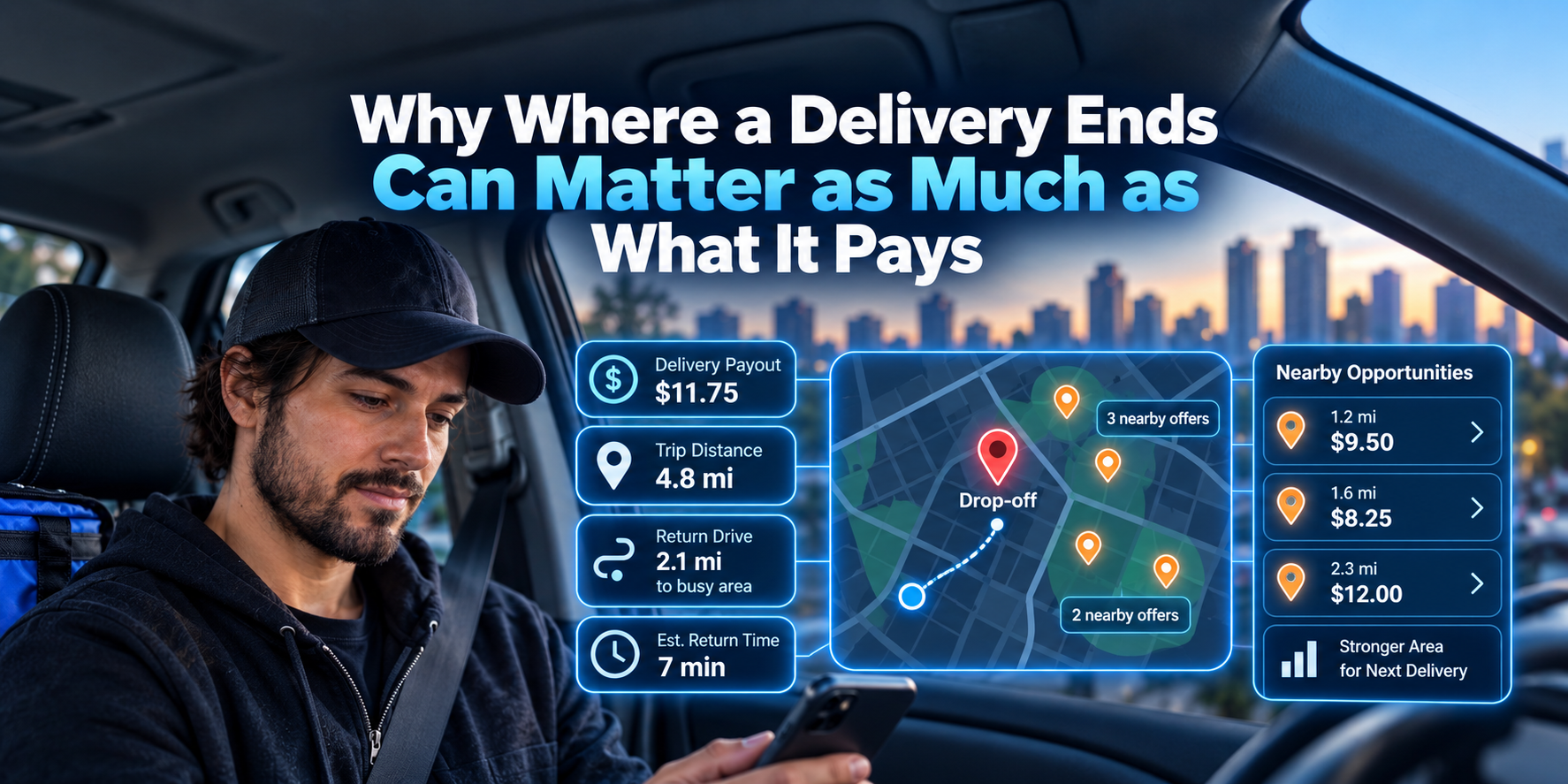
A delivery offer can look strong when you first see the payout.
But where that delivery leaves you can make a big difference in what happens next.
Two offers can pay the same amount and require similar mileage, yet one may leave you close to active pickup locations while the other puts you far away from where you are likely to receive another worthwhile offer.
That difference can affect your time, mileage, fuel use, and overall profit.
Those numbers matter.
An offer that ends far outside those areas may require a long drive before you are in a useful position again.
That extra movement can change the real value of the delivery.
Wait nearby for another offer
Drive to another pickup area
Return toward your usual delivery area
End your shift and drive home
Each of those choices can involve additional time and mileage.
That is why looking only at the trip to the customer may not tell you the whole story.
For example, a delivery might end near several pickup locations or along a route that keeps you close to areas where you normally work.
Over several deliveries, that difference can add up.
You may finish the delivery and realize that you need to drive several miles before you are likely to receive another useful offer.
They still take time.
And they may not produce any additional earnings.
That can make an otherwise attractive offer less profitable than it first appeared.
Offer A ends near several locations where you regularly receive delivery requests.
Offer B ends far outside your normal delivery area.
Even if both offers require similar mileage to the customer, the second one may require additional unpaid driving afterward.
A strong destination may put you in position to receive another order quickly.
A weak destination may force you to spend time driving back before you can realistically continue working.
That can affect:
Total miles
Fuel use
Vehicle wear
Time between deliveries
Profit per hour
Profit per mile
An area with plenty of delivery activity during lunch may be much quieter later in the afternoon.
A destination near several pickup locations may be useful during busy periods but less valuable when those locations are slow.
That means destination quality can change throughout the day.
Maybe a particular neighborhood is far from your usual pickup locations.
Maybe a rural route often requires a long drive back.
Maybe one side of town consistently leaves you with fewer nearby opportunities.
Those patterns are worth remembering.
You do not necessarily need to avoid those deliveries completely.
But you may want a higher payout before accepting them because you know there is a good chance they will require additional driving afterward.
A useful position is one that gives you reasonable access to offers that actually meet your goals.
An area may have a large number of offers but also have long waits, heavy traffic, or low-paying orders.
Another area may be quieter but produce better results for your vehicle and your time.
Where will this delivery leave me?
Are there useful pickup locations nearby?
Will I probably need to drive back?
How much additional time could that take?
Does the payout still look worthwhile if I include that possibility?
You will not always know exactly what will happen after a delivery.
But thinking about the destination gives you a more complete picture than looking at payout alone.
Look at where your strongest deliveries ended.
Look at which areas regularly required extra driving afterward.
Compare your total mileage, time, and profit.
Patterns can become clearer after several weeks.
That information can help you make faster decisions when similar offers appear again.
Where you finish can affect your next move, your next offer, and the amount of unpaid driving you do during the rest of your shift.
That is why two offers with similar payouts can produce very different results.
TRUE Driver Profit is designed to help drivers look at the complete picture, including mileage, time, vehicle costs, return driving, and what they actually keep.
When you consider where a delivery ends as well as what it pays, you can make decisions based on the whole trip instead of just the number on the offer screen.
But where that delivery leaves you can make a big difference in what happens next.
Two offers can pay the same amount and require similar mileage, yet one may leave you close to active pickup locations while the other puts you far away from where you are likely to receive another worthwhile offer.
That difference can affect your time, mileage, fuel use, and overall profit.
The destination is part of the offer
Drivers naturally look at payout, miles, and estimated time before accepting an order.Those numbers matter.
But the destination matters too.
An offer that ends near stores, restaurants, or areas where you regularly receive orders may allow you to continue working without much unpaid driving.An offer that ends far outside those areas may require a long drive before you are in a useful position again.
That extra movement can change the real value of the delivery.
Think beyond the drop-off
The work does not always end when the order is delivered.After the drop-off, you still have to decide what happens next.
You may be able to:Wait nearby for another offer
Drive to another pickup area
Return toward your usual delivery area
End your shift and drive home
Each of those choices can involve additional time and mileage.
That is why looking only at the trip to the customer may not tell you the whole story.
A good destination can reduce unpaid driving
Some deliveries naturally leave you in a useful location.For example, a delivery might end near several pickup locations or along a route that keeps you close to areas where you normally work.
That can reduce the amount of unpaid driving between orders.
Instead of spending 10 or 15 minutes repositioning, you may already be where you need to be.Over several deliveries, that difference can add up.
A poor destination can create hidden miles
Other deliveries may leave you in areas with very few pickup opportunities.You may finish the delivery and realize that you need to drive several miles before you are likely to receive another useful offer.
Those miles still use fuel.
They still add wear to your vehicle.They still take time.
And they may not produce any additional earnings.
That can make an otherwise attractive offer less profitable than it first appeared.
The same payout can lead to different results
Imagine two offers that both pay $20.Offer A ends near several locations where you regularly receive delivery requests.
Offer B ends far outside your normal delivery area.
Even if both offers require similar mileage to the customer, the second one may require additional unpaid driving afterward.
That means the two $20 offers may not actually produce the same result.
The destination can change the amount of time and mileage needed before you are ready for your next profitable order.Positioning affects the rest of your shift
Where one delivery ends can influence the next several decisions you make.A strong destination may put you in position to receive another order quickly.
A weak destination may force you to spend time driving back before you can realistically continue working.
That can affect:
Total miles
Fuel use
Vehicle wear
Time between deliveries
Profit per hour
Profit per mile
One delivery can influence more than just that single order.
Destination quality can depend on the time of day
A location that works well at one time may not work as well at another.An area with plenty of delivery activity during lunch may be much quieter later in the afternoon.
A destination near several pickup locations may be useful during busy periods but less valuable when those locations are slow.
That means destination quality can change throughout the day.
Your own experience can help you recognize those patterns.
Know which areas regularly leave you stranded
Over time, you may notice certain destinations that repeatedly create extra driving.Maybe a particular neighborhood is far from your usual pickup locations.
Maybe a rural route often requires a long drive back.
Maybe one side of town consistently leaves you with fewer nearby opportunities.
Those patterns are worth remembering.
You do not necessarily need to avoid those deliveries completely.
But you may want a higher payout before accepting them because you know there is a good chance they will require additional driving afterward.
Good positioning does not always mean the busiest area
The busiest area is not automatically the best place to be.A useful position is one that gives you reasonable access to offers that actually meet your goals.
An area may have a large number of offers but also have long waits, heavy traffic, or low-paying orders.
Another area may be quieter but produce better results for your vehicle and your time.
The goal is not simply to stay close to activity.
The goal is to stay close to opportunities that work for you.Consider where you are going before you accept
Before accepting an offer, ask yourself a few simple questions.Where will this delivery leave me?
Are there useful pickup locations nearby?
Will I probably need to drive back?
How much additional time could that take?
Does the payout still look worthwhile if I include that possibility?
You will not always know exactly what will happen after a delivery.
But thinking about the destination gives you a more complete picture than looking at payout alone.
Track destination patterns over time
The best way to understand which destinations work well is to compare your actual results.Look at where your strongest deliveries ended.
Look at which areas regularly required extra driving afterward.
Compare your total mileage, time, and profit.
Patterns can become clearer after several weeks.
That information can help you make faster decisions when similar offers appear again.
The destination is part of the real trip
A delivery offer is more than the drive from pickup to drop-off.Where you finish can affect your next move, your next offer, and the amount of unpaid driving you do during the rest of your shift.
That is why two offers with similar payouts can produce very different results.
TRUE Driver Profit is designed to help drivers look at the complete picture, including mileage, time, vehicle costs, return driving, and what they actually keep.
When you consider where a delivery ends as well as what it pays, you can make decisions based on the whole trip instead of just the number on the offer screen.