How Dead Miles Quietly Lower Your Delivery Profit
Unpaid miles between deliveries can quietly eat into your earnings. Learn how repositioning and empty driving affect your real delivery profit.
By TRUE Driver Profit · September 10, 2026
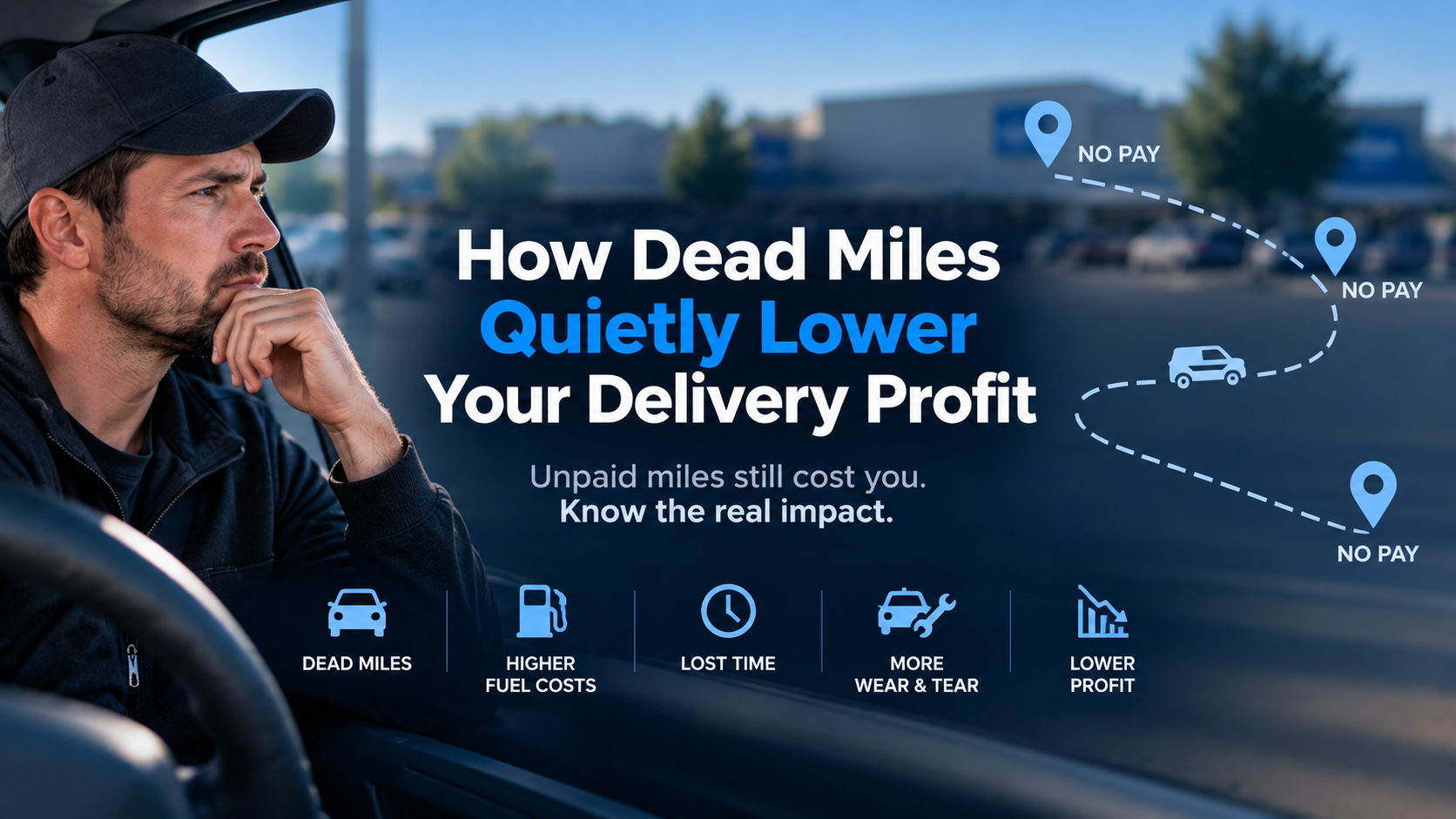
How Dead Miles Quietly Lower Your Delivery Profit
Some of the most expensive miles in delivery work are the miles that never appear on an offer.
You finish one order.
Then you drive several miles toward another pickup area.
Maybe you move across town because your current area is slow.
Maybe you leave a customer and reposition somewhere you are more likely to receive another worthwhile offer.
You are driving, but no order is paying you for those miles.
Those are often called dead miles.
And over a full shift, they can quietly reduce your profit.
Dead miles happen between opportunities.
Examples can include:
Driving toward a busier pickup area
Repositioning after a delivery
Moving between different pickup locations while waiting for an offer
Driving away from an area where demand has slowed
Traveling empty before the next paid order begins
These miles may feel like part of doing business.
They are.
But that does not make them free.
Every mile can still use fuel and contribute to:
Tire wear
Oil changes
Brakes
Maintenance
Repairs
Depreciation
If you drive 20 unpaid miles during a shift, those miles still have a real operating cost.
That cost comes out of what you earned from your paid deliveries.
Small amounts can add up quickly
A few dead miles may not seem important.
But imagine averaging 15 unpaid repositioning miles per day.
Over five driving days, that becomes 75 miles.
Over four weeks, that becomes about 300 miles.
The individual trips may have looked minor.
The monthly total may not be.
This is why looking at an entire Workday can reveal things that individual offer calculations cannot.
Repositioning takes time too.
If you spend 15 minutes moving to another pickup area without an active order, that is 15 minutes when you are working but not earning a payout.
Several repositioning trips during one shift can reduce your effective profit per hour.
That can happen even when the orders you completed were individually profitable.
A profitable order can still leave you in a weak position
Suppose you complete a strong order.
The payout was good.
The mileage was reasonable.
The order itself produced a healthy profit.
But now you are in an area where you are unlikely to receive another worthwhile offer.
You drive eight miles toward your preferred pickup area.
That does not necessarily make the original order bad.
But those eight miles belong to the bigger picture of your day.
If this happens repeatedly, the pattern matters.
Dead miles can be broader.
You might reposition even when you are not returning to the exact place you started.
You might drive from one pickup area to another.
You might move because demand has changed.
You might travel several miles before deciding where to wait.
In each case, you are putting miles on the vehicle without a current order paying for them.
That is why both return miles and total Workday mileage can matter.
Chasing a busy area can have a cost
Drivers sometimes hear that another part of town is busy and immediately head there.
That can work.
But the trip itself has a cost.
Suppose you drive six miles to reach a busier area.
If you immediately receive a strong offer, the repositioning may be worthwhile.
If you arrive and wait another 20 minutes, the result may be very different.
The decision should not be based only on whether another area seems busier.
Consider what it costs to get there.
More movement does not always mean more opportunity
When orders are slow, sitting still can feel unproductive.
That can make it tempting to keep moving.
But driving around without a clear reason can add mileage without increasing earnings.
Sometimes repositioning is useful.
Sometimes waiting is better.
The important thing is recognizing that movement itself has a cost.
Your odometer keeps counting even when your earnings do not.
Your Workday tells you what happened between them too.
At the end of a shift, compare:
Total earnings
Total miles driven
Miles connected to completed orders
Time worked
Fuel cost
Vehicle cost
TRUE profit
Profit per mile
Profit per hour
If your total mileage seems much higher than the mileage connected to your deliveries, unpaid movement may be part of the reason.
But patterns can help you reduce them.
You may discover that one delivery area regularly leaves you too far from another pickup.
You may notice that repositioning at a certain time rarely leads to a better offer.
You may find that staying near one group of pickup locations produces fewer empty miles.
Those observations can change how you approach future shifts.
The goal is not zero dead miles
Delivery driving is not perfectly efficient.
There will be times when moving without an active order makes sense.
The goal is not to eliminate every unpaid mile.
The goal is to know they exist and understand what they are doing to your profit.
A driver who earns $150 while driving 80 total miles may have a very different day from a driver who earns the same $150 while driving 140 miles.
Gross earnings alone do not show that difference.
TRUE Driver Profit helps you see the miles behind the earnings
TRUE Driver Profit is built to help drivers understand what they actually earn after the cost of doing the work.
That means looking beyond payouts and completed orders.
Mileage, time, fuel, vehicle costs, and the full Workday all matter.
Dead miles may never appear as a line item on an offer.
But they still show up on your odometer.
And eventually, they show up in your profit.
Some of the most expensive miles in delivery work are the miles that never appear on an offer.
You finish one order.
Then you drive several miles toward another pickup area.
Maybe you move across town because your current area is slow.
Maybe you leave a customer and reposition somewhere you are more likely to receive another worthwhile offer.
You are driving, but no order is paying you for those miles.
Those are often called dead miles.
And over a full shift, they can quietly reduce your profit.
Dead miles are different from delivery miles
Delivery miles are connected directly to an order.Dead miles happen between opportunities.
Examples can include:
Driving toward a busier pickup area
Repositioning after a delivery
Moving between different pickup locations while waiting for an offer
Driving away from an area where demand has slowed
Traveling empty before the next paid order begins
These miles may feel like part of doing business.
They are.
But that does not make them free.
Your vehicle still has a cost
Your car does not know whether an order is active.Every mile can still use fuel and contribute to:
Tire wear
Oil changes
Brakes
Maintenance
Repairs
Depreciation
If you drive 20 unpaid miles during a shift, those miles still have a real operating cost.
That cost comes out of what you earned from your paid deliveries.
Small amounts can add up quickly
A few dead miles may not seem important.
But imagine averaging 15 unpaid repositioning miles per day.
Over five driving days, that becomes 75 miles.
Over four weeks, that becomes about 300 miles.
The individual trips may have looked minor.
The monthly total may not be.
This is why looking at an entire Workday can reveal things that individual offer calculations cannot.
Dead miles also cost time
Mileage is only part of the problem.Repositioning takes time too.
If you spend 15 minutes moving to another pickup area without an active order, that is 15 minutes when you are working but not earning a payout.
Several repositioning trips during one shift can reduce your effective profit per hour.
That can happen even when the orders you completed were individually profitable.
A profitable order can still leave you in a weak position
Suppose you complete a strong order.
The payout was good.
The mileage was reasonable.
The order itself produced a healthy profit.
But now you are in an area where you are unlikely to receive another worthwhile offer.
You drive eight miles toward your preferred pickup area.
That does not necessarily make the original order bad.
But those eight miles belong to the bigger picture of your day.
If this happens repeatedly, the pattern matters.
Dead miles and return miles are related but not identical
Return miles usually describe the driving required to get back after a particular delivery.Dead miles can be broader.
You might reposition even when you are not returning to the exact place you started.
You might drive from one pickup area to another.
You might move because demand has changed.
You might travel several miles before deciding where to wait.
In each case, you are putting miles on the vehicle without a current order paying for them.
That is why both return miles and total Workday mileage can matter.
Chasing a busy area can have a cost
Drivers sometimes hear that another part of town is busy and immediately head there.
That can work.
But the trip itself has a cost.
Suppose you drive six miles to reach a busier area.
If you immediately receive a strong offer, the repositioning may be worthwhile.
If you arrive and wait another 20 minutes, the result may be very different.
The decision should not be based only on whether another area seems busier.
Consider what it costs to get there.
More movement does not always mean more opportunity
When orders are slow, sitting still can feel unproductive.
That can make it tempting to keep moving.
But driving around without a clear reason can add mileage without increasing earnings.
Sometimes repositioning is useful.
Sometimes waiting is better.
The important thing is recognizing that movement itself has a cost.
Your odometer keeps counting even when your earnings do not.
Look at the whole Workday
Individual offers tell you what happened on individual deliveries.Your Workday tells you what happened between them too.
At the end of a shift, compare:
Total earnings
Total miles driven
Miles connected to completed orders
Time worked
Fuel cost
Vehicle cost
TRUE profit
Profit per mile
Profit per hour
If your total mileage seems much higher than the mileage connected to your deliveries, unpaid movement may be part of the reason.
Patterns can help you reduce unnecessary miles
Dead miles are not always avoidable.But patterns can help you reduce them.
You may discover that one delivery area regularly leaves you too far from another pickup.
You may notice that repositioning at a certain time rarely leads to a better offer.
You may find that staying near one group of pickup locations produces fewer empty miles.
Those observations can change how you approach future shifts.
The goal is not zero dead miles
Delivery driving is not perfectly efficient.
There will be times when moving without an active order makes sense.
The goal is not to eliminate every unpaid mile.
The goal is to know they exist and understand what they are doing to your profit.
A driver who earns $150 while driving 80 total miles may have a very different day from a driver who earns the same $150 while driving 140 miles.
Gross earnings alone do not show that difference.
TRUE Driver Profit helps you see the miles behind the earnings
TRUE Driver Profit is built to help drivers understand what they actually earn after the cost of doing the work.
That means looking beyond payouts and completed orders.
Mileage, time, fuel, vehicle costs, and the full Workday all matter.
Dead miles may never appear as a line item on an offer.
But they still show up on your odometer.
And eventually, they show up in your profit.