Which Delivery App Pays the Most?
The app with the biggest payouts is not always the most profitable. Learn how to compare delivery apps using real costs, miles, and time.
By TRUE Driver Profit · September 12, 2026
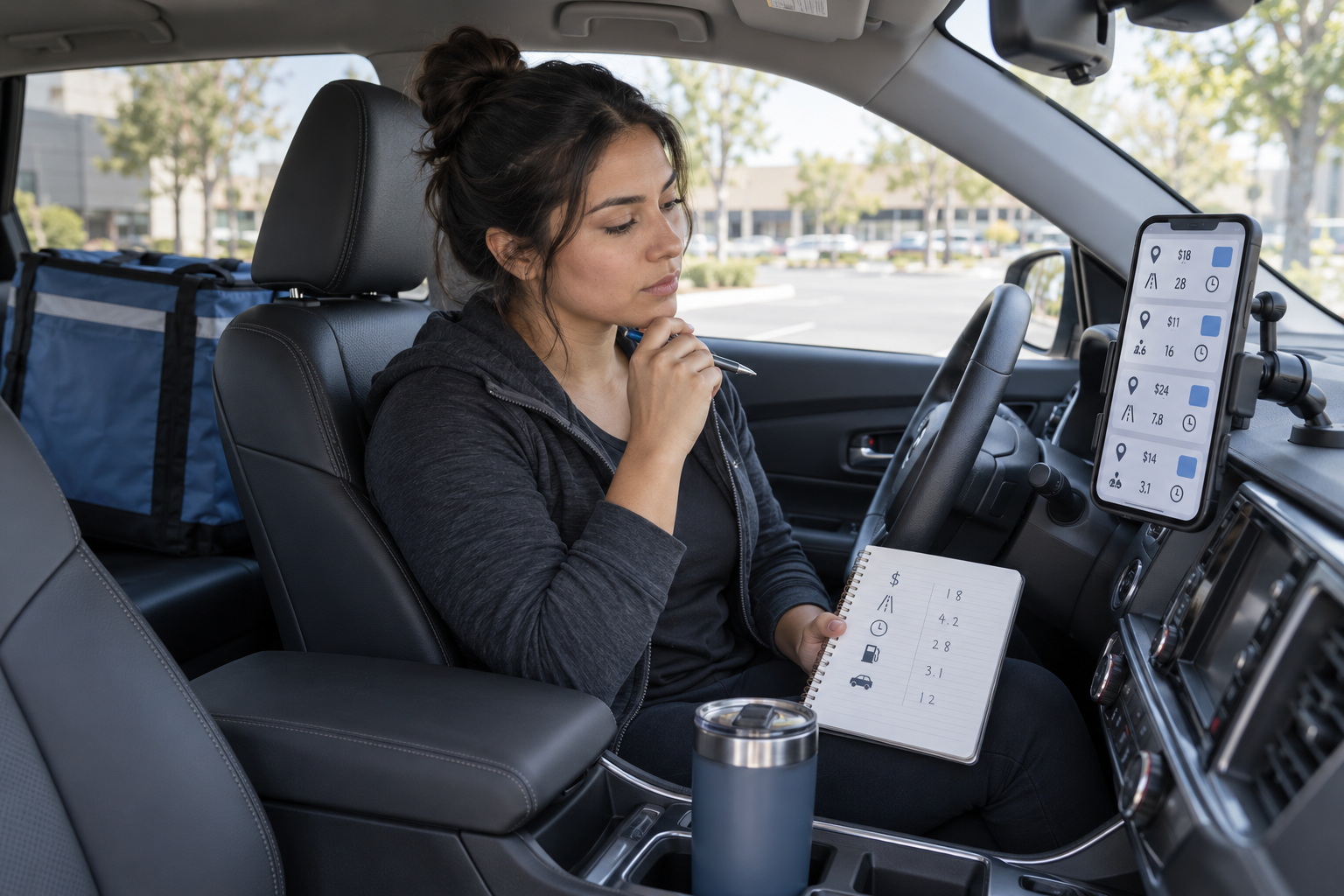
Drivers often compare apps by looking at payouts, tips, bonuses, or what another driver earned. Those numbers can be helpful, but they do not reveal which app will produce the most profit for you. An app may offer larger payouts while sending you farther from the pickup area. Another may provide smaller orders with shorter distances and faster completion times. A third may keep you busy but require more unpaid waiting. The best-paying delivery app is not always the app showing the largest offer. It is the one that helps you keep the most money after your time and vehicle costs are counted.
There is no single best-paying app for every driver
DoorDash, Uber Eats, Instacart, Spark, Roadie, Amazon Flex, and other delivery platforms operate differently. Results can also vary between cities, towns, stores, restaurants, days, and driving hours. Two drivers using the same app can earn different profit because they have different: - Fuel economy - Vehicle costs - Driving distances - Pickup locations - Waiting times - Delivery areas - Working schedules - Offer-selection standards This is why another driver’s earnings screenshot cannot tell you which app will be most profitable for you.
Gross earnings do not show what you actually keep
Suppose one app produces $150 during a shift while another produces $130. The first app appears to pay more, but the comparison is incomplete. The $150 shift may require 100 miles and six hours. The $130 shift may require only 55 miles and five hours. Once fuel, vehicle wear, unpaid miles, and working time are included, the lower-grossing shift could produce better profit per hour and profit per mile. Gross earnings answer one question: How much money did the app pay? TRUE profit answers a more useful question: How much did you keep after completing the work?
Compare every delivery app using the same numbers
You need to measure each app consistently before deciding which one pays best.
Total payout
Include base pay, confirmed tips, bonuses, and other earnings received during the period you are reviewing. Be careful with estimated tips. A projected tip is not guaranteed income until it is confirmed.
Total business miles
Count all business driving connected to your work, not just the miles shown on accepted offers. Depending on your workday, this could include: - Driving toward a pickup - Driving from pickup to drop-off - Traveling between deliveries - Returning to an active delivery area - Repositioning while waiting for another offer An app that produces higher payouts may also create more unpaid miles.
Total working time
Include the complete time required to earn the money. This can include: - Waiting for offers - Driving to pickups - Waiting at restaurants or stores - Shopping - Loading - Driving to customers - Completing drop-offs - Returning to an area where you can receive another order Only counting active delivery time can make an app appear more profitable than it really is.
Fuel and vehicle costs
Fuel is only one part of using your vehicle for delivery work. Your comparison should also account for costs such as: - Oil changes - Tires - Brakes - Maintenance - Repairs - Depreciation - Insurance - Phone and work supplies These costs may not happen after every delivery, but the miles you drive contribute to them.
Profit per hour and profit per mile
Profit per hour shows how effectively an app pays for your time. Profit per mile shows how much money remains for each mile placed on your vehicle. A strong delivery app should support both measurements. An app that performs well in only one area may still create problems. High profit per hour with excessive mileage can wear out your vehicle faster. High profit per mile with long periods of waiting can leave you with weak hourly results.
Different delivery types create different costs
Delivery apps do not all provide the same type of work. Restaurant deliveries may involve shorter trips, but restaurant delays can reduce profit per hour. Shop and deliver orders may offer larger payouts, but shopping time, substitutions, checkout lines, heavy items, and difficult drop-offs can extend the order. Curbside and grocery pickups may reduce shopping time, but long loading delays or large delivery distances can affect the result. Package routes may provide a known block payment, but the complete route, return drive, and total time still matter. The delivery type that works best depends on your vehicle, experience, area, and ability to complete the work efficiently.
The strongest app can change during the day
One delivery app may perform well during lunch while another produces better opportunities during the afternoon or evening. Results can also change because of: - Restaurant traffic - Store staffing - Customer demand - Weather - Road construction - Special events - Holidays - Available drivers - Temporary bonuses Instead of selecting one permanent winner, drivers may benefit from identifying which app performs best during specific hours and conditions.
Bonuses do not automatically make an app more profitable
A bonus can improve earnings, but it can also encourage drivers to accept deliveries they would normally decline. Before chasing a bonus, consider: - How many deliveries are required - How many additional hours you may need - Whether weaker offers must be accepted - How many extra miles could be driven - Whether the bonus changes your normal decision process The bonus only helps if the complete group of deliveries remains profitable.
Do not judge an app from one unusually good shift
A single strong day can be encouraging, but it may not represent normal results. Compare apps across several shifts or weeks. Track the same information for each one and look for repeatable patterns. Ask: - Which app produced the most total profit? - Which app produced the best profit per hour? - Which app produced the best profit per mile? - Which app created the most unpaid miles? - Which app required the most waiting? - Which app placed me in better locations for the next delivery? - Which app produced the most consistent results? A weekly review provides a more reliable comparison than one order or one shift.
The best-paying delivery app is personal
There is no universal delivery app that pays every driver the most.
The right answer depends on what remains after your real costs are removed. It also depends on whether the work meets your personal profit-per-hour and profit-per-mile goals.
The app with the largest payouts may not be your best option. The app that keeps you busiest may not be your best option either.
The best-paying delivery app for you is the one that repeatedly produces the strongest TRUE profit without wasting your time or placing unnecessary miles on your vehicle.
Track the complete work, compare the results, and let your own numbers identify the winner.