Profit Per Hour vs. Profit Per Mile: Which Matters More for Delivery Drivers?
Profit per hour and profit per mile tell you different things about a delivery offer. Learn why smart drivers look at both before deciding whether an order is really worth taking.
By TRUE Driver Profit · September 10, 2026
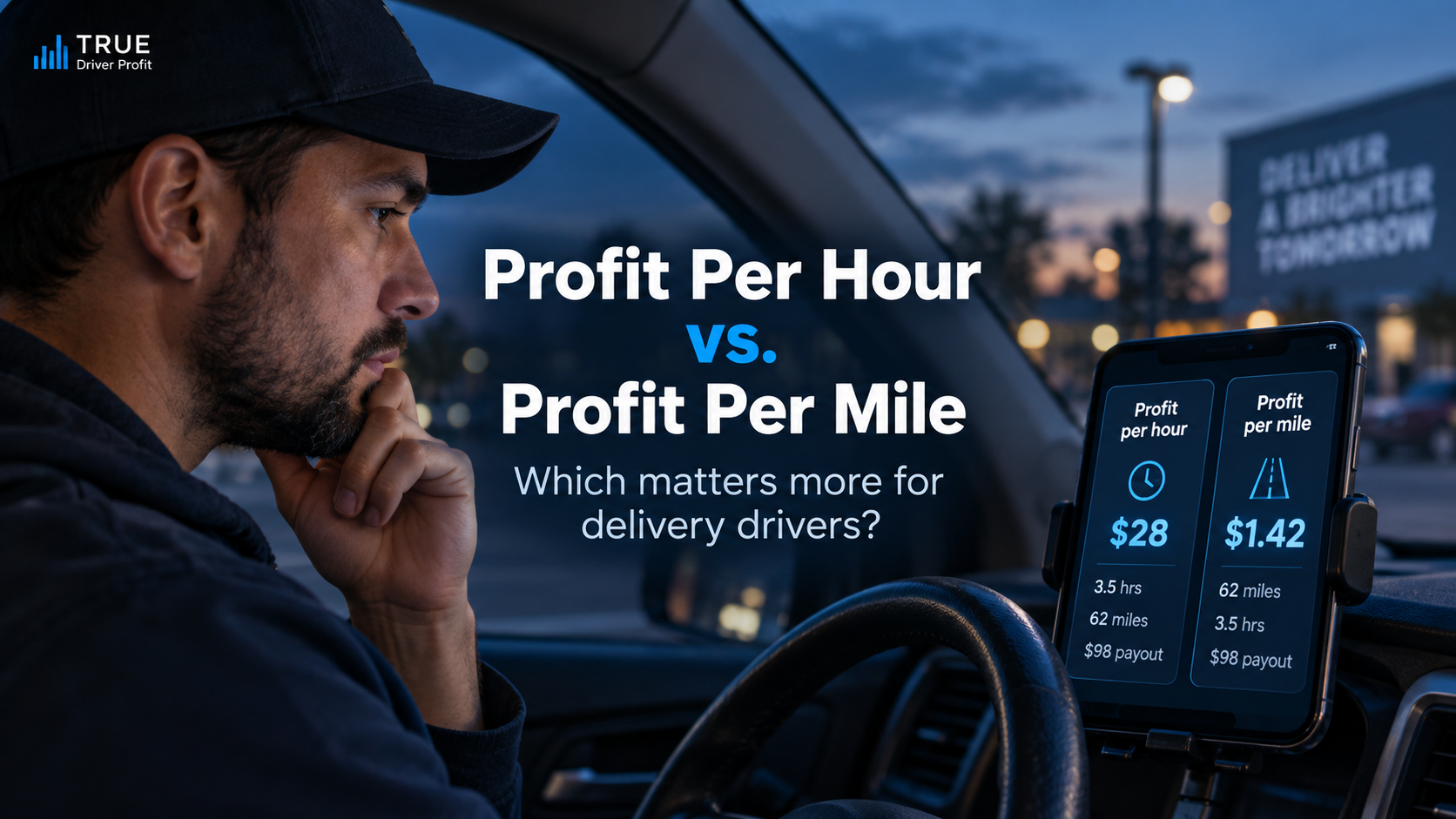
Profit Per Hour vs. Profit Per Mile: Which Matters More for Delivery Drivers?
When a delivery offer appears, there are a lot of numbers competing for your attention.
The payout matters.
The miles matter.
The time matters.
But once you start thinking about actual profit, two numbers become especially useful:
Profit per hour and profit per mile.
They measure different parts of the job, and relying on only one can give you an incomplete picture.
The best way to evaluate an offer is to understand what each number tells you.
That matters because every mile puts cost and wear on your vehicle.
More miles can mean more:
Fuel
Oil and maintenance
Tire wear
Brake wear
Repairs
Depreciation
If two offers pay the same amount but one requires much more driving, profit per mile helps expose the difference.
For example:
Offer A pays $18 and requires 6 total miles.
Offer B pays $18 and requires 14 total miles.
The payout is identical.
But the second offer uses more fuel, more vehicle life, and more of your mileage capacity for the day.
Profit per mile helps you see that difference.
An offer can look great on mileage and still consume too much of your day.
Waiting at pickup, traffic, apartment deliveries, long walks, loading time, and return driving can all stretch an order far beyond what the mileage alone suggests.
Consider two offers that both leave you with $12 in profit.
One takes 25 minutes.
The other takes 55 minutes.
The profit is the same, but the effect on your day is completely different.
Profit per hour helps make that visible.
Imagine a short delivery that only requires 3 miles.
That sounds excellent.
But what if the pickup takes 30 minutes, the order takes another 15 minutes to complete, and the entire trip consumes nearly an hour?
Your mileage may look great.
Your hourly result may not.
That is why short mileage does not automatically mean a good offer.
An offer may look strong on an hourly basis but require a lot of driving.
Suppose an offer pays well and can be completed quickly because most of the trip is highway driving.
Your hourly result may look good.
But if the order requires a large number of miles, your vehicle is absorbing more fuel use and wear.
Over time, consistently accepting high-mileage offers can create costs that are easy to underestimate.
That is why a good hourly number does not automatically mean the mileage makes sense.
It gives you a reasonable return for both your time and your vehicle.
That does not mean every order has to meet one perfect formula.
Driving areas are different.
Vehicles are different.
Driver goals are different.
A driver in a rural area may naturally drive farther distances.
A driver in a busy city may drive fewer miles but spend more time waiting or sitting in traffic.
The important thing is knowing which part of the offer is costing you.
Suppose a delivery takes you 7 miles away from your normal pickup area.
If you have to drive most of those 7 miles back, your total mileage increases.
So does your total time.
That means the return trip can affect both measurements at once.
An offer that looked strong before the return miles were considered may look very different afterward.
Waiting time matters too
Pickup delays can change an otherwise good offer.
The car may not be moving, so mileage does not increase much.
But the clock keeps running.
If you wait 20 extra minutes for an order, your profit per mile may still look fine while your profit per hour falls.
This is another reason the two measurements should be viewed together.
Your vehicle changes the calculation
Not every driver has the same operating cost.
A fuel-efficient car will have different costs than a larger SUV or truck.
Maintenance costs, fuel prices, and vehicle wear also vary.
That means two drivers can complete the exact same offer and have different real profit.
Your own numbers matter more than a generic rule.
Your goals matter too
Some drivers set a target for how much they want to earn per hour.
Others also set a minimum amount they want to make per mile.
Looking at both lets you compare an offer against the goals that actually matter to you.
An offer may meet your hourly goal but miss your mileage goal.
Another may do the opposite.
That does not always make the decision automatic.
It gives you better information before making it.
Think about the whole day
One order rarely defines an entire shift.
The real question is what repeated decisions do to your earnings over several hours.
A driver who consistently takes orders with poor profit per mile may put a lot of unnecessary mileage on the vehicle.
A driver who consistently takes slow orders may end the day with fewer completed deliveries and weaker hourly earnings.
Watching both numbers can help you recognize those patterns.
TRUE Driver Profit shows both
TRUE Driver Profit is built to help drivers evaluate an offer using more than the payout shown on the screen.
It can account for payout, miles, return miles, time, fuel, and vehicle costs and then show you:
TRUE profit
Profit per mile
Profit per hour
Instead of forcing one rule on every driver, TRUE Driver Profit gives you the numbers so you can make the decision that fits your vehicle, your area, and your goals.
Profit per mile tells you what the driving is costing you.
Profit per hour tells you what the time is costing you.
Together, they give you a much clearer picture of what an offer is really worth.
When a delivery offer appears, there are a lot of numbers competing for your attention.
The payout matters.
The miles matter.
The time matters.
But once you start thinking about actual profit, two numbers become especially useful:
Profit per hour and profit per mile.
They measure different parts of the job, and relying on only one can give you an incomplete picture.
The best way to evaluate an offer is to understand what each number tells you.
What profit per mile tells you
Profit per mile shows how much profit you are keeping for each mile you drive.That matters because every mile puts cost and wear on your vehicle.
More miles can mean more:
Fuel
Oil and maintenance
Tire wear
Brake wear
Repairs
Depreciation
If two offers pay the same amount but one requires much more driving, profit per mile helps expose the difference.
For example:
Offer A pays $18 and requires 6 total miles.
Offer B pays $18 and requires 14 total miles.
The payout is identical.
But the second offer uses more fuel, more vehicle life, and more of your mileage capacity for the day.
Profit per mile helps you see that difference.
What profit per hour tells you
Profit per hour focuses on your time.An offer can look great on mileage and still consume too much of your day.
Waiting at pickup, traffic, apartment deliveries, long walks, loading time, and return driving can all stretch an order far beyond what the mileage alone suggests.
Consider two offers that both leave you with $12 in profit.
One takes 25 minutes.
The other takes 55 minutes.
The profit is the same, but the effect on your day is completely different.
Profit per hour helps make that visible.
Why profit per mile alone is not enough
A driver can become too focused on mileage.Imagine a short delivery that only requires 3 miles.
That sounds excellent.
But what if the pickup takes 30 minutes, the order takes another 15 minutes to complete, and the entire trip consumes nearly an hour?
Your mileage may look great.
Your hourly result may not.
That is why short mileage does not automatically mean a good offer.
Why profit per hour alone is not enough
The opposite can happen too.An offer may look strong on an hourly basis but require a lot of driving.
Suppose an offer pays well and can be completed quickly because most of the trip is highway driving.
Your hourly result may look good.
But if the order requires a large number of miles, your vehicle is absorbing more fuel use and wear.
Over time, consistently accepting high-mileage offers can create costs that are easy to underestimate.
That is why a good hourly number does not automatically mean the mileage makes sense.
The strongest offers usually balance both
A strong delivery offer generally does more than look good in one category.It gives you a reasonable return for both your time and your vehicle.
That does not mean every order has to meet one perfect formula.
Driving areas are different.
Vehicles are different.
Driver goals are different.
A driver in a rural area may naturally drive farther distances.
A driver in a busy city may drive fewer miles but spend more time waiting or sitting in traffic.
The important thing is knowing which part of the offer is costing you.
Return miles affect both numbers
Return miles are especially important because they can reduce both profit per mile and profit per hour.Suppose a delivery takes you 7 miles away from your normal pickup area.
If you have to drive most of those 7 miles back, your total mileage increases.
So does your total time.
That means the return trip can affect both measurements at once.
An offer that looked strong before the return miles were considered may look very different afterward.
Waiting time matters too
Pickup delays can change an otherwise good offer.
The car may not be moving, so mileage does not increase much.
But the clock keeps running.
If you wait 20 extra minutes for an order, your profit per mile may still look fine while your profit per hour falls.
This is another reason the two measurements should be viewed together.
Your vehicle changes the calculation
Not every driver has the same operating cost.
A fuel-efficient car will have different costs than a larger SUV or truck.
Maintenance costs, fuel prices, and vehicle wear also vary.
That means two drivers can complete the exact same offer and have different real profit.
Your own numbers matter more than a generic rule.
Your goals matter too
Some drivers set a target for how much they want to earn per hour.
Others also set a minimum amount they want to make per mile.
Looking at both lets you compare an offer against the goals that actually matter to you.
An offer may meet your hourly goal but miss your mileage goal.
Another may do the opposite.
That does not always make the decision automatic.
It gives you better information before making it.
Think about the whole day
One order rarely defines an entire shift.
The real question is what repeated decisions do to your earnings over several hours.
A driver who consistently takes orders with poor profit per mile may put a lot of unnecessary mileage on the vehicle.
A driver who consistently takes slow orders may end the day with fewer completed deliveries and weaker hourly earnings.
Watching both numbers can help you recognize those patterns.
TRUE Driver Profit shows both
TRUE Driver Profit is built to help drivers evaluate an offer using more than the payout shown on the screen.
It can account for payout, miles, return miles, time, fuel, and vehicle costs and then show you:
TRUE profit
Profit per mile
Profit per hour
Instead of forcing one rule on every driver, TRUE Driver Profit gives you the numbers so you can make the decision that fits your vehicle, your area, and your goals.
Profit per mile tells you what the driving is costing you.
Profit per hour tells you what the time is costing you.
Together, they give you a much clearer picture of what an offer is really worth.