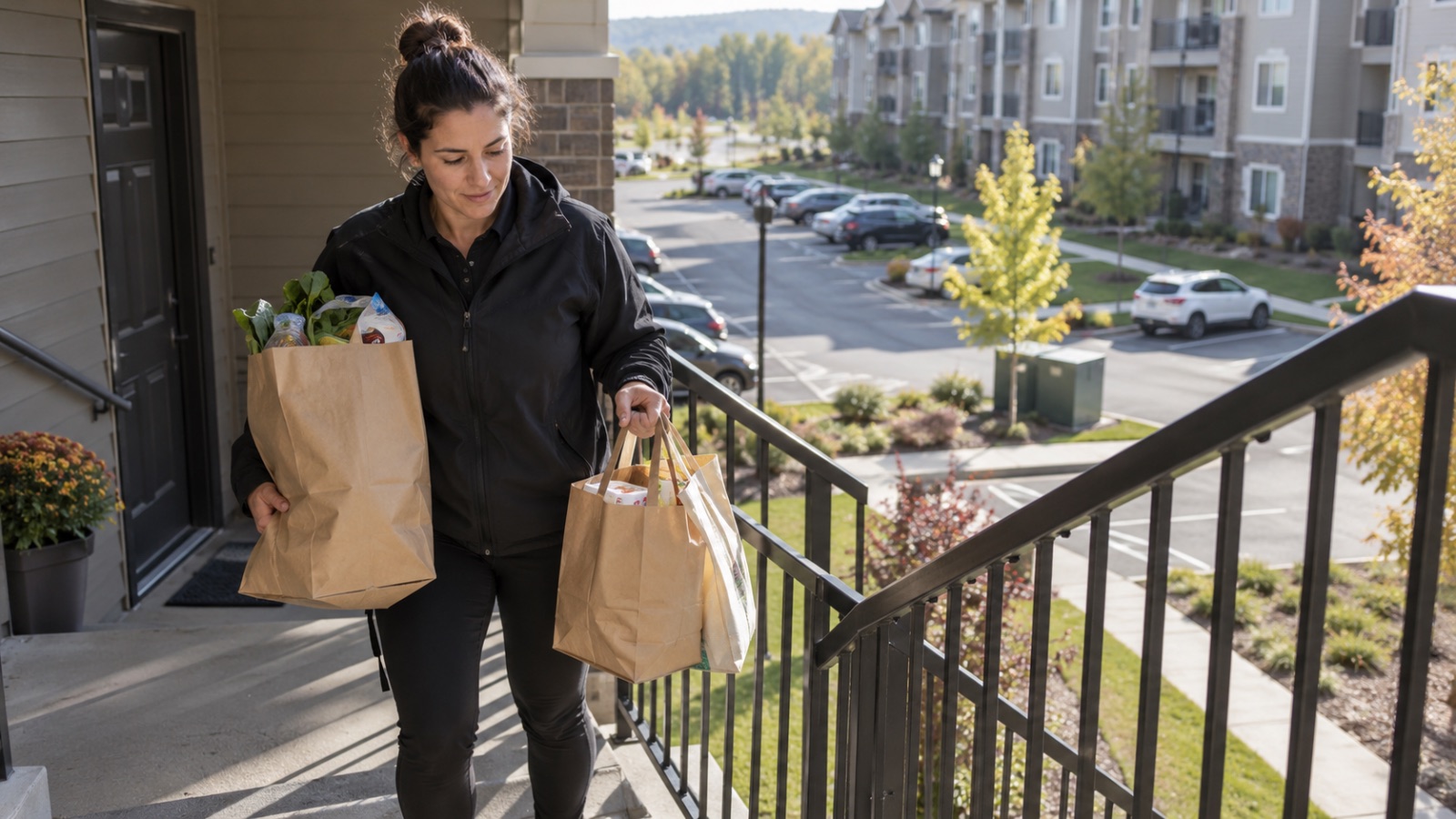
Apartment deliveries can be some of the shortest trips on the map and some of the longest stops in real life.
The mileage may look easy.
Then you arrive and discover a gate, several buildings, limited parking, a long walkway, stairs, or an apartment number that is difficult to locate.
The problem is not that apartment deliveries are automatically bad.
The problem is that the final few hundred feet can take much longer than the offer screen suggests.
The good news is that drivers can make many apartment deliveries easier by preparing before they arrive.
Read the delivery instructions before you park
Do not wait until you are standing outside the vehicle to read the customer’s instructions.
Before you reach the property, safely review any available notes for:
- Gate codes
- Building numbers
- Entrance directions
- Floor numbers
- Parking instructions
- Lobby or leasing-office details
Knowing what you are looking for can prevent unnecessary walking or circling.
Look for the building number first
Large apartment complexes often have several buildings that look nearly identical.
It is easy to park at the first building that seems close and then discover that the customer is several buildings away.
Use the property layout when one is available
Some complexes have maps near the entrance or leasing office.
A quick look can save several minutes of driving and walking.
If the building numbers are visible from the roadway, identify the correct building before choosing a parking spot.
Do not assume the map pin is the front door
GPS may bring you to the property but not to the correct entrance.
In large complexes, the pin may land near:
- The leasing office
- A rear entrance
- A parking lot
- The wrong side of the building
- A different building entirely
Treat the pin as a starting point, not a guarantee.
Choose parking based on the exit too
The closest parking spot is not always the fastest overall choice.
A spot that saves 30 seconds walking can cost several minutes if it traps you behind traffic or makes leaving difficult.
Think about the complete stop
You need to:
Park
Carry the order
Find the unit
Complete the drop-off
Return to the vehicle
Leave the property
A good parking choice supports all of those steps.
Organize the order before leaving the vehicle
Apartment deliveries become harder when you discover halfway to the building that you forgot a drink or another bag.
Before you start walking, confirm that you have everything for that customer.
For larger orders, organize bags so you can carry them safely without mixing items or making unnecessary return trips.
Know when one trip is not the safest choice
Trying to carry too much at once can create spills, dropped items, or injury.
Several controlled trips can be better than one overloaded trip.
The goal is efficiency, not rushing.
Stairs change the time required
A third-floor walk-up is not the same stop as a ground-floor unit next to the parking lot.
Stairs add time and physical effort, especially with groceries, drinks, or heavier items.
Drivers should include that reality when judging how long similar deliveries tend to take.
Elevators can create waiting too
An elevator may make carrying easier, but it can still add time.
You may need to wait for it, ride several floors, walk a long hallway, and repeat the process on the way back.
That is why a short-mile apartment delivery can still occupy a large part of an hour.
Gate access deserves attention
A missing or incorrect gate code can stop the delivery before it really begins.
If access information is incomplete, use the delivery app’s approved customer-contact process rather than guessing or following another vehicle through a secured entrance.
Keep security boundaries intact
Drivers should not bypass locked access points or enter areas they are not authorized to enter.
A few saved minutes are not worth creating a safety or security problem.
Long walks should count in your mental time estimate
Some complexes have parking far from the building entrance.
Others require walking around fences, courtyards, or internal paths.
Those minutes do not add road miles, but they still use working time.
Over many deliveries, that can affect your profit per hour.
Use past experience to recognize difficult properties
Drivers often learn which apartment communities are straightforward and which routinely take longer.
Useful private logistics notes may include:
- Building numbers hard to see
- Long walk from parking
- Gate access needed
- GPS pin inaccurate
- No elevator
- Difficult driveway or road access
The point is not to judge the customer.
The point is to remember the logistics that affect your time.
Do not treat every apartment delivery the same
Some apartment deliveries are faster than house deliveries.
Others are much slower.
The useful question is not “Is this an apartment?”
It is “What does this particular property usually require?”
That distinction helps you make better decisions without relying on broad assumptions.
Apartment efficiency improves with familiarity
The first visit to a large complex may take time.
After several visits, you may know:
- Which entrance to use
- Where building numbers are located
- Where visitor parking is
- Which side of the building has the correct stairwell
- How the numbering system works
That local knowledge can turn a difficult stop into a routine one.
The bottom line
Apartment deliveries can add hidden time through parking, gates, building searches, long walks, stairs, elevators, and access instructions.
You cannot eliminate every delay.
But you can reduce wasted time by reading instructions early, identifying the correct building before parking, organizing the order before leaving the vehicle, and learning the properties you visit repeatedly.
The goal is not to rush.
It is to make the stop more predictable and efficient while completing the delivery safely.
Related reading