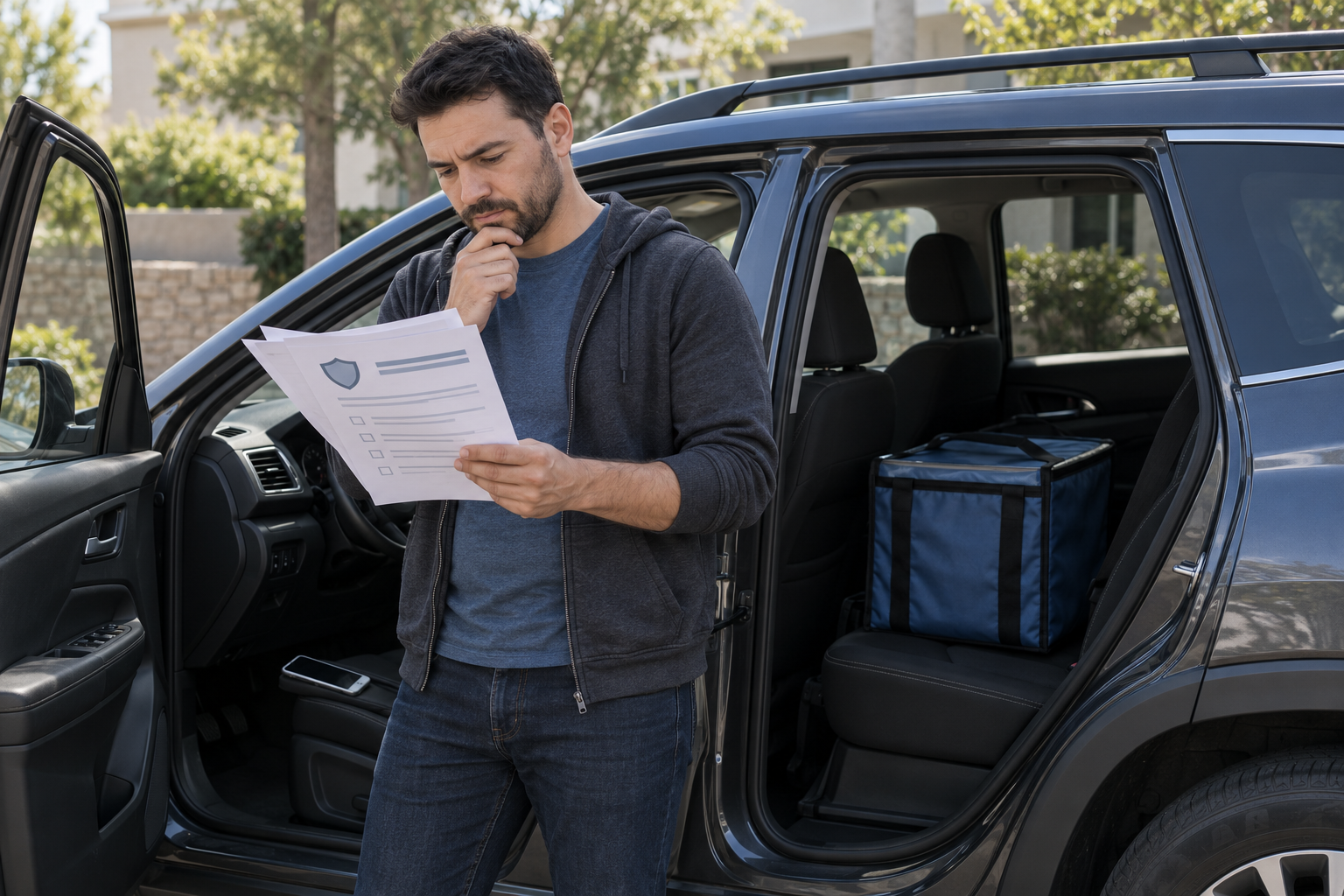
Many delivery drivers use the same vehicle for personal trips and paid deliveries. That can make it easy to assume that a normal personal auto insurance policy covers both.
Coverage is not always that simple.
Some personal policies may exclude or limit coverage when a vehicle is being used for delivery work. The protection offered by a delivery platform may also have restrictions, deductibles, or coverage gaps.
Before completing paid deliveries, drivers should understand what their own policy covers and what additional protection may be required.
Do delivery drivers need special car insurance?
Some delivery drivers may need a delivery endorsement, business-use coverage, or a commercial auto policy. Other drivers may already have coverage that allows certain types of delivery work.
There is no single insurance answer that applies to every driver.
The correct coverage can depend on:
- Your insurance company
- Your state
- The type of deliveries you complete
- The platforms you use
- How often you deliver
- Whether you transport food, groceries, retail items, or packages
- Your vehicle and existing policy
- The coverage provided by the delivery platform
The safest step is to tell your insurance company exactly how you use your vehicle and ask what coverage is required.
Why personal auto insurance may not be enough
A personal auto policy is normally written around personal vehicle use.
Paid delivery work changes how the vehicle is being used. You may drive more miles, spend more time on the road, make frequent stops, and travel to unfamiliar locations.
An insurance company may treat this as business activity.
If your policy excludes delivery work, an accident during a delivery could create problems with the claim. A driver should not assume coverage exists simply because the vehicle has an active personal insurance policy.
Ask your insurance company directly whether your policy covers app-based delivery work.
Coverage may change during different parts of a delivery
Insurance protection may depend on what you were doing when an accident happened.
When the delivery app is turned off
This is usually personal driving, but your own policy terms still control the coverage.
When you are online and waiting for an offer
You may be available for delivery work even though you have not accepted an order.
Ask whether your personal policy or the platform provides coverage during this waiting period.
When you have accepted an order
Once an order is accepted, you may be driving to a restaurant, store, pickup location, or customer.
Coverage during this period may be different from coverage while waiting for an offer.
When the delivery is complete
After completing the drop-off, you may still be driving back to a pickup area or waiting for another offer.
Drivers should ask how their coverage applies during this part of the workday.
These distinctions can vary between insurance companies, states, and delivery platforms.
Does the delivery platform insure the driver?
Some delivery platforms may provide certain insurance protection while a driver is completing eligible work.
That does not necessarily mean the platform replaces your personal insurance.
Platform coverage may:
- Apply only during certain stages of a delivery
- Require an active personal policy
- Provide only specific types of protection
- Carry a high deductible
- Apply after your personal insurer responds
- Exclude damage to your own vehicle
- Vary by state or delivery type
Drivers should review the current insurance information supplied by every platform they use.
Do not rely on another driver’s explanation. Coverage terms can change and may not be the same in every location.
What should you ask your insurance company?
Explain that you use your personal vehicle for paid delivery work. Be specific about what you deliver and which platforms you use.
Is paid delivery work covered?
Ask whether your existing policy covers food, grocery, retail, and package deliveries.
Do not describe the work only as rideshare driving. Transporting passengers and delivering products may be treated differently.
Do you need a delivery endorsement?
Some insurance companies offer an endorsement that extends coverage to certain delivery activity.
Ask what the endorsement covers, when it applies, and whether any part of your workday remains uncovered.
Do you need commercial coverage?
A commercial policy may be required in some situations. This can depend on the insurer, the type of work, and how the vehicle is used.
Ask whether your delivery activity can be added to your personal policy or requires a separate policy.
What happens during each stage of a delivery?
Ask about coverage when:
- The app is turned off
- You are online and waiting
- You are driving to a pickup
- You are waiting at the pickup
- You are transporting an order
- You are returning after a delivery
This can help identify gaps between your policy and any platform-provided protection.
Can the answer be provided in writing?
Insurance conversations can involve important details.
Ask your agent or insurance company to confirm the coverage in writing. Keep that information with your policy records.
Insurance cost belongs in your delivery profit
Insurance is a real cost of operating a delivery vehicle.
If additional coverage increases your monthly premium, include that increase when reviewing your delivery expenses.
For example, suppose delivery coverage adds $40 per month to your insurance cost. That money must come from the income produced by your delivery work.
The cost can be divided across your normal driving activity to help you understand how it affects your TRUE profit.
Ignoring insurance does not make the expense disappear. It only makes your profit look higher than it really is.
What could happen without the correct coverage?
An accident can already create vehicle damage, missed work, and unexpected expenses.
A coverage dispute can make the situation more difficult.
Depending on the policy and circumstances, a driver could face:
- A denied claim
- Responsibility for vehicle repairs
- Medical expenses
- Liability for damage or injuries
- Policy cancellation or nonrenewal
- Lost income while the vehicle is unavailable
The exact outcome depends on the policy, state law, and accident details.
This is why coverage should be confirmed before a claim is needed.
Review coverage when something changes
Insurance needs can change over time.
Contact your insurer when you:
- Start delivering for the first time
- Add another delivery platform
- Change the type of deliveries you complete
- Begin driving more hours
- Purchase another vehicle
- Move to another state
- Add another driver to the vehicle
- Renew or replace your policy
Do not assume the coverage from an old vehicle or previous policy automatically applies to a new situation.
Keep insurance information available
Drivers should keep current insurance information accessible while working.
Useful records may include:
- Insurance identification card
- Policy number
- Agent or company contact information
- Delivery endorsement documents
- Platform insurance information
- Accident-reporting instructions
- Photos of the vehicle’s current condition
Keeping these records organized can make it easier to respond if an accident happens.
Protect the vehicle that produces your income
Your vehicle is one of the most important tools in delivery work.
Fuel, maintenance, repairs, depreciation, and insurance all affect what you actually keep. Proper coverage helps protect the vehicle and the income it allows you to earn.
Do not assume that a personal policy or delivery platform automatically covers every situation.
Tell your insurer how the vehicle is used, ask detailed questions, review the platform’s current coverage, and keep written confirmation of the answer.
This article provides general information and is not insurance or legal advice. Coverage requirements and policy terms vary. Contact a licensed insurance professional in your state for guidance about your situation.
Related reading