How Vehicle Wear Quietly Cuts Into Delivery Profit
Fuel is easy to notice, but tires, brakes, oil changes, maintenance, and depreciation also cost money. See why vehicle wear belongs in your delivery profit picture.
By TRUE Driver Profit · September 10, 2026
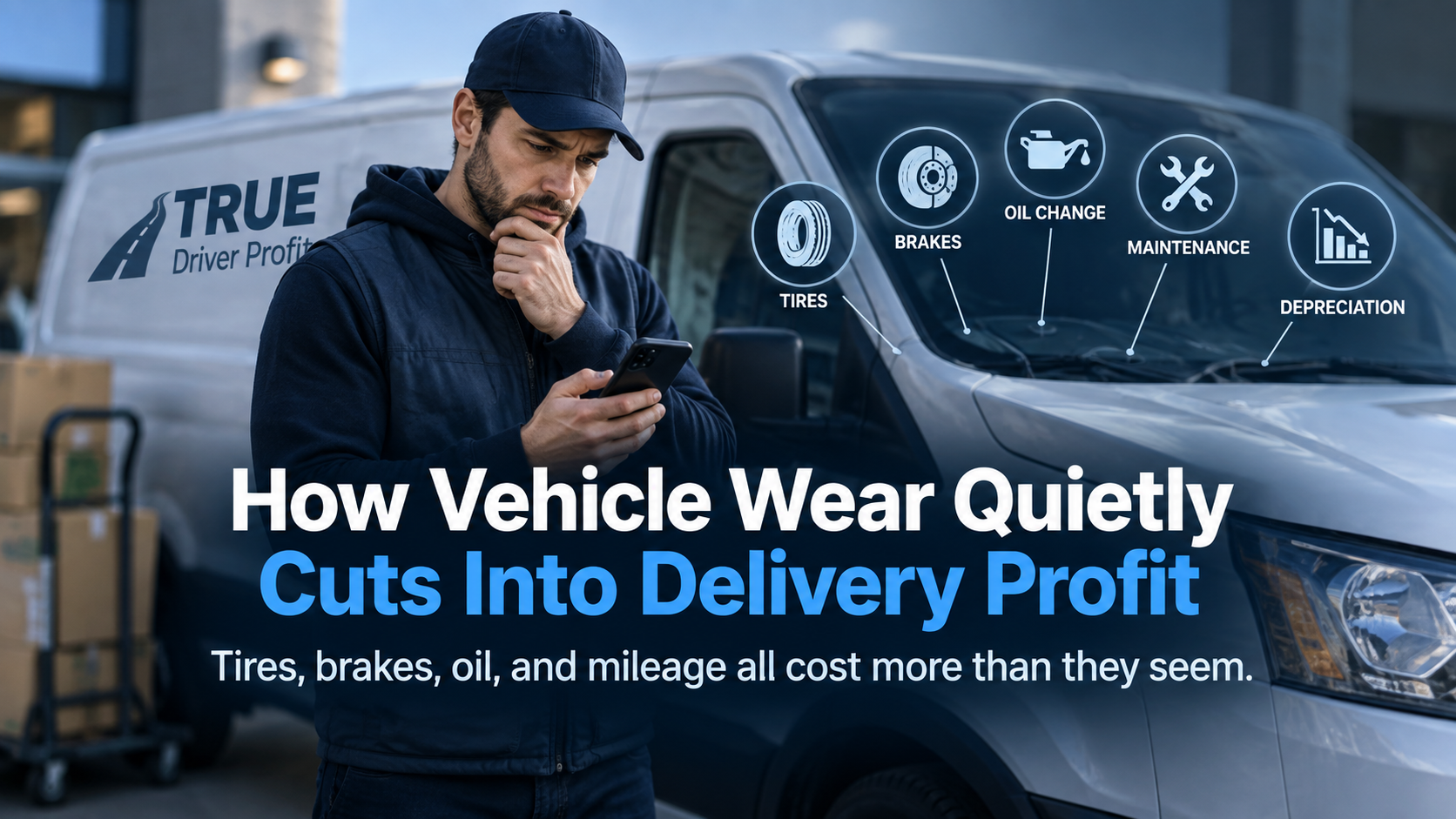
How Vehicle Wear Quietly Cuts Into Delivery Profit
Gas is the vehicle cost drivers notice most often.
You see the price at the pump.
You see the charge on your card.
You know exactly when you bought it.
Vehicle wear is different.
It builds slowly.
A few miles here.
A few hundred miles there.
Then one day you need tires, brakes, an oil change, or a repair.
Those costs did not appear overnight.
Delivery driving helped create them mile by mile.
That is why fuel alone does not show the full cost of using your vehicle for work.
The tires turn.
The brakes get used.
Oil circulates.
Suspension components absorb bumps.
Mileage increases.
The vehicle gets closer to its next service or repair.
One delivery may add only a small amount of wear.
But hundreds of deliveries can add a lot.
This is especially important for drivers who put thousands of business miles on their vehicles every month.
They wear gradually with every mile.
Delivery driving can be especially demanding because it often includes:
Frequent stops
Parking lot turns
City driving
Uneven roads
Driveways
Repeated acceleration and braking
A set of tires may last a long time.
But when replacement day comes, the cost can be substantial.
That cost belongs to the miles that helped wear them out.
Pickup.
Stop.
Customer.
Stop.
Next pickup.
Stop again.
Repeated city and neighborhood driving can put extra demand on brake pads and rotors.
You may not think about brake cost while accepting an offer.
But eventually the repair bill arrives.
That is one reason vehicle cost per mile matters.
Oil changes come faster with more driving
The more miles you drive, the faster you reach your next oil change.
A driver covering 150 miles in a day moves through service intervals much faster than someone who only drives a few miles to work and back.
Oil changes may not feel expensive compared with major repairs.
But they happen repeatedly.
Over a year, those routine maintenance costs can add up.
Repairs are harder to predict
Some vehicle costs are predictable.
Tires wear.
Oil needs changing.
Brakes eventually need service.
Other repairs are less predictable.
A wheel bearing fails.
A battery dies.
A suspension component wears out.
A cooling system develops a problem.
Not every repair is caused by delivery driving.
But higher mileage and heavier use can increase how quickly some parts wear.
That is why it is risky to treat fuel as the only cost of working.
Two similar vehicles may be worth different amounts if one has much higher mileage.
Delivery work can add mileage quickly.
That does not mean you should avoid driving your vehicle for work.
It means the vehicle is being used as part of the business.
That use has a cost.
The repair bill comes later, but the wear starts now
This is what makes vehicle wear easy to ignore.
You may finish a delivery today and spend nothing on repairs.
That can make the order feel more profitable than it really was.
But some of the money you earned today may eventually need to cover:
Tires
Brakes
Maintenance
Repairs
Replacement parts
Future vehicle replacement
The cost may happen later.
The wear happened today.
A high-mileage day can look better than it is
Suppose you earn $180 in one day.
That sounds strong.
But imagine you drove 160 miles to earn it.
Another day you earn $165 while driving only 80 miles.
The first day has higher gross earnings.
The second day puts much less mileage on the vehicle.
Once vehicle costs are considered, the difference between those two days may be smaller than the gross earnings suggest.
This is why mileage and vehicle cost belong in the same conversation.
Tire prices can differ.
Maintenance can differ.
Fuel economy can differ.
Repair costs can differ.
That means there is no single perfect vehicle-cost number for every driver.
Your vehicle matters.
Your maintenance experience matters.
Your driving conditions matter.
That is why using your own cost settings can give you a more useful picture than relying on one generic rule.
Wear and tear should not be confused with fuel
Fuel cost and vehicle wear are two different things.
Fuel reflects what you burn while driving.
Vehicle wear reflects the broader cost of putting miles on the vehicle.
Both matter.
If you count fuel but ignore wear, your profit can look higher than the amount you are truly keeping.
If you count wear but forget fuel, the same problem happens in reverse.
The goal is to consider both.
Small amounts per mile become large amounts over time
A vehicle cost measured in cents per mile can feel tiny.
But the mileage adds up.
If you drive 1,000 business miles in a month, even a small per-mile vehicle cost becomes meaningful.
If you drive 2,000 or 3,000 miles, it becomes even more important.
That is why the per-mile approach can be useful.
It spreads long-term costs across the miles that create them.
Understanding vehicle wear ahead of time can help you see whether your delivery work is actually leaving enough money behind.
It can also help you avoid judging offers only by payout.
An offer that adds a lot of mileage needs enough value to justify using the vehicle.
Your vehicle is one of your most important work tools
For many delivery drivers, the vehicle is the business.
Without it, the work stops.
That makes protecting its value important.
Driving profitably is not only about making enough to buy gas.
It is also about making enough to cover the broader cost of using the vehicle.
TRUE Driver Profit helps include the vehicle in the calculation
TRUE Driver Profit is designed to help drivers look beyond fuel.
Your vehicle cost can be included alongside:
Payout
Mileage
Return miles
Time
Fuel cost
That helps show:
TRUE profit
Profit per mile
Profit per hour
The goal is to see what the delivery leaves behind after the vehicle has done its part.
Because the tires, brakes, oil, and mileage may not send you a bill today.
But they are still part of the cost of earning the money.
Gas is the vehicle cost drivers notice most often.
You see the price at the pump.
You see the charge on your card.
You know exactly when you bought it.
Vehicle wear is different.
It builds slowly.
A few miles here.
A few hundred miles there.
Then one day you need tires, brakes, an oil change, or a repair.
Those costs did not appear overnight.
Delivery driving helped create them mile by mile.
That is why fuel alone does not show the full cost of using your vehicle for work.
Every delivery adds wear
Each time you accept an order, your vehicle does more than burn fuel.The tires turn.
The brakes get used.
Oil circulates.
Suspension components absorb bumps.
Mileage increases.
The vehicle gets closer to its next service or repair.
One delivery may add only a small amount of wear.
But hundreds of deliveries can add a lot.
This is especially important for drivers who put thousands of business miles on their vehicles every month.
Tires are part of the cost
Tires do not wear out all at once.They wear gradually with every mile.
Delivery driving can be especially demanding because it often includes:
Frequent stops
Parking lot turns
City driving
Uneven roads
Driveways
Repeated acceleration and braking
A set of tires may last a long time.
But when replacement day comes, the cost can be substantial.
That cost belongs to the miles that helped wear them out.
Brakes take a beating too
Gig driving often involves more stopping than ordinary highway driving.Pickup.
Stop.
Customer.
Stop.
Next pickup.
Stop again.
Repeated city and neighborhood driving can put extra demand on brake pads and rotors.
You may not think about brake cost while accepting an offer.
But eventually the repair bill arrives.
That is one reason vehicle cost per mile matters.
Oil changes come faster with more driving
The more miles you drive, the faster you reach your next oil change.
A driver covering 150 miles in a day moves through service intervals much faster than someone who only drives a few miles to work and back.
Oil changes may not feel expensive compared with major repairs.
But they happen repeatedly.
Over a year, those routine maintenance costs can add up.
Repairs are harder to predict
Some vehicle costs are predictable.
Tires wear.
Oil needs changing.
Brakes eventually need service.
Other repairs are less predictable.
A wheel bearing fails.
A battery dies.
A suspension component wears out.
A cooling system develops a problem.
Not every repair is caused by delivery driving.
But higher mileage and heavier use can increase how quickly some parts wear.
That is why it is risky to treat fuel as the only cost of working.
Depreciation matters even when nothing breaks
A vehicle can lose value simply because the mileage keeps climbing.Two similar vehicles may be worth different amounts if one has much higher mileage.
Delivery work can add mileage quickly.
That does not mean you should avoid driving your vehicle for work.
It means the vehicle is being used as part of the business.
That use has a cost.
The repair bill comes later, but the wear starts now
This is what makes vehicle wear easy to ignore.
You may finish a delivery today and spend nothing on repairs.
That can make the order feel more profitable than it really was.
But some of the money you earned today may eventually need to cover:
Tires
Brakes
Maintenance
Repairs
Replacement parts
Future vehicle replacement
The cost may happen later.
The wear happened today.
A high-mileage day can look better than it is
Suppose you earn $180 in one day.
That sounds strong.
But imagine you drove 160 miles to earn it.
Another day you earn $165 while driving only 80 miles.
The first day has higher gross earnings.
The second day puts much less mileage on the vehicle.
Once vehicle costs are considered, the difference between those two days may be smaller than the gross earnings suggest.
This is why mileage and vehicle cost belong in the same conversation.
Different vehicles have different costs
A small fuel-efficient car may have different operating costs from an SUV or truck.Tire prices can differ.
Maintenance can differ.
Fuel economy can differ.
Repair costs can differ.
That means there is no single perfect vehicle-cost number for every driver.
Your vehicle matters.
Your maintenance experience matters.
Your driving conditions matter.
That is why using your own cost settings can give you a more useful picture than relying on one generic rule.
Wear and tear should not be confused with fuel
Fuel cost and vehicle wear are two different things.
Fuel reflects what you burn while driving.
Vehicle wear reflects the broader cost of putting miles on the vehicle.
Both matter.
If you count fuel but ignore wear, your profit can look higher than the amount you are truly keeping.
If you count wear but forget fuel, the same problem happens in reverse.
The goal is to consider both.
Small amounts per mile become large amounts over time
A vehicle cost measured in cents per mile can feel tiny.
But the mileage adds up.
If you drive 1,000 business miles in a month, even a small per-mile vehicle cost becomes meaningful.
If you drive 2,000 or 3,000 miles, it becomes even more important.
That is why the per-mile approach can be useful.
It spreads long-term costs across the miles that create them.
Do not wait for a repair to think about vehicle cost
The worst time to realize your vehicle has been costing money is when a major repair bill arrives.Understanding vehicle wear ahead of time can help you see whether your delivery work is actually leaving enough money behind.
It can also help you avoid judging offers only by payout.
An offer that adds a lot of mileage needs enough value to justify using the vehicle.
Your vehicle is one of your most important work tools
For many delivery drivers, the vehicle is the business.
Without it, the work stops.
That makes protecting its value important.
Driving profitably is not only about making enough to buy gas.
It is also about making enough to cover the broader cost of using the vehicle.
TRUE Driver Profit helps include the vehicle in the calculation
TRUE Driver Profit is designed to help drivers look beyond fuel.
Your vehicle cost can be included alongside:
Payout
Mileage
Return miles
Time
Fuel cost
That helps show:
TRUE profit
Profit per mile
Profit per hour
The goal is to see what the delivery leaves behind after the vehicle has done its part.
Because the tires, brakes, oil, and mileage may not send you a bill today.
But they are still part of the cost of earning the money.