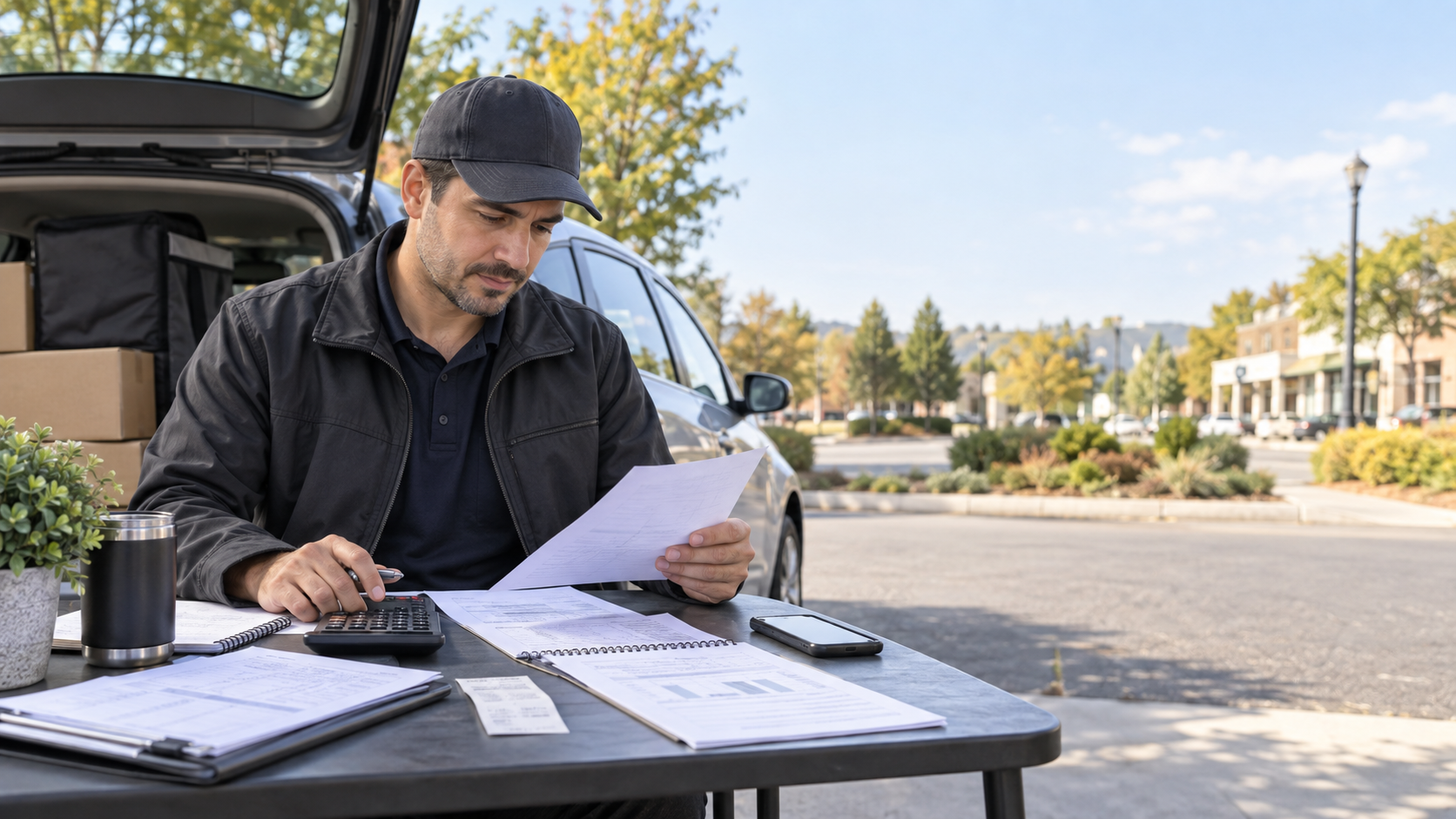
Delivery drivers who start treating gig work like a real business eventually run into another practical question:
Do I need a separate business bank account?
For many drivers, the answer is not that it is always legally required.
The bigger issue is organization.
Keeping delivery income and business expenses separate from your personal money can make it much easier to understand what you earn, what you spend, and what you actually keep.
Do delivery drivers need a separate business bank account?
Not every delivery driver is legally required to open a separate business bank account.
A sole proprietor may sometimes be able to use a personal account for business activity, depending on the bank and local requirements.
But being allowed to mix everything together does not necessarily mean it is the best way to run the business.
Separate accounts can make your records much easier
When delivery income, personal spending, groceries, fuel, maintenance, subscriptions, and household bills all move through the same account, it can become difficult to tell what belongs to the business.
A separate account creates a cleaner record.
That can be especially helpful at tax time.
What does the IRS say about separate accounts?
The IRS emphasizes good recordkeeping for self-employed workers.
Your records need to clearly show your business income and expenses.
A separate business account can make that easier because business deposits and business spending are not mixed together with personal transactions.
The account does not replace good records
A business bank account by itself is not a complete recordkeeping system.
You still need to track things such as:
- Delivery income
- Business mileage
- Vehicle expenses
- Supplies
- Phone costs
- Tax payments
- Other business expenses
The account simply makes those records easier to organize.
Do sole proprietor delivery drivers need a business account?
A sole proprietor and the owner are not separate legal entities in the same way that some other business structures are.
That can make the banking rules different from those of a corporation or some LLC situations.
A bank may allow a sole proprietor to open a business account using the owner's information and business documents.
Requirements vary from bank to bank.
Check your bank's rules
Some banks restrict business activity in personal checking accounts.
Others may allow limited business use.
Before using a personal account for delivery income, check the account agreement and the bank's policies.
You do not want to build your entire payment setup around an account that is not intended for business activity.
What are the benefits of a separate business bank account?
The biggest benefit for many delivery drivers is clarity.
You can quickly see what came into the business and what went out.
Easier income tracking
If all of your delivery deposits go into one account, it becomes much easier to compare those deposits with your delivery-platform statements.
You can also spot missing deposits or payment differences faster.
Easier expense tracking
Business expenses are easier to identify when they are not mixed with everyday personal purchases.
Fuel, vehicle maintenance, supplies, subscriptions, and other business costs become easier to review.
Easier tax preparation
Good tax records depend on knowing which income and expenses belong to the business.
A separate account can reduce the amount of sorting you have to do later.
Instead of going through hundreds of mixed transactions, you have a clearer business record from the beginning.
Does a business bank account help you know your TRUE profit?
It can help.
A bank account does not calculate profit by itself, but it can make your financial records cleaner.
That makes it easier to compare your delivery income with the costs of doing the work.
Bank balance is not the same as profit
This is important.
The amount sitting in your business checking account is not automatically your profit.
You may still have upcoming costs such as:
- Taxes
- Fuel
- Maintenance
- Tires
- Insurance
- Phone expenses
- Vehicle repairs
TRUE profit comes from understanding your earnings and your actual business costs, not simply looking at the account balance.
Should delivery drivers deposit every payout into the business account?
If you decide to use a separate business account, keeping your delivery income flowing into that account can make the system much cleaner.
You can then move money to your personal account when you want to pay yourself or use business earnings for personal expenses.
Transfers are easier to understand than mixed spending
Suppose you earn $800 during the week.
Instead of spending directly from the business account on groceries and household expenses, you might transfer a specific amount to your personal account.
That creates a clearer trail.
The business account shows business activity.
The personal account handles personal spending.
Should taxes be kept in the same account?
You can keep tax money in the same business account, but many drivers may find it easier to move tax savings into a separate savings account.
That reduces the temptation to treat tax money like spendable cash.
Tax savings should be easy to identify
If you decide to save part of each payout for taxes, having a separate tax savings account can make the amount obvious.
You can see at a glance how much you have reserved.
That is often easier than trying to remember which part of a checking balance is already spoken for.
What about vehicle expenses?
Vehicle expenses can be tricky because the same vehicle may be used for both delivery work and personal driving.
That makes accurate records especially important.
A business card does not make every purchase deductible
Paying for something with a business debit card does not automatically make it a business expense.
For example, fuel purchased for a vehicle used for both personal and business driving may still need to be allocated correctly depending on the tax method you use.
The payment method does not determine deductibility.
The nature of the expense does.
Do you need an EIN to open a business bank account?
It depends on your business structure and the bank.
Some banks may ask for an EIN.
Others may allow certain sole proprietors to open a business account using a Social Security number and other business documentation.
Banks set their own documentation requirements
You may be asked for things such as:
- EIN
- Social Security number
- LLC formation documents
- Business license
- Assumed business name paperwork
- Government identification
The exact requirements vary.
Check with the bank before applying.
What if you have an LLC?
If you formed an LLC, keeping business money separate becomes even more important.
One of the reasons people create a legal business entity is to separate business activity from personal activity.
Mixing money between the two can make that separation harder to maintain.
Treat the business like a separate business
If you went through the effort of forming an LLC, it makes sense to keep the financial records organized accordingly.
Use the business account for business income and expenses.
Use the personal account for personal activity.
That creates a much cleaner record of how the business actually operates.
Does a separate account make delivery driving more profitable?
No.
Opening another bank account does not magically increase your earnings.
What it can do is make your numbers easier to understand.
That can help you make better decisions.
Better records make problems easier to see
A clean account history can help you notice:
- Fuel costs increasing
- Maintenance spending rising
- A drop in weekly earnings
- Subscription charges you forgot about
- Too much money being withdrawn for personal spending
- Too little being reserved for taxes
Those details can be difficult to spot when everything is mixed together.
Should every delivery driver open a business account?
Not necessarily.
A driver doing a handful of deliveries each month may decide a separate account is more than they need right now.
Someone treating delivery work as a serious source of income may benefit much more from the separation.
Ask whether it makes your business easier to manage
A separate account may be worth considering if:
- You want cleaner business records
- You have regular delivery income
- You have frequent business expenses
- You formed an LLC
- You want easier tax preparation
- You want to separate tax savings from personal spending
- You are trying to understand your real business profit
The goal is not to add another account just to feel more official.
The goal is to make the business easier to understand and manage.
Keep your business money organized
Delivery driving already involves enough moving pieces.
You have earnings, mileage, fuel, vehicle wear, taxes, insurance, and maintenance to keep up with.
Your banking setup should make that easier, not harder.
A separate business bank account can give you a cleaner picture of what is happening with your money.
But the account is only one tool.
The real goal is still the same:
Know what you earned.
Know what it cost you.
Know what you actually kept.
Related reading
Do Delivery Drivers Need an EIN?
Do Delivery Drivers Need an LLC?
Do Delivery Drivers Need a Business License?
Do Delivery Drivers Have to Pay Self-Employment Tax?
Delivery Driver Profit Guide
This article is for general educational information and is not legal, tax, or banking advice. Bank requirements, account rules, fees, and business requirements vary by financial institution, business structure, and location. Check with your bank and a qualified professional when deciding what setup is right for you.