Can Delivery Drivers Deduct Delivery Bags and Supplies?
Delivery drivers may be able to deduct ordinary and necessary supplies used for delivery work. Learn which items may qualify, how personal use matters, and what records to keep.
By TRUE Driver Profit · September 13, 2026
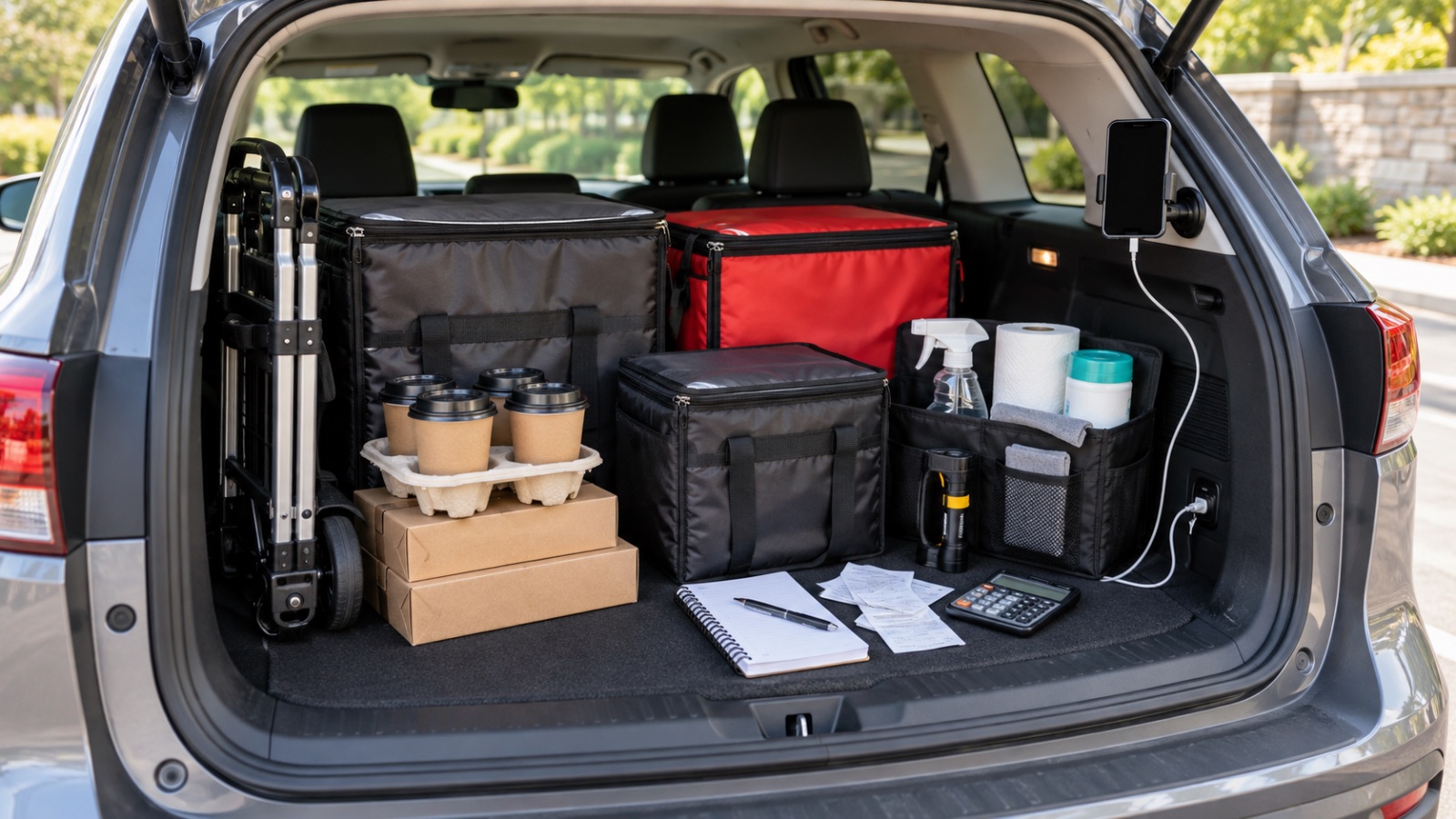
Delivery drivers use more than a car and a phone to get the job done. Insulated bags help keep food at the right temperature. Drink carriers can prevent spills. Totes and bins help organize larger orders. Phone mounts make navigation easier. Flashlights can help with nighttime deliveries. Carts and dollies can make heavy orders safer to move. All of those items cost money. So can delivery drivers deduct delivery bags and supplies? In many cases, ordinary and necessary business supplies may qualify as business expenses when they are purchased and used for delivery work.
Can delivery drivers deduct delivery bags and supplies?
Possibly. If you purchase an item because it is useful and appropriate for your delivery business, the business-use portion may generally qualify as a business expense. That can include many of the practical tools drivers use every day.
The item needs a business purpose
A purchase does not become deductible simply because you are a delivery driver. There should be a real connection between the item and your work. The stronger that connection is, the easier it is to understand why the expense belongs to the business.
What delivery supplies may qualify?
Drivers use different equipment depending on the type of deliveries they complete. Possible business supplies may include: - Insulated delivery bags - Pizza bags - Drink carriers - Totes - Storage bins - Coolers - Ice packs - Phone mounts - Charging cables - Car chargers - Flashlights - Headlamps - Pens - Notebooks - Receipt organizers - Cleaning supplies - Disposable gloves - Hand sanitizer - Small carts - Folding dollies Not every item automatically qualifies, but these are examples of things that can have a direct business purpose.
Can delivery drivers deduct insulated bags?
Insulated bags are one of the clearest examples of delivery equipment. They are used to help maintain food temperature during transportation. If you purchase them specifically for delivery work, they may generally qualify as a business expense.
Keep the purchase receipt
Save records showing: - Date purchased - Amount paid - Item purchased - Store or seller If you buy several bags at once, keep the invoice showing what was included.
Can delivery drivers deduct drink carriers?
Drink carriers can also be useful business supplies. They can help prevent spills and make it easier to transport several drinks at once.
Small tools can prevent expensive problems
A good drink carrier may only cost a few dollars. But it can help prevent spilled drinks, damaged orders, extra cleanup, customer complaints, and lost time. Sometimes a small business expense provides a lot of practical value.
Can delivery drivers deduct totes and storage bins?
Totes and bins can help organize orders in the vehicle. They can be especially helpful when carrying multiple bags, groceries, or items that could roll around while driving.
Business use should be clear
If a tote is used only for delivery work, the business connection is straightforward. If the same tote is also used for personal shopping, camping, household storage, or other personal purposes, the business-use portion becomes more important.
Can delivery drivers deduct a phone mount?
A phone mount can be a useful business tool because delivery drivers rely heavily on navigation and delivery apps. If the mount is purchased primarily for delivery work, it may generally have a business purpose.
Safety matters too
A stable phone mount can make it easier to view navigation without holding the phone while driving. That can make it both a practical and safety-related tool.
What about chargers and charging cables?
Delivery apps can use a lot of battery power. Navigation, GPS, messaging, and screen time can drain a phone quickly. Car chargers, charging cables, and portable battery packs may therefore be useful business supplies.
Separate business and personal use when needed
A charger kept in the delivery vehicle and used mainly for work has a clearer business purpose than one shared throughout the household. Keep your use reasonable and supportable.
Can delivery drivers deduct flashlights?
A flashlight or headlamp can be useful for nighttime deliveries. Drivers may need to see house numbers, apartment numbers, walkways, driveways, stairs, gates, and drop-off areas. A flashlight purchased specifically for delivery work may generally have a legitimate business purpose.
Practical equipment can reduce delivery problems
Night deliveries can be difficult when addresses are poorly lit. A simple flashlight can make the job safer and faster.
Can delivery drivers deduct carts or dollies?
Drivers who handle large grocery orders, cases of water, heavy packages, or apartment deliveries may use a cart or folding dolly. If the equipment is purchased for business use, it may qualify as a business expense.
Higher-cost equipment may have different tax treatment
A small supply and a more expensive piece of equipment are not always treated exactly the same for tax purposes. The cost of the item and how long it is expected to be used can affect how it is handled. Keep detailed records for larger purchases.
Can delivery drivers deduct cleaning supplies?
Delivery work can create messes. Food can spill. Drinks can leak. Grocery bags can break. Keeping the vehicle clean is part of maintaining a professional delivery environment.
Business-use cleaning costs may qualify
Cleaning products purchased specifically for the delivery vehicle may potentially qualify as business expenses. Examples can include: - Interior wipes - Paper towels - Trash bags - Carpet cleaner - Upholstery cleaner - Disinfectant - Odor remover If the same products are also used throughout your home, separate personal use from business use when appropriate.
What about car washes?
Car washes are a little different because they relate to the vehicle itself. How vehicle cleaning expenses are handled can depend on the deduction method and individual circumstances.
Keep vehicle costs separate from general supplies
It can help to organize records into categories such as delivery supplies, vehicle expenses, phone and software, parking and tolls, and taxes. That makes it easier to understand what you are spending.
Can delivery drivers deduct disposable gloves?
Some drivers use disposable gloves when handling messy, leaking, or unusual orders. If they are purchased for business use, they may potentially qualify as supplies.
The expense should be connected to the work
A box of gloves used for delivery work has a business connection. A box used mainly for household cleaning is a personal expense.
Can delivery drivers deduct hand sanitizer?
Hand sanitizer may also have a business purpose when used during delivery work. Drivers touch shopping carts, store doors, bags, packages, apartment entrances, elevators, and gates. Keeping sanitizer in the delivery vehicle can be a reasonable work-related supply.
Can delivery drivers deduct notebooks and pens?
Ordinary office-type supplies used for business recordkeeping may potentially qualify. Drivers may use notebooks to track mileage, expenses, maintenance, earnings, delivery notes, and business reminders.
Digital records count too
You do not have to use paper records. Apps and software can also help manage the business. But if you prefer notebooks and folders, those costs may still be legitimate business supplies.
Can delivery drivers deduct receipt organizers?
Folders, envelopes, binders, or small filing systems can help drivers keep business records organized. That can make tax preparation much easier.
Organization has real value
Losing receipts can mean losing important information about what you actually spent. A simple filing system can help prevent that.
What if an item is used for both business and personal purposes?
Mixed use is common. For example, you might buy a cooler for deliveries and also use it on family trips. In that case, only the business portion may potentially qualify.
Be reasonable
Your business-use estimate should reflect reality. If an item is mostly personal, claiming it as 100% business would be difficult to support.
What records should delivery drivers keep?
Save receipts and invoices for business supplies. Useful records can include: - Purchase receipts - Online order confirmations - Credit-card statements - Bank records - Product descriptions - Notes about business purpose
Make the business purpose easy to remember
A quick note can help later. For example: "Insulated bag for deliveries." "Drink carrier for delivery orders." "Phone mount for navigation." "Folding cart for grocery deliveries."
Do small expenses really matter?
Yes. Drivers sometimes ignore small expenses because each purchase seems insignificant. But those purchases can add up.
Ten dollars here and there becomes real money
Suppose you spend: - $30 on delivery bags - $25 on a phone mount - $20 on charging cables - $40 on a drink carrier and storage bins - $60 on cleaning supplies - $80 on a folding cart That is $255 of business spending. Ignoring small expenses can make your delivery business look more profitable than it really is.
Deductible does not mean free
A business deduction does not normally reimburse you for the entire cost of an item. You still spent real money.
Buy supplies because they help the business
Do not buy unnecessary equipment just because you think you can deduct it. The purchase should help you work more safely, efficiently, or professionally.
Supplies affect TRUE profit
Even when supplies qualify as tax deductions, they still reduce your real earnings. One driver may need only a phone mount and one insulated bag. Another may need multiple bags, grocery totes, a folding cart, chargers, cleaning supplies, and organization equipment. Their business costs will be different.
The bottom line
Delivery drivers may generally be able to deduct ordinary and necessary supplies purchased for delivery work. That can include items such as insulated bags, drink carriers, phone mounts, chargers, flashlights, carts, cleaning supplies, and recordkeeping materials when they have a legitimate business purpose. Keep receipts. Separate personal use when necessary. Do not assume every purchase is automatically deductible. And remember that business supplies affect your TRUE profit whether or not they qualify for a tax deduction. The goal is not to buy more equipment. The goal is to use the right tools to do the work efficiently while understanding what they actually cost you.
Related reading
- Can Delivery Drivers Deduct Cell Phone Expenses?
- Can Delivery Drivers Deduct Parking Fees and Tolls?
- Can Delivery Drivers Deduct Car Repairs and Maintenance?
- How Much Do Delivery Drivers Actually Make After Expenses?
- Delivery Driver Profit Guide
This article is for general educational information and is not tax advice. Whether a particular item qualifies as a business expense can depend on its business purpose, personal use, cost, reimbursement, and individual circumstances. Review current IRS guidance or speak with a qualified tax professional about your situation.